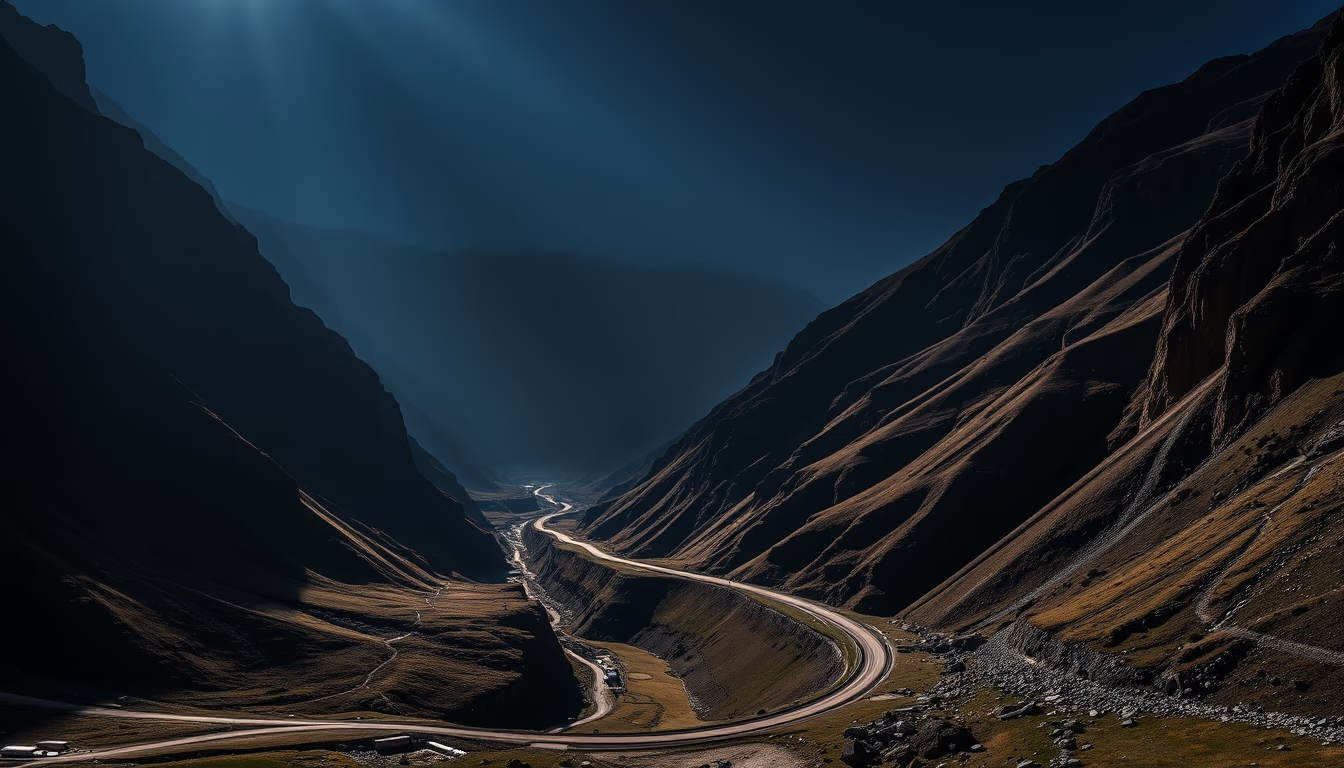
Transfagarasan romania
1344×768 · AVIF · CC BY 4.0

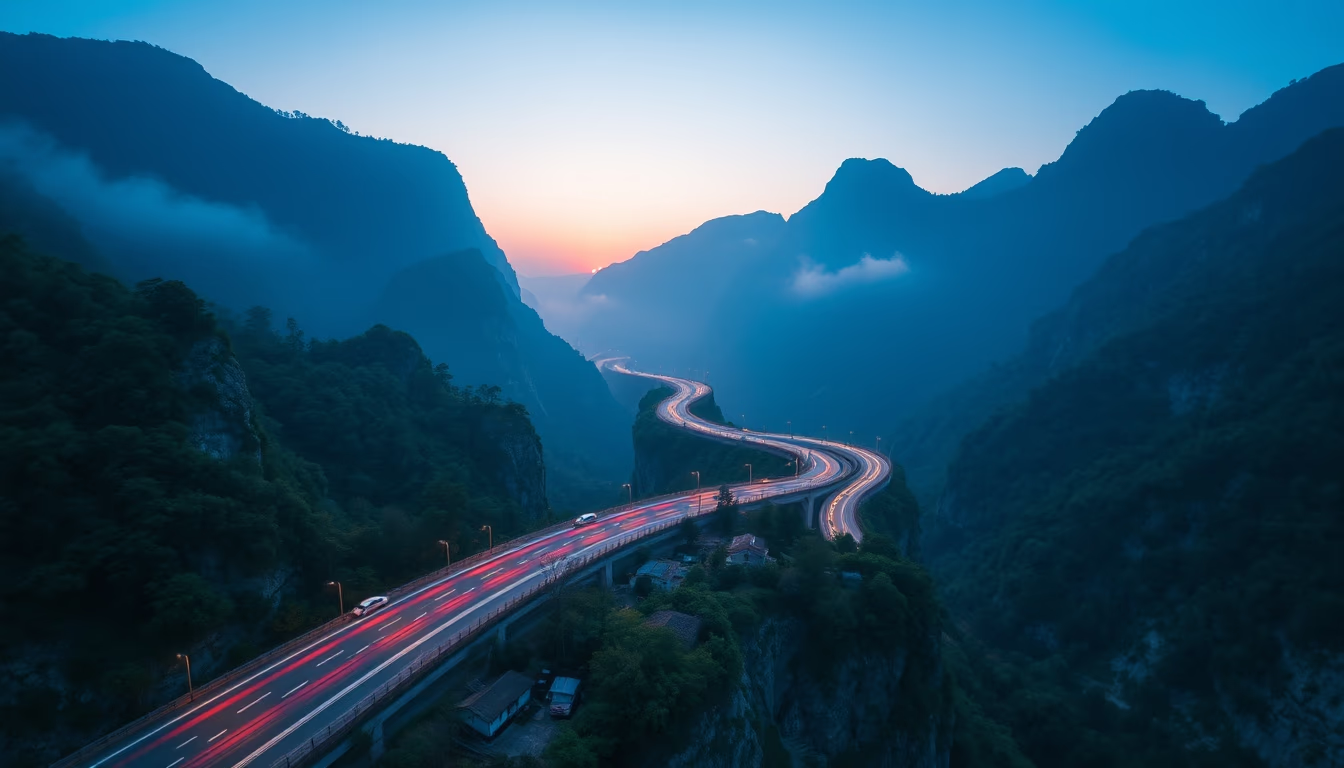
The Transfăgărășan is one of the world's most spectacular roads, winding through the Romanian Carpathians at extreme altitudes.
About this subject
The Transfăgărășan, officially designated DN7C, is a mountain road that cuts through the Southern Carpathians in Romania, linking the historic regions of Transylvania and Wallachia. Built between 1970 and 1974 under the orders of dictator Nicolae Ceaușescu, the road was a military response to the 1968 Soviet invasion of Czechoslovakia, intended to provide a fast crossing route over the mountains. The construction involved 6 million kilograms of dynamite and the labor of thousands of soldiers, resulting in 90 km of pavement climbing to Romania's highest paved road point: the Bâlea Tunnel at 2,042 meters altitude.
The route is renowned for its sharp curves, viaducts, and breathtaking scenery. It features over 70 tight turns, five tunnels, and numerous bridges, including the Capra Viaduct, one of the tallest in the country. The Transfăgărășan is only fully open from June to October due to heavy snow cover in winter; the section between Bâlea and Vidraru lakes is closed during the rest of the year. In summer, it is a paradise for drivers and cyclists, attracting enthusiasts from around the globe.
Bâlea Lake, a glacial lake near the tunnel, is a popular tourist destination with chalets and a cable car that operates even in winter. The road also passes by the Vidraru Dam, an impressive 166-meter-high hydroelectric dam that forms Vidraru Lake. Although the road gained international fame after being featured on the BBC's Top Gear show, which declared it one of the best driving roads in the world, the Transfăgărășan is much more than an automotive playground: it is a monumental engineering feat that provides access to some of the wildest and most preserved landscapes in the Carpathians, with abundant wildlife such as bears and lynxes.
Frequently Asked Questions
What is the best time to drive the Transfăgărășan?
The road is fully open only from June to October. Outside this period, the high section between Bâlea and Vidraru lakes is closed due to snow. Summer is ideal to enjoy the scenery and mild weather.
How long is the Transfăgărășan?
The Transfăgărășan is approximately 90 km long, connecting the village of Bascov (near Pitești) to the town of Cârțișoara in Transylvania. The most winding and famous section is about 60 km.
Is the Transfăgărășan dangerous to drive?
Despite being well-paved and signposted, it requires attention due to sharp curves, steep gradients, and heavy summer traffic. Inexperienced drivers should be cautious, especially in rain or fog.
Direct URL
https://pub-c7d6a6ea828543ac903a74a341ccb2e1.r2.dev/imagens/transfagarasan-romania-studio-editorial-portrait-fresh1.avifHow to credit
Include a visible link back to UtilizAí. Copy one of the snippets below:
<a href="https://xn--utiliza-eza.com/en/midia/imagens/transfagarasan-romania-studio-editorial-portrait-fresh1">Transfagarasan romania</a> by <a href="https://xn--utiliza-eza.com">UtilizAí</a>, licensed under <a href="https://creativecommons.org/licenses/by/4.0/">CC BY 4.0</a>.
[Transfagarasan romania](https://xn--utiliza-eza.com/en/midia/imagens/transfagarasan-romania-studio-editorial-portrait-fresh1) by [UtilizAí](https://xn--utiliza-eza.com), CC BY 4.0
License: CC-BY-4.0