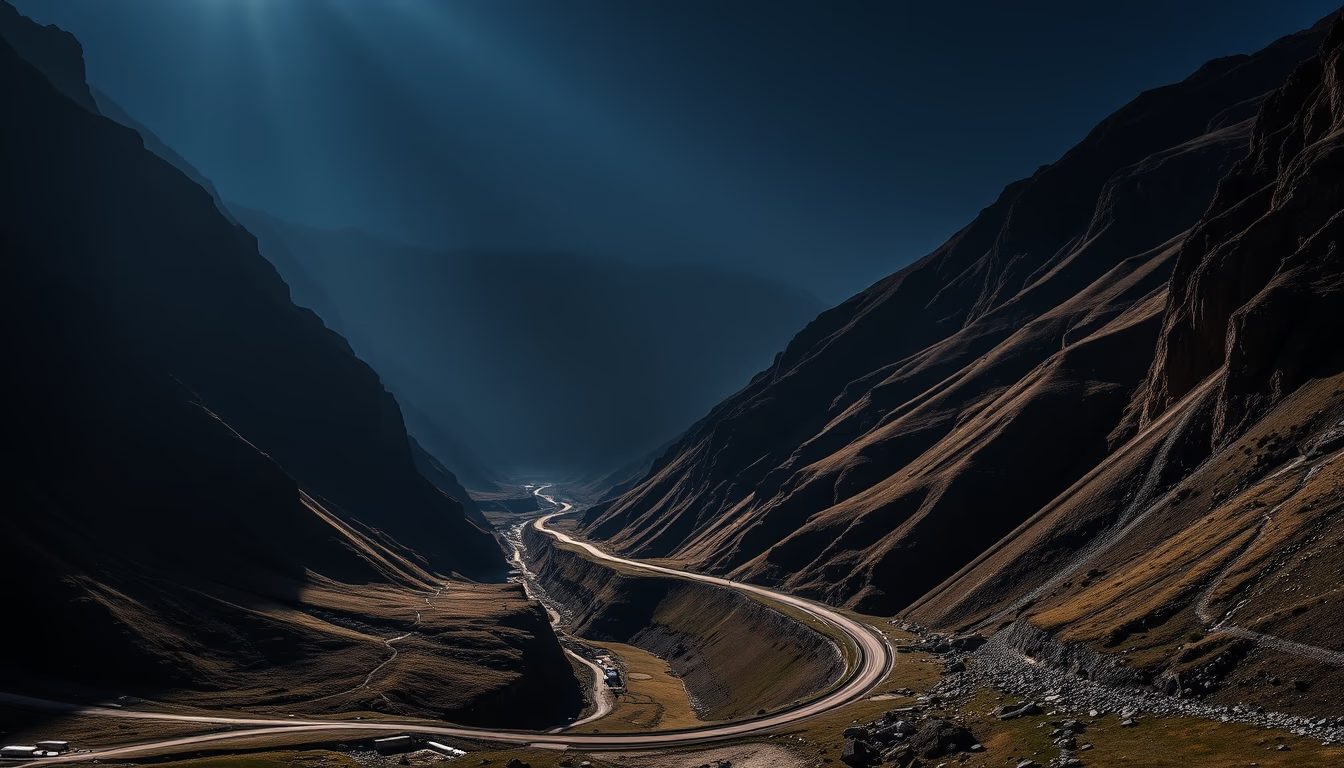
Transfagarasan romania
1344×768 · AVIF · CC BY 4.0
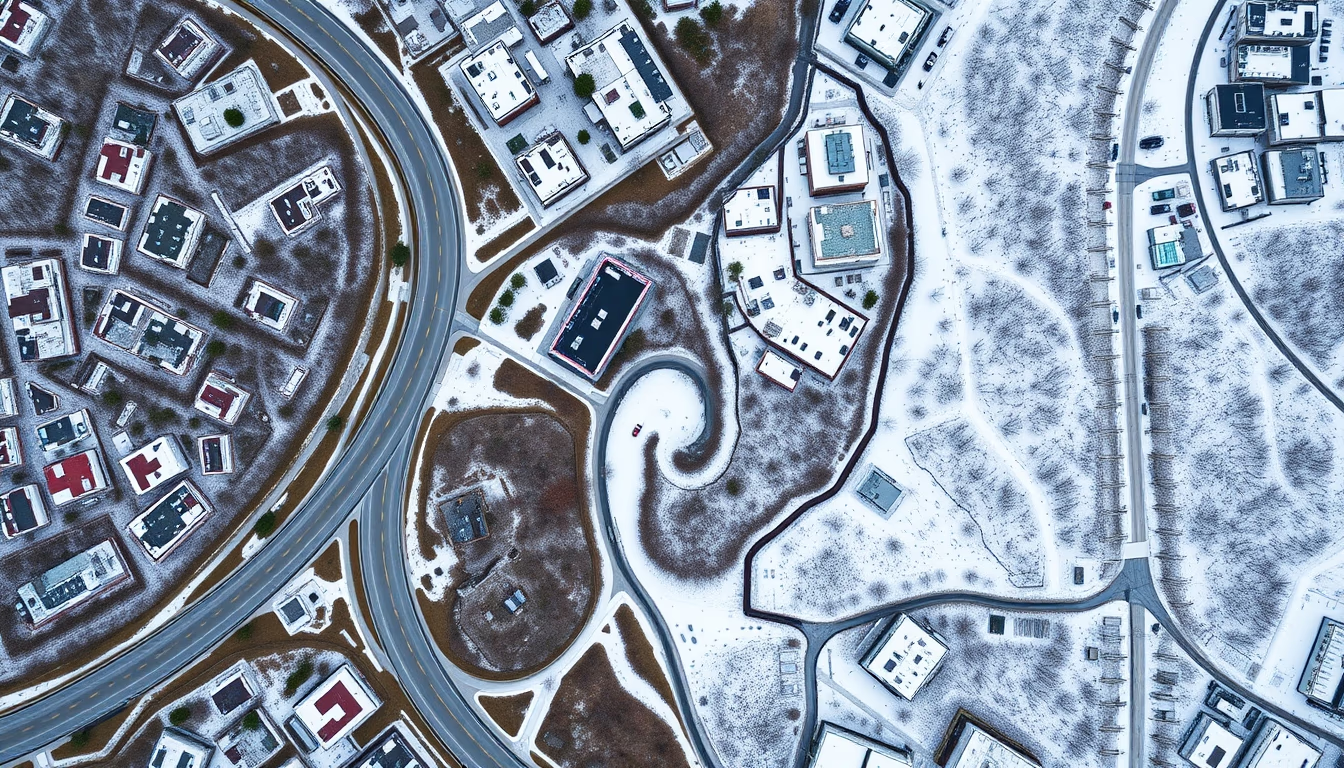
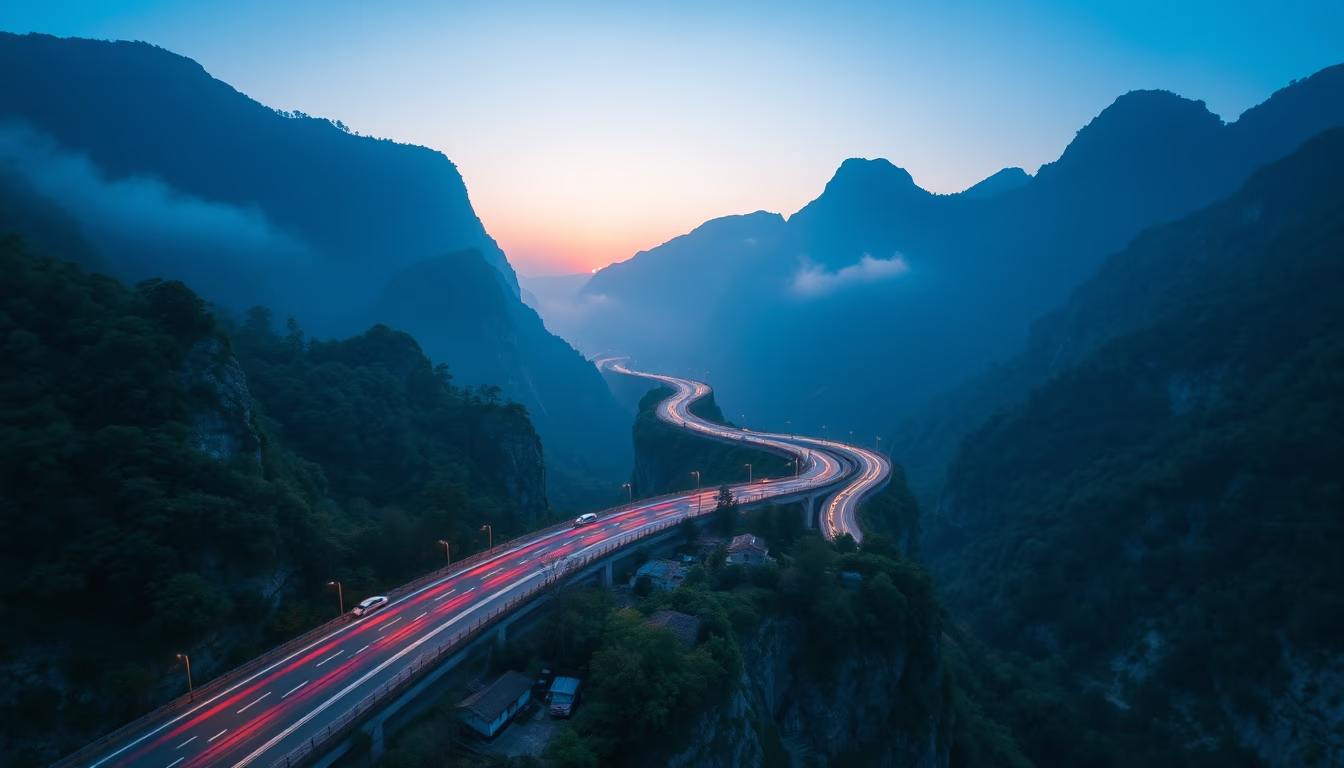
The Transfagarasan in Romania is one of the world's most iconic roads, winding through the Carpathians with tight curves and stunning landscapes.
About this subject
The Transfagarasan is a paved road that crosses the Southern Carpathians, connecting the historical region of Transylvania to Wallachia. Its construction was ordered by dictator Nicolae Ceaușescu between 1970 and 1974, initially for strategic military purposes, to provide a fast crossing route through the Carpathians in case of a Soviet invasion. The project involved about six thousand soldiers and used dynamite to cut through the mountains, resulting in a 90-kilometer route with tight curves, tunnels, and viaducts.
The road reaches a maximum altitude of 2,042 meters at Lake Bâlea, where an 880-meter tunnel pierces the rock. The zigzag curves and steep gradients make driving challenging, but the scenery compensates: green valleys, rocky peaks, and waterfalls. The most famous stretch, between Curtea de Argeș and the village of Bâlea Cascadă, is closed during much of the year due to snow, typically opening from June to October. The Transfagarasan gained international notoriety after appearing on the TV show Top Gear, being described as the best road in the world.
Beyond its scenic value, the Transfagarasan offers points of interest such as the Vidraru Dam, 166 meters high, and Lake Bâlea, formed by a glacier. The region hosts diverse wildlife, including brown bears, wolves, and lynxes. For its combination of daring engineering and natural beauty, it has become a must-visit destination for motorcyclists and cyclists, who tackle its slopes in annual events. The official name is DN7C, but everyone knows it as Transfagarasan.
Frequently Asked Questions
Where exactly is the Transfagarasan located?
The Transfagarasan (DN7C) is located in Romania, in the Southern Carpathians. It connects the city of Curtea de Argeș in Wallachia to the village of Bâlea Cascadă in Transylvania, passing by Lake Bâlea.
What is the best time to drive the Transfagarasan?
The road is typically open from June to October, depending on weather conditions. Summer and early autumn offer the best conditions, with green landscapes and mild temperatures. In winter, it is closed due to snow accumulation.
Why was the Transfagarasan built?
It was built by order of Nicolae Ceaușescu between 1970 and 1974, for strategic military purposes, to allow a fast crossing of the Carpathians in case of a Soviet invasion. Later, it became a tourist attraction.
Direct URL
https://pub-c7d6a6ea828543ac903a74a341ccb2e1.r2.dev/imagens/transfagarasan-romania-isometric-flat-lay-fresh15.avifHow to credit
Include a visible link back to UtilizAí. Copy one of the snippets below:
<a href="https://xn--utiliza-eza.com/en/midia/imagens/transfagarasan-romania-isometric-flat-lay-fresh15">Transfagarasan romania</a> by <a href="https://xn--utiliza-eza.com">UtilizAí</a>, licensed under <a href="https://creativecommons.org/licenses/by/4.0/">CC BY 4.0</a>.
[Transfagarasan romania](https://xn--utiliza-eza.com/en/midia/imagens/transfagarasan-romania-isometric-flat-lay-fresh15) by [UtilizAí](https://xn--utiliza-eza.com), CC BY 4.0
License: CC-BY-4.0