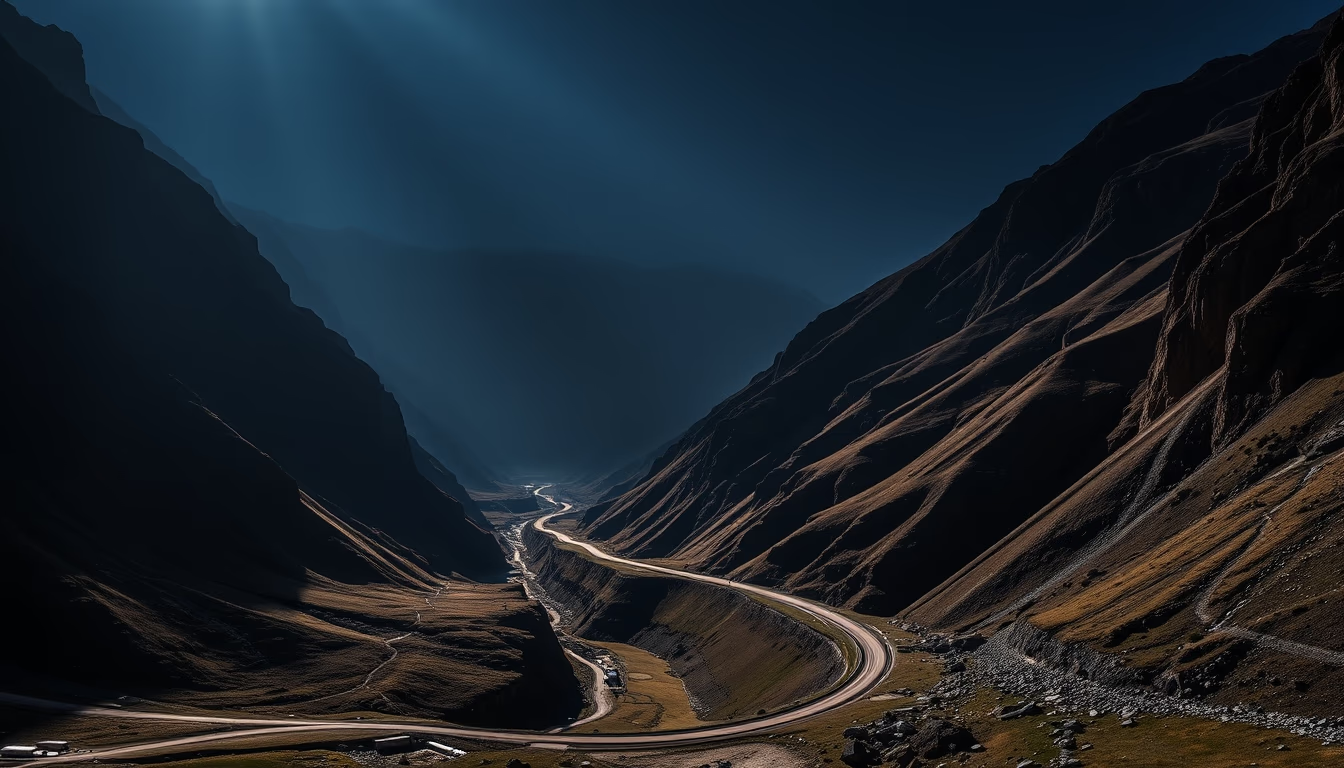
Transfagarasan romania
1344×768 · AVIF · CC BY 4.0
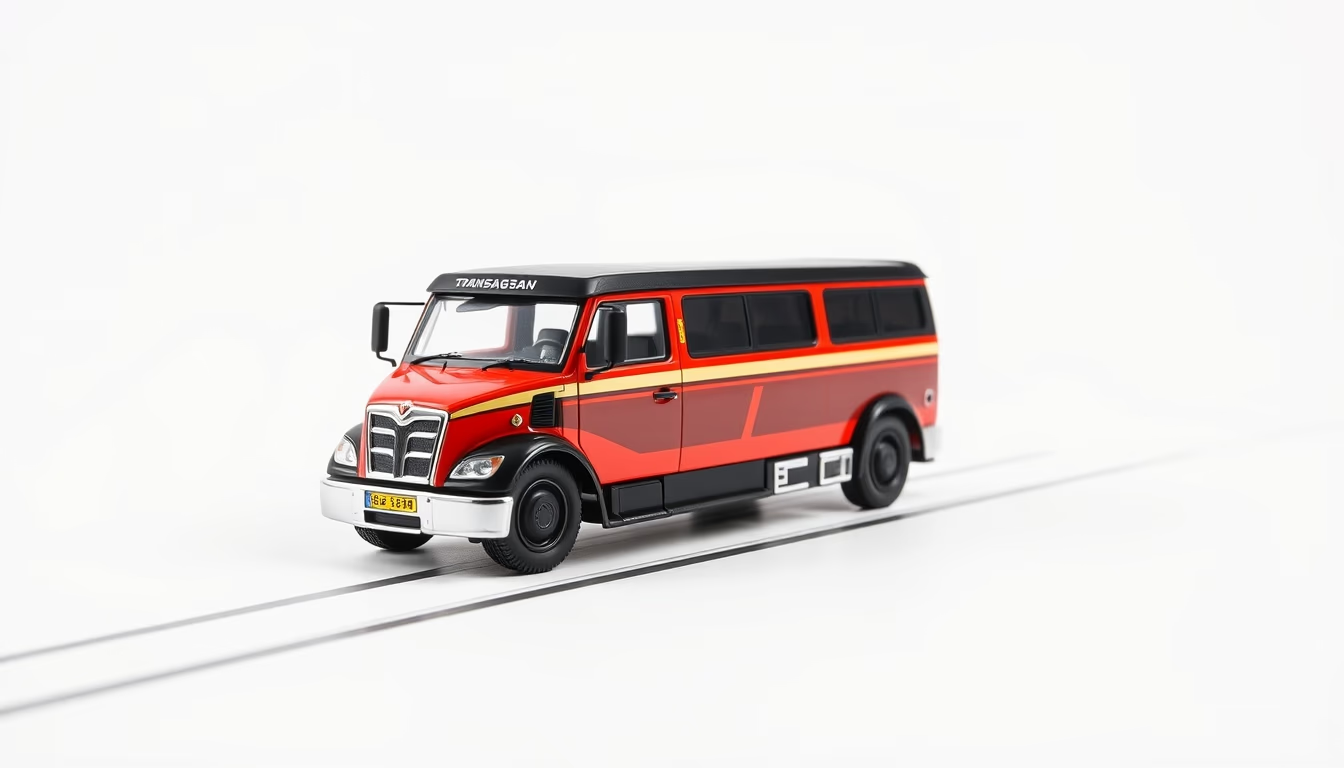
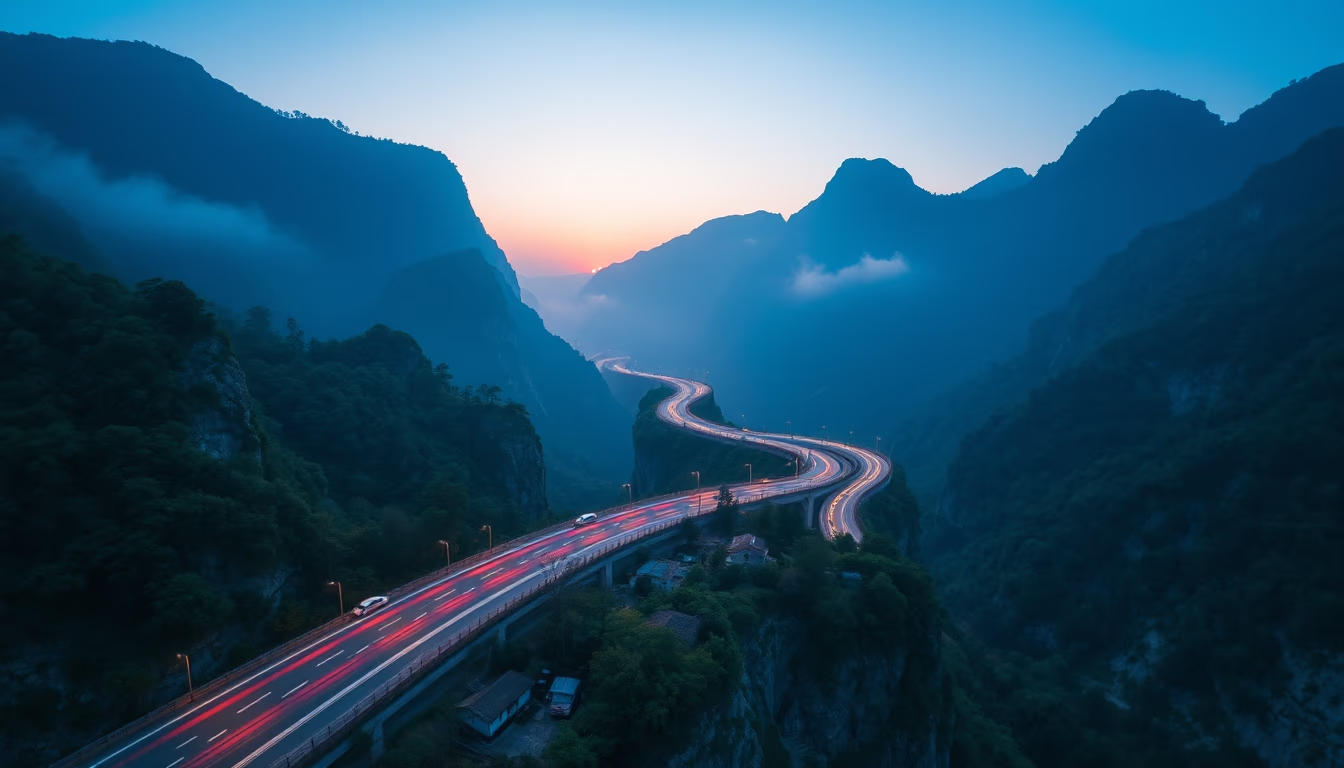
The Transfagarasan is a scenic road in the Romanian Carpathians, famous for its tight curves, tunnels, and stunning landscapes.
About this subject
The Transfagarasan, officially DN7C, is a high-altitude road crossing the Făgăraș Mountains in Romania, linking the historical regions of Transylvania and Wallachia. Built between 1970 and 1974 by order of dictator Nicolae Ceaușescu, the road had strategic military purposes, allowing a quick traverse of the Carpathians. Stretching about 90 kilometers, the Transfagarasan features over 800 curves and five tunnels, the longest being the Bâlea Tunnel at 887 meters. Its highest point, at 2,034 meters, is Bâlea Lake, a glacial formation that becomes a popular destination in both summer and winter.
The road is globally celebrated as one of the most spectacular drives. TV presenter Jeremy Clarkson of Top Gear called it "the best road in the world." The Transfagarasan attracts car enthusiasts, motorcyclists, and cyclists, as well as tourists seeking panoramic views of the Carpathian peaks. In summer, traffic includes all types of vehicles, while in winter the road closes due to heavy snow, typically from October to June.
Beyond the driving experience, the region offers attractions such as Poenari Castle, a fortress associated with Vlad the Impaler, and Bâlea Waterfall, a 60-meter cascade. The area is also a starting point for hiking trails in the Făgăraș Mountains. The Transfagarasan is not merely a transport route but a destination in itself, combining impressive engineering with natural beauty.
Frequently Asked Questions
Where is the Transfagarasan?
The Transfagarasan is located in Romania, crossing the Făgăraș Mountains, part of the Southern Carpathians. It connects the city of Sibiu in Transylvania to Pitești in Wallachia.
What is the best time to visit the Transfagarasan?
The best time is from July to September, when the road is fully open and free of snow. During winter, the Transfagarasan is closed due to severe weather conditions.
Why was the Transfagarasan built?
The road was built by order of Nicolae Ceaușescu for strategic military reasons, to allow rapid troop movement across the Carpathians in case of invasion.
Direct URL
https://pub-c7d6a6ea828543ac903a74a341ccb2e1.r2.dev/imagens/transfagarasan-romania-commercial-product-photography-fresh7.avifHow to credit
Include a visible link back to UtilizAí. Copy one of the snippets below:
<a href="https://xn--utiliza-eza.com/en/midia/imagens/transfagarasan-romania-commercial-product-photography-fresh7">Transfagarasan romania</a> by <a href="https://xn--utiliza-eza.com">UtilizAí</a>, licensed under <a href="https://creativecommons.org/licenses/by/4.0/">CC BY 4.0</a>.
[Transfagarasan romania](https://xn--utiliza-eza.com/en/midia/imagens/transfagarasan-romania-commercial-product-photography-fresh7) by [UtilizAí](https://xn--utiliza-eza.com), CC BY 4.0
License: CC-BY-4.0