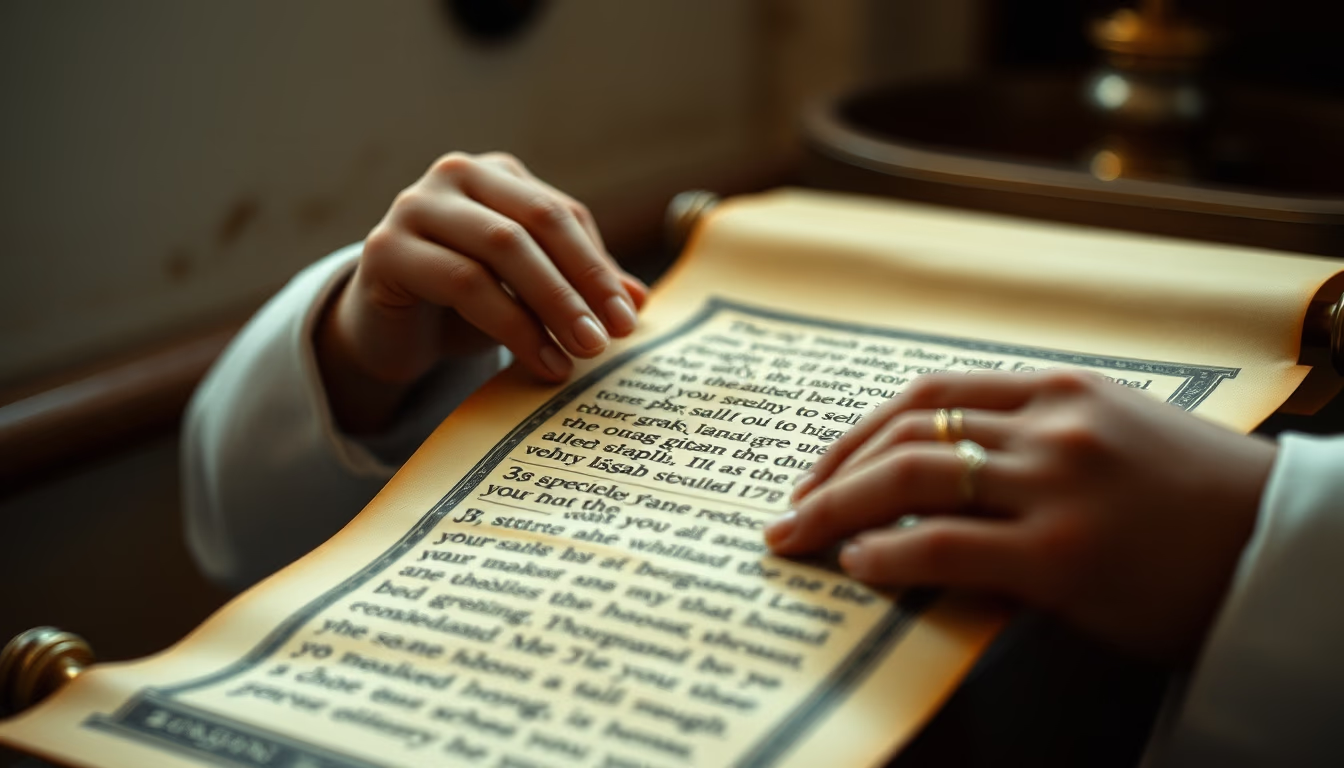
Torah scroll silver casing
1344×768 · AVIF · CC BY 4.0
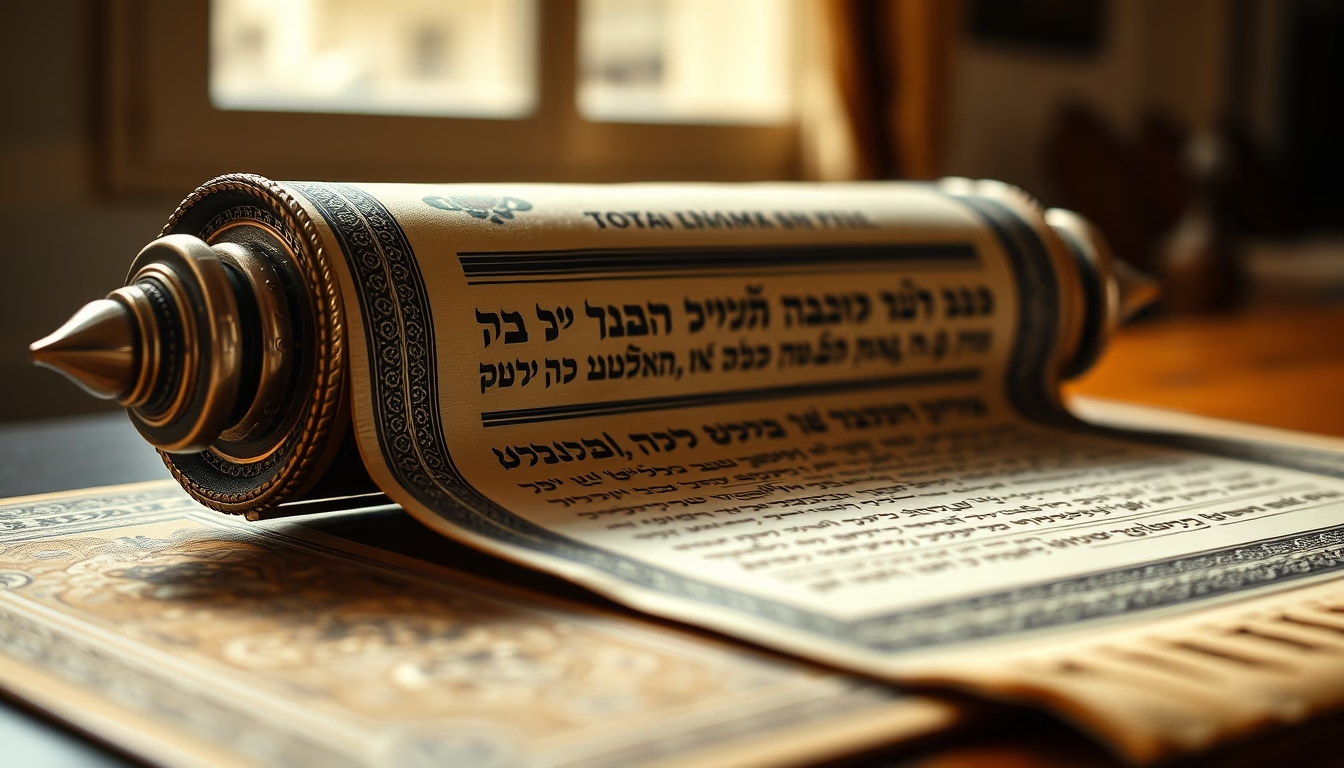
Silver Torah scroll casing: protection and sacred art in Sephardic Jewish tradition.
About this subject
The Torah, the sacred text of Judaism, consists of the Five Books of Moses and is handwritten on parchment, forming a scroll known as a Sefer Torah. To protect this precious object, different Jewish communities have developed specific storage methods. While Ashkenazi Jews use a cloth mantle, Sephardic and Oriental Jews traditionally keep the scroll in a rigid case, usually made of wood or metal, called a “tik”. The outer covering of this case is often made of silver, a material that provides durability and symbolizes purity and reverence.
Crafting a silver Torah casing requires silversmithing skill and knowledge of Jewish law. Artisans, often specialized in ritual objects, employ techniques such as filigree, chasing, and engraving to decorate the case with Jewish symbols: the Menorah, the Tablets of the Law, Lions of Judah, or Torah crowns. These adornments are not merely aesthetic; they carry theological meanings and connect the observer to Jewish history and faith.
Beyond protection, the silver casing facilitates the handling of the scroll during synagogue readings. The case is opened at the front or side, allowing the parchment to be unrolled on a reading table. The weight of the silver also helps stabilize the scroll. Many such cases are dated and signed by silversmiths, making them pieces of historical and artistic value, preserved in museums or private collections.
The tradition of using silver Torah cases dates back to Jewish communities in North Africa, the Middle East, and the Iberian Peninsula before the expulsion. Today, it is common in Sephardic synagogues worldwide, including Brazil, where Jewish immigrants of Syrian, Lebanese, and Moroccan origin maintained this custom. The silver casing thus serves as a link between biblical antiquity and contemporary religious practice.
Frequently Asked Questions
Why is the Torah kept in a silver case?
The silver case protects the parchment from physical damage and environmental changes. Silver is chosen for its durability and symbolism of purity, also imparting a sacred character. This practice is common among Sephardic Jews, while Ashkenazim use a cloth mantle.
What do the engraved symbols on the silver case mean?
Common symbols include the Menorah (candelabrum), the Tablets of the Law, Lions of Judah, and Torah crowns. They represent aspects of Jewish faith, such as spiritual illumination, the divine covenant, strength, and God's kingship, respectively.
Where can I see silver Torah cases in Brazil?
Sephardic synagogues in São Paulo, Rio de Janeiro, and other cities with Eastern Jewish communities have these cases. Museums like the Jewish Museum of São Paulo also display historical pieces in their collections.
Direct URL
https://pub-c7d6a6ea828543ac903a74a341ccb2e1.r2.dev/imagens/torah-scroll-silver-casing-documentary-photography-fresh6.avifHow to credit
Include a visible link back to UtilizAí. Copy one of the snippets below:
<a href="https://xn--utiliza-eza.com/en/midia/imagens/torah-scroll-silver-casing-documentary-photography-fresh6">Torah scroll silver casing</a> by <a href="https://xn--utiliza-eza.com">UtilizAí</a>, licensed under <a href="https://creativecommons.org/licenses/by/4.0/">CC BY 4.0</a>.
[Torah scroll silver casing](https://xn--utiliza-eza.com/en/midia/imagens/torah-scroll-silver-casing-documentary-photography-fresh6) by [UtilizAí](https://xn--utiliza-eza.com), CC BY 4.0
License: CC-BY-4.0