Torah scroll silver casing
1344×768 · AVIF · CC BY 4.0
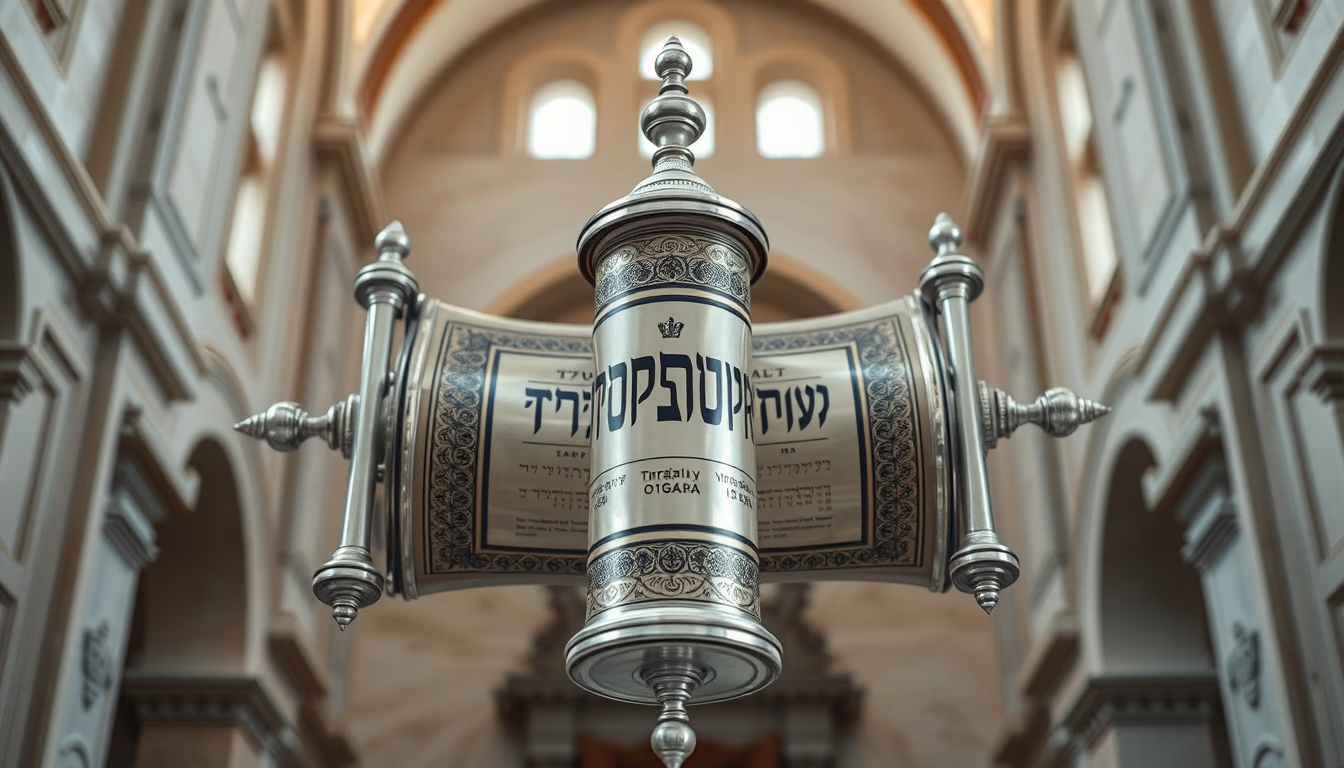
Silver casing for a Torah scroll, a Jewish ritual object adorned with reliefs and Hebrew inscriptions.
About this subject
The silver casing for a Torah scroll, known in Hebrew as a tik, is a cylindrical container used to store and protect the parchment scroll. Unlike rimonim (ornamental finials placed on the scroll’s staves), the tik fully encases the parchment, allowing safe handling during synagogue readings. Silver crafting is traditional among Jewish communities in Eastern Europe and North Africa, where artisans apply filigree, repoussé, and engraving to create geometric patterns, floral motifs, and Hebrew inscriptions such as the names of the Twelve Tribes or biblical verses.
The use of precious metals in Jewish liturgical objects dates back to at least the Second Temple period, but silver casings gained popularity between the 17th and 19th centuries, particularly in Poland, Ukraine, and Morocco. Each community developed distinct styles: Ashkenazi tikim tend to be plain or modestly decorated, while Moroccan Sephardic ones are richly ornamented, often featuring small bells at the top. Silver was preferred for its durability and because it does not require special sanctification, unlike gold.
Beyond its protective function, the silver casing carries strong symbolism. It represents the sanctity of the text and the importance of Torah study. In many synagogues, the tik is kept inside the Holy Ark (Aron Kodesh) and may be adorned with velvet mantles during festivals. Today, contemporary silversmiths in Israel and the Diaspora produce these objects, blending ancient techniques with modern designs to serve Orthodox, Conservative, and Reform congregations.
Frequently Asked Questions
What is the difference between a silver casing (tik) and rimonim?
The tik is a cylindrical case that fully encloses the Torah scroll, while rimonim are ornamental finials placed on the top of the scroll’s wooden staves.
What materials are commonly used to make Torah casings?
Silver is the most common, but wood, velvet, and gold are also used. The choice depends on community tradition and available resources.
Are there regional variations in Torah casings?
Yes. Ashkenazi casings from Eastern Europe tend to be more austere, while Sephardic ones from North Africa are richly decorated with filigree and colors, reflecting local cultural influences.
Direct URL
https://pub-c7d6a6ea828543ac903a74a341ccb2e1.r2.dev/imagens/torah-scroll-silver-casing-architectural-photography-fresh17.avifHow to credit
Include a visible link back to UtilizAí. Copy one of the snippets below:
<a href="https://xn--utiliza-eza.com/en/midia/imagens/torah-scroll-silver-casing-architectural-photography-fresh17">Torah scroll silver casing</a> by <a href="https://xn--utiliza-eza.com">UtilizAí</a>, licensed under <a href="https://creativecommons.org/licenses/by/4.0/">CC BY 4.0</a>.
[Torah scroll silver casing](https://xn--utiliza-eza.com/en/midia/imagens/torah-scroll-silver-casing-architectural-photography-fresh17) by [UtilizAí](https://xn--utiliza-eza.com), CC BY 4.0
License: CC-BY-4.0