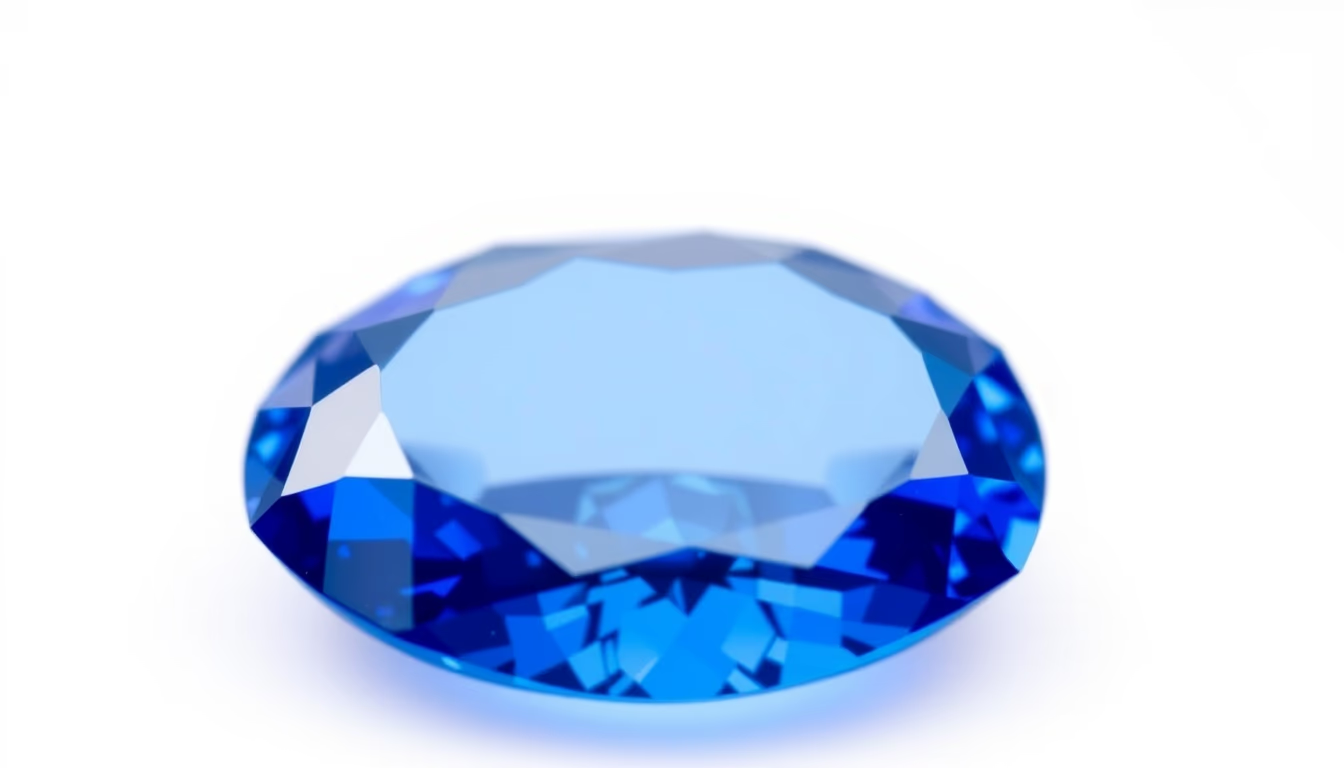
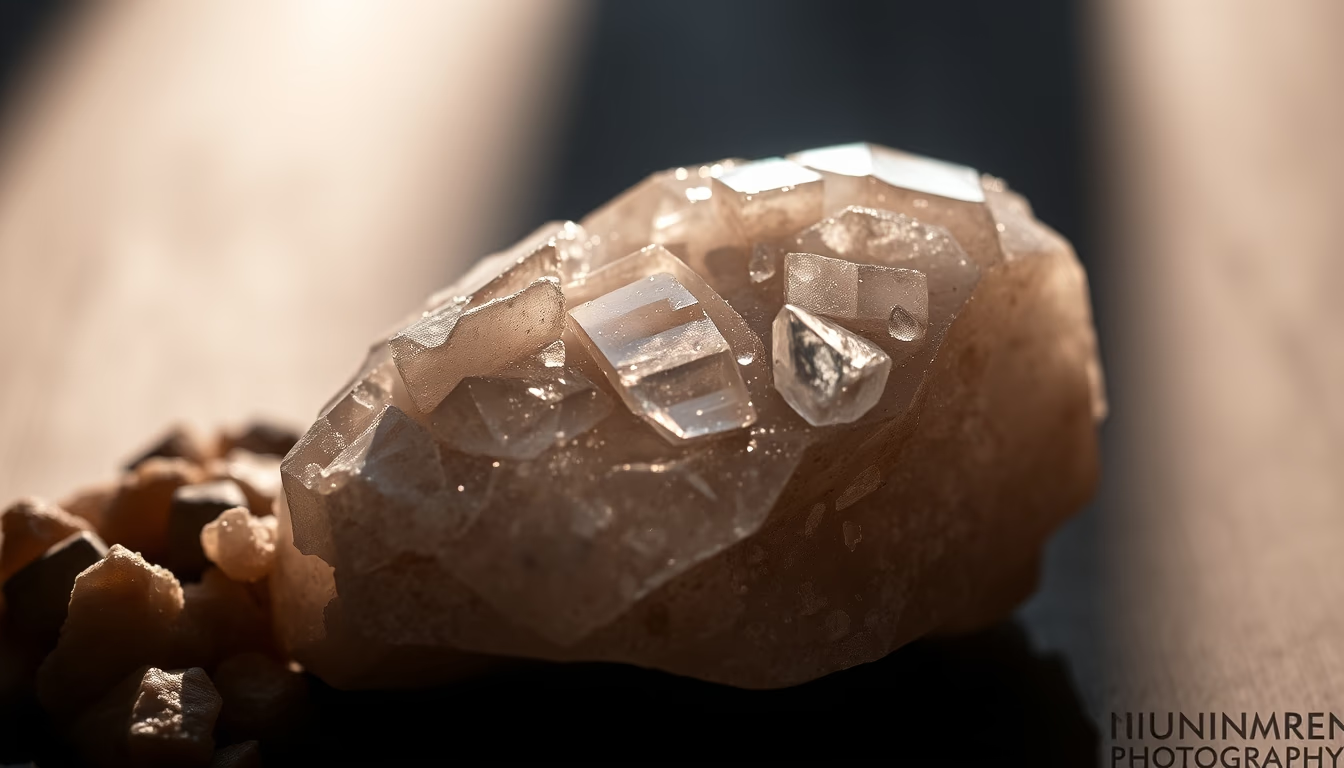
Topaz blue gemstone
1344×768 · AVIF · CC BY 4.0
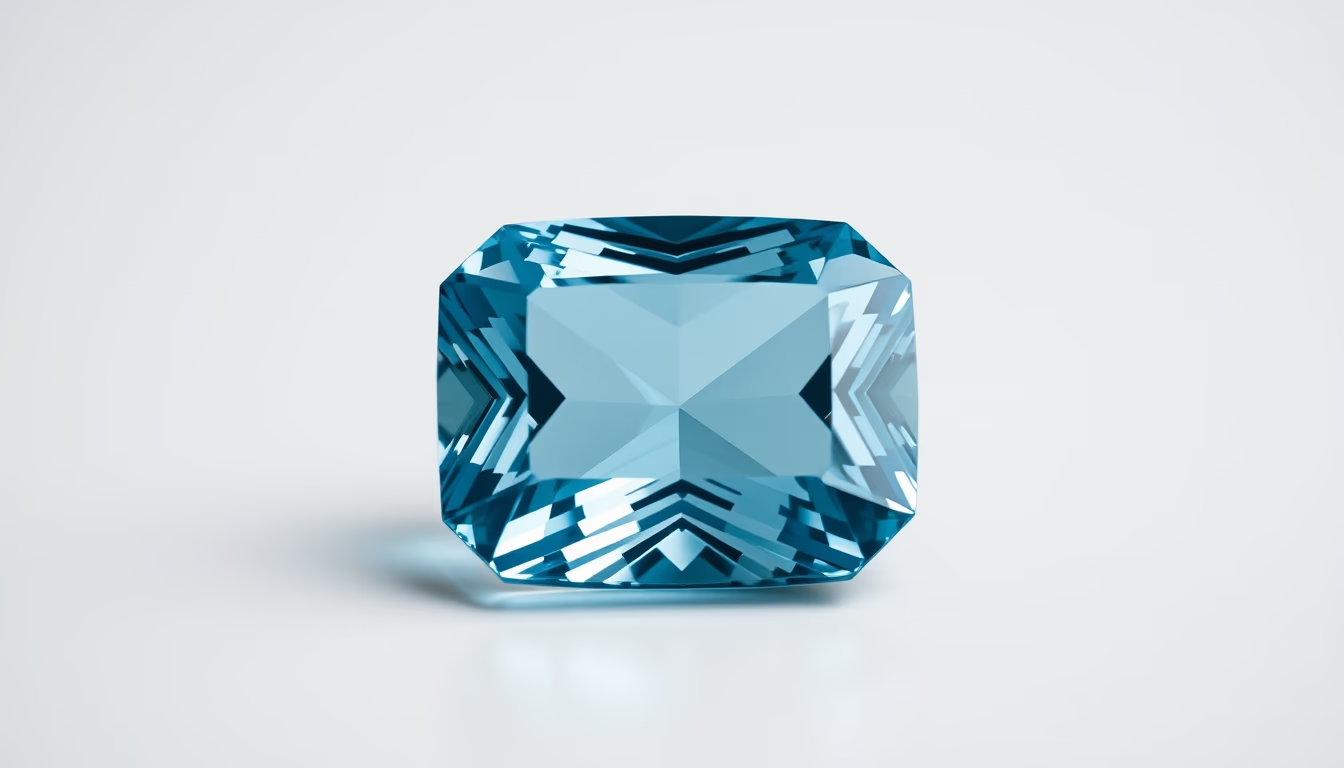
Blue topaz is one of the world's most popular gemstones, known for its vibrant hue and exceptional clarity, often achieved through treatments on naturally colorless stones.
About this subject
Topaz is a silicate mineral of aluminum and fluorine, with the chemical formula Al2SiO4(F,OH)2. Its hardness of 8 on the Mohs scale makes it durable enough for everyday jewelry, though less hard than diamond. The name “topaz” has uncertain origins, possibly from the Greek “topazos” or Sanskrit “tapas” (fire).
Blue topaz rarely occurs naturally in an intense blue color. The vast majority of commercial blue topaz is produced by irradiating colorless or pale topaz followed by heat treatment. Brazil, especially the state of Minas Gerais, is the world’s largest producer of topaz, with historic deposits in Ouro Preto and Mariana. Other producing countries include Pakistan, Russia, and Sri Lanka.
Several blue topaz shades exist: “Sky Blue,” “Swiss Blue,” and “London Blue” are the most common, ranging from light to deep dark blue. London Blue is the darkest and most valuable. It is important to distinguish treated blue topaz from imperial topaz, which has a natural orange or pinkish color and is much rarer and pricier. Topaz is also frequently confused with aquamarine, but its higher density (3.5, 3.6 g/cm³) allows for differentiation.
A curiosity: the largest faceted blue topaz, weighing 9,381 carats, is housed at the Natural History Museum in London. The gem is the official state gem of Texas (USA) and is believed in esoteric circles to promote calmness and communication. For collectors and jewelers, blue topaz offers an affordable combination of beauty and durability, making it a popular alternative to sapphires and tanzanite.
Frequently Asked Questions
Is blue topaz natural?
Rarely. Most commercial blue topaz is produced by irradiating and heating colorless or very light topaz, as intense blue is extremely rare in nature.
What is the difference between blue topaz and aquamarine?
Both are blue gems, but topaz has a hardness of 8 and higher density (3.5, 3.6), while aquamarine (beryl) has hardness 7.5, 8 and lower density (2.6, 2.9). Aquamarine also tends to have a softer tone.
How should I care for blue topaz jewelry?
Avoid prolonged exposure to strong sunlight and excessive heat, as it may alter color in some treated varieties. Clean with warm water and mild soap, avoiding ultrasonic and steam cleaners.
Direct URL
https://pub-c7d6a6ea828543ac903a74a341ccb2e1.r2.dev/imagens/topaz-blue-gemstone-studio-still-life-p4.avifHow to credit
Include a visible link back to UtilizAí. Copy one of the snippets below:
<a href="https://xn--utiliza-eza.com/en/midia/imagens/topaz-blue-gemstone-studio-still-life-p4">Topaz blue gemstone</a> by <a href="https://xn--utiliza-eza.com">UtilizAí</a>, licensed under <a href="https://creativecommons.org/licenses/by/4.0/">CC BY 4.0</a>.
[Topaz blue gemstone](https://xn--utiliza-eza.com/en/midia/imagens/topaz-blue-gemstone-studio-still-life-p4) by [UtilizAí](https://xn--utiliza-eza.com), CC BY 4.0
License: CC-BY-4.0