Tin soldier set
1344×768 · AVIF · CC BY 4.0
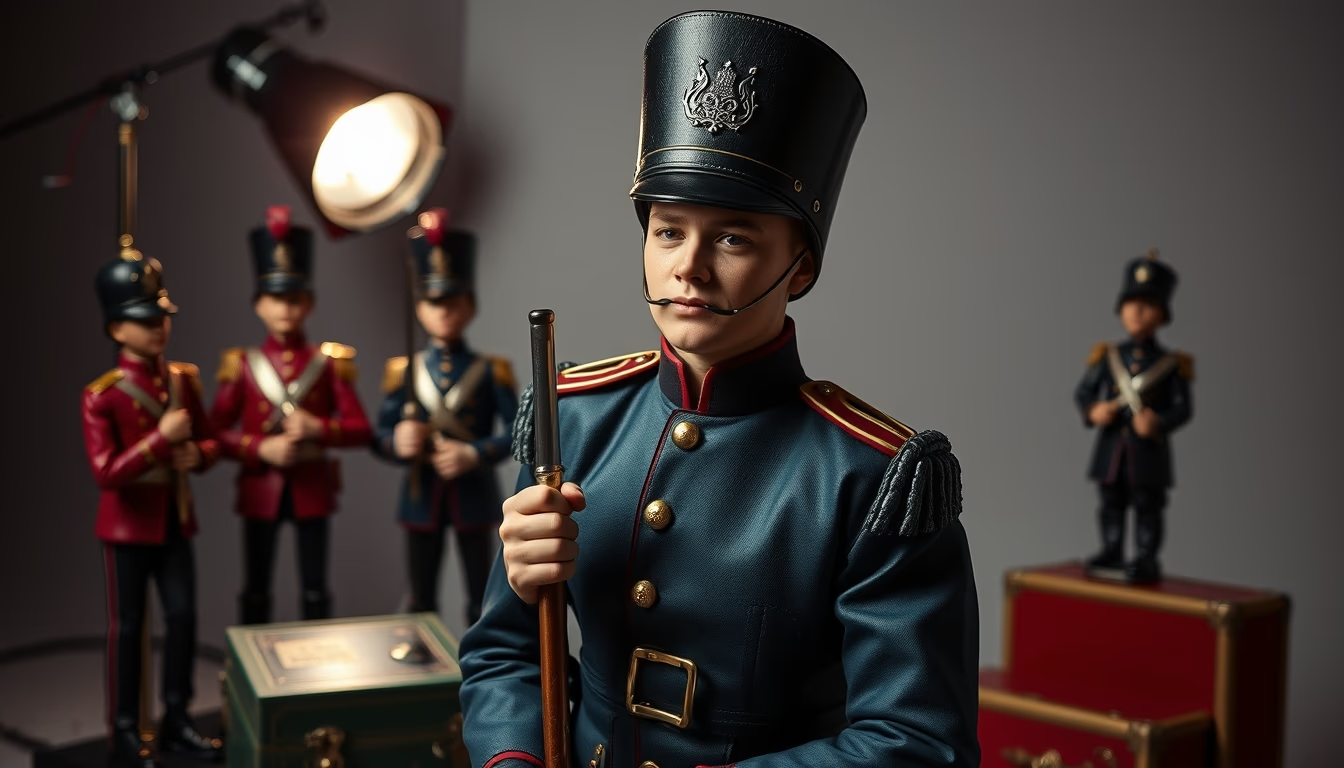
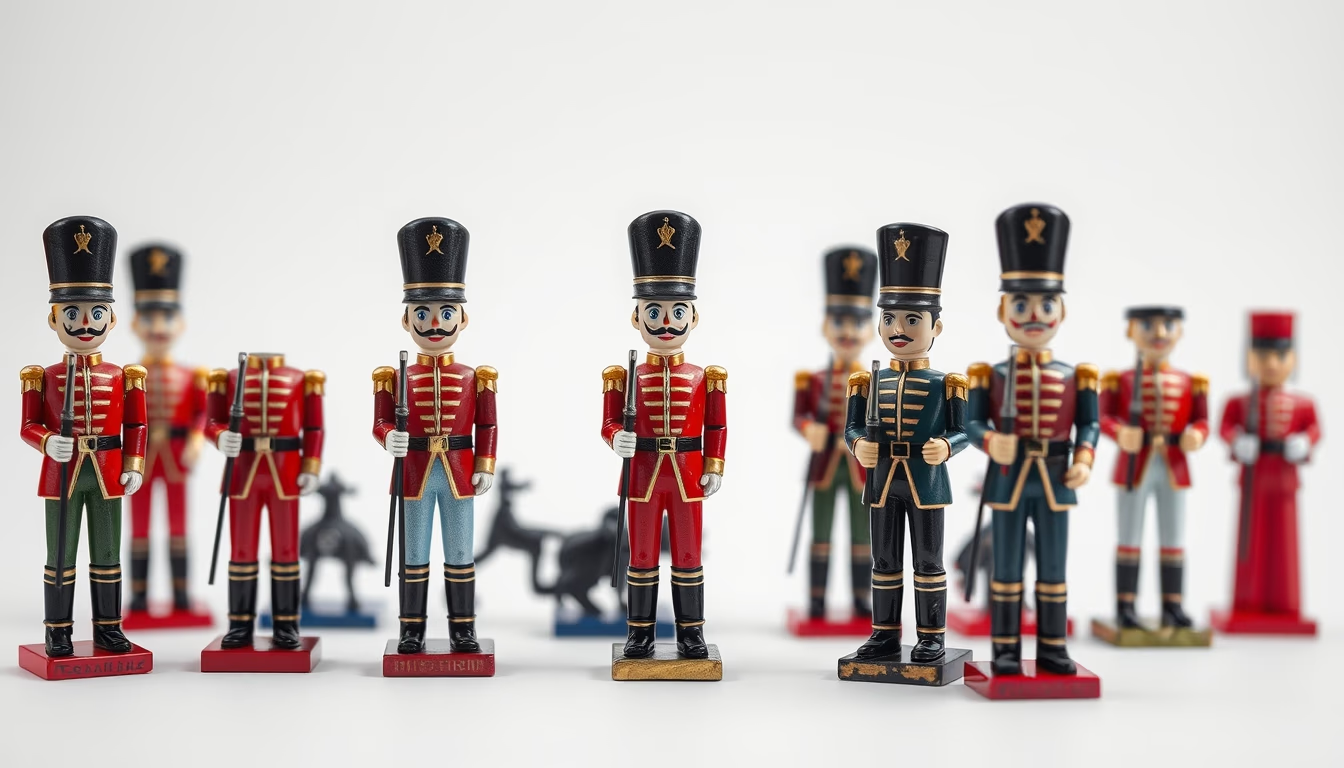
Set of tin soldiers, classic toy from the 19th century, still collected for its historical and craftsmanship value.
About this subject
Tin soldiers originated in Germany in the late 18th century, with the first flat figures known as "flache Figuren". Manufacturers such as Heyde (Dresden) and later Lineol popularized the toy, which spread across Europe. The figures were cast in tin or lead, hand-painted with precise military details. They represented real armies, such as Napoleonic soldiers or American Civil War uniforms, and were used by both children and adults for battle simulations and tactical study.
Culturally, tin soldiers marked generations as an educational toy and collectible. In Brazil, they arrived in the 20th century and became popular among boys, though today they are niche items. Collecting these pieces is strong worldwide: there are conventions, fairs, and dedicated societies, such as the Tin Soldier Collectors Association. Rare 19th-century pieces can fetch thousands of dollars, especially if well-preserved with original paint.
A technical curiosity is that lead was replaced by safer alloys from the 1960s onward due to toxicity risks. Common scales are 1:32 (54 mm) and 1:72 (20 mm), but various sizes exist. Artisanal production still continues, with restorers and creators using traditional methods. Historic brands like Britains (UK), Mignot (France), and Elastolin (Germany) are benchmarks in the market.
Frequently Asked Questions
How to identify antique tin soldiers?
Check the base: old pieces often have flat bases or small casting burrs. Hand-painted details with vivid colors and no modern irregularities are also indicators. Look for manufacturer marks engraved on the underside.
What is the most common scale for tin soldiers?
The 1:32 scale (54 mm) is the most traditional for infantry figures, while 1:72 (20 mm) is common for dioramas and mass battles. Larger scales like 1:16 (100 mm) exist for mounted officers.
Why was lead banned in the manufacture of toy soldiers?
Lead is toxic, especially for children who might put pieces in their mouths. From the 1960s onward, many countries banned its use in toys, leading to substitution with tin alloys, zamac, or plastic.
Direct URL
https://pub-c7d6a6ea828543ac903a74a341ccb2e1.r2.dev/imagens/tin-soldier-set-studio-editorial-portrait-fresh11.avifHow to credit
Include a visible link back to UtilizAí. Copy one of the snippets below:
<a href="https://xn--utiliza-eza.com/en/midia/imagens/tin-soldier-set-studio-editorial-portrait-fresh11">Tin soldier set</a> by <a href="https://xn--utiliza-eza.com">UtilizAí</a>, licensed under <a href="https://creativecommons.org/licenses/by/4.0/">CC BY 4.0</a>.
[Tin soldier set](https://xn--utiliza-eza.com/en/midia/imagens/tin-soldier-set-studio-editorial-portrait-fresh11) by [UtilizAí](https://xn--utiliza-eza.com), CC BY 4.0
License: CC-BY-4.0