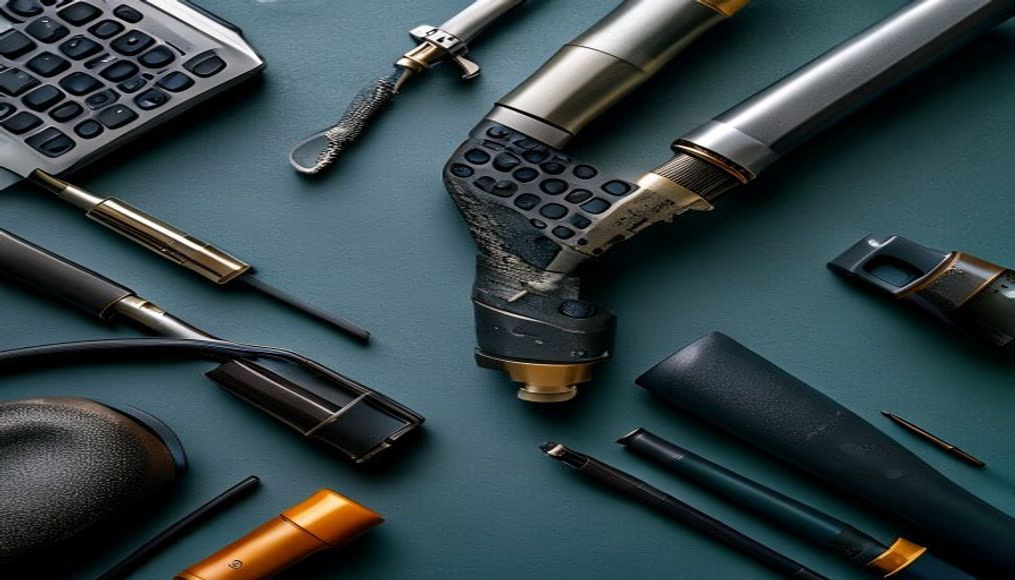
Thermal paste application
1344×768 · AVIF · CC BY 4.0

Thermal paste application is crucial for heat transfer between processors and heatsinks, preventing overheating and ensuring performance.
About this subject
Thermal paste, also known as thermal compound, is a heat-conductive material applied between a processor (CPU or GPU) and its heatsink or cooler. Its main role is to fill microscopic imperfections on metal surfaces, eliminating air gaps that act as thermal insulators. Without it, heat generated by the chip would not be efficiently dissipated, leading to thermal throttling and potential permanent damage.
There are several types of thermal paste: silicone-based compounds are common and inexpensive. Ceramic-based pastes offer good conductivity with no risk of electrical shorts. Metal-based pastes, containing silver or aluminum, provide superior conductivity but are electrically conductive, requiring careful application. The choice depends on budget and thermal performance needs.
Correct application is debated: the pea-sized dot method placing a small drop in the center of the processor, letting cooler pressure spread it, is widely recommended. Others prefer manual spreading with a card or the X-pattern. Excess paste does not improve conductivity and may leak, while too little creates hot spots.
Thermal paste degrades over time, drying or pumping out from the interface. Reapplication every 2-3 years is recommended, especially in high-performance or overclocked systems. Ideal processor temperatures are around 30-40°C at idle and up to 80°C under load, depending on the model.
Frequently Asked Questions
How often should I reapply thermal paste?
Every 2 to 3 years, or if you notice rising temperatures without other causes. Systems with overclocking or heavy use may need more frequent reapplication.
What is the best application method for a CPU?
The pea-sized dot method (a small drop in the center) is most recommended. The cooler's pressure spreads the paste evenly.
Can conductive thermal paste cause a short circuit?
Yes, metal-based pastes with silver or aluminum are electrically conductive. If they leak onto pins or circuits, they can cause shorts. Ceramic or silicone pastes are non-conductive.
Direct URL
https://pub-c7d6a6ea828543ac903a74a341ccb2e1.r2.dev/imagens/thermal-paste-application-long-exposure-p0.avifHow to credit
Include a visible link back to UtilizAí. Copy one of the snippets below:
<a href="https://xn--utiliza-eza.com/en/midia/imagens/thermal-paste-application-long-exposure-p0">Thermal paste application</a> by <a href="https://xn--utiliza-eza.com">UtilizAí</a>, licensed under <a href="https://creativecommons.org/licenses/by/4.0/">CC BY 4.0</a>.
[Thermal paste application](https://xn--utiliza-eza.com/en/midia/imagens/thermal-paste-application-long-exposure-p0) by [UtilizAí](https://xn--utiliza-eza.com), CC BY 4.0
License: CC-BY-4.0