Thermal paste application
1344×768 · AVIF · CC BY 4.0
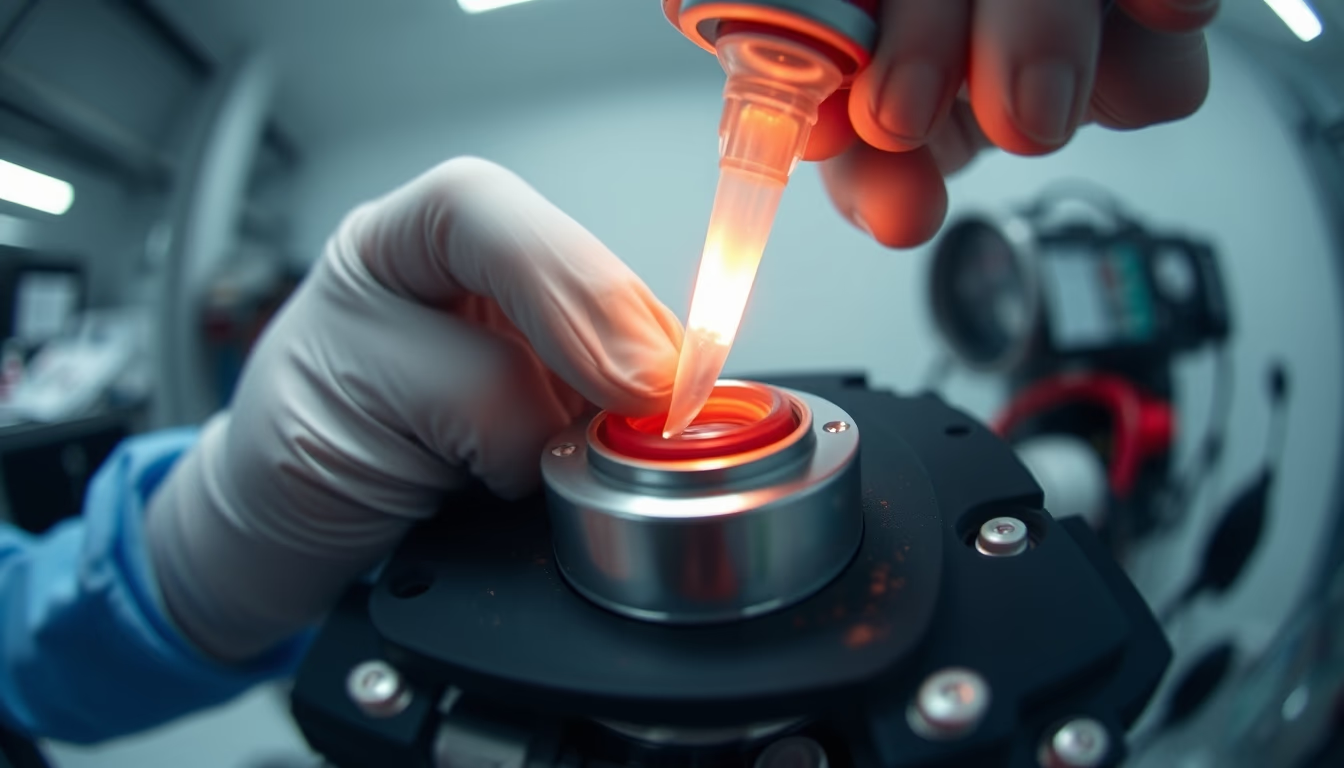
Thermal paste application on a CPU: understand the importance of the compound for heat transfer between processor and heatsink.
About this subject
Thermal paste, also known as thermal compound or thermal grease, is an essential material in processor cooling. Its primary role is to fill microscopic gaps between the CPU die and the heatsink base, ensuring efficient heat transfer. Without it, air pockets would act as thermal insulators, raising processor temperatures and reducing performance or lifespan.
There are different types of thermal paste: ceramic-based pastes are the most common and are electrically non-conductive; metallic pastes (with silver or aluminum) offer higher thermal conductivity but are conductive and require care to avoid short circuits. Carbon or synthetic diamond pastes are among the most effective, with thermal conductivity above 10 W/mK. The choice depends on application: overclocking, servers, or everyday use.
Correct application is a debated topic among builders. Methods like the pea-sized dot, the cross pattern, or spreading with a spatula have proponents. The pea method (a small dot in the center) is often recommended because the cooler's pressure spreads the paste evenly for rectangular processors. Too much paste can cause squeezing out, while too little leaves areas uncovered.
Studies show that the temperature difference between ideal and poor application can reach 5°C to 10°C. Additionally, thermal paste degrades over time due to thermal cycling. Manufacturers suggest replacement every 2 to 3 years, or whenever the cooler is removed. High-quality pastes like Arctic MX-4 or Noctua NT-H1 maintain effectiveness for longer periods.
Frequently Asked Questions
What is the best method to apply thermal paste?
The pea method is most recommended: a small dot (size of a grain of rice) in the center, which the cooler's pressure spreads evenly. For rectangular CPUs (typical Intel), a thin line along the center also works.
How often should I replace thermal paste?
Generally every 2 to 3 years, or whenever you remove the cooler. If you notice higher than normal temperatures, the paste may be dried out.
Does thermal paste expire? What are the risks of using old paste?
Yes, it loses properties over time. Old paste can dry out, crack, and reduce cooling efficiency, raising CPU temperatures.
Direct URL
https://pub-c7d6a6ea828543ac903a74a341ccb2e1.r2.dev/imagens/thermal-paste-application-fish-eye-wide-angle-p2.avifHow to credit
Include a visible link back to UtilizAí. Copy one of the snippets below:
<a href="https://xn--utiliza-eza.com/en/midia/imagens/thermal-paste-application-fish-eye-wide-angle-p2">Thermal paste application</a> by <a href="https://xn--utiliza-eza.com">UtilizAí</a>, licensed under <a href="https://creativecommons.org/licenses/by/4.0/">CC BY 4.0</a>.
[Thermal paste application](https://xn--utiliza-eza.com/en/midia/imagens/thermal-paste-application-fish-eye-wide-angle-p2) by [UtilizAí](https://xn--utiliza-eza.com), CC BY 4.0
License: CC-BY-4.0