Thermal paste application
1344×768 · AVIF · CC BY 4.0
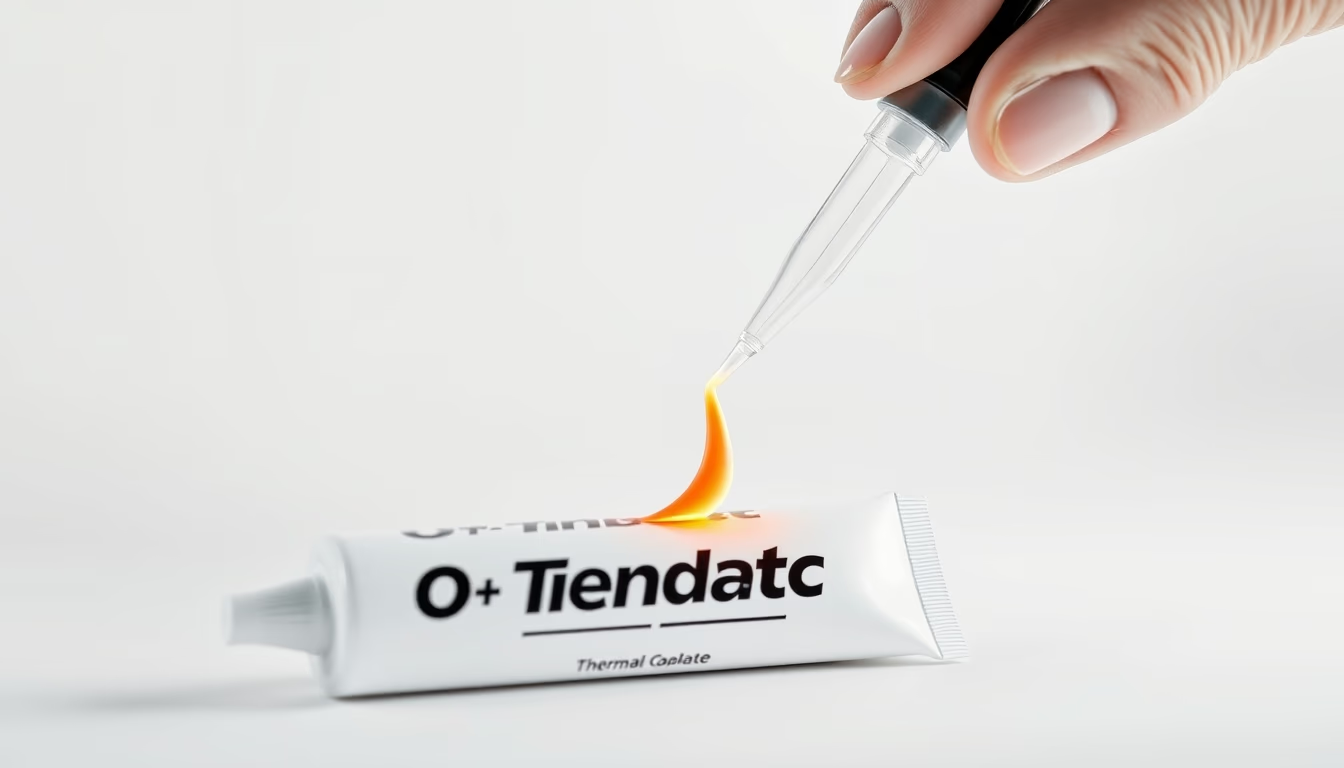
Proper thermal paste application is critical for heat transfer between processor and cooler, preventing overheating and ensuring performance.
About this subject
Thermal paste, also known as thermal compound, is a heat-conductive material applied between the processor (CPU or GPU) surface and the cooler base. Its primary purpose is to fill microscopic imperfections on both surfaces, eliminating air pockets that act as insulators. Without it, heat generated by the chip would not be dissipated efficiently, leading to high temperatures, performance throttling, and even permanent damage.
There are several application methods: the most common is placing a small dot in the center of the processor (rice grain method) and letting the cooler pressure spread the paste. Others prefer manual spreading with a spatula or using an X pattern. The ideal amount is about the size of a pea; excess can cause leakage or reduce efficiency, while insufficient paste leaves uncovered areas. High-quality pastes, such as those with silver or ceramic compounds, offer superior thermal conductivity, but all degrade over time and with heat, requiring reapplication every few years.
The choice of thermal paste depends on the use case: for overclocking, pastes with high conductivity (above 8 W/mK) are recommended; for standard systems, silicone or ceramic pastes suffice. It is important to note that liquid metal pastes are electrically conductive and require extreme caution to avoid short circuits. The application process is simple yet fundamental for hardware longevity, being one of the first steps in computer assembly or maintenance.
Frequently Asked Questions
How much thermal paste should I use on a CPU?
A pea-sized drop (about 0.5 grams) in the center is ideal. The cooler's pressure will spread it evenly.
How often should thermal paste be replaced?
Every 2 to 3 years, or whenever you remove the cooler. If CPU temperatures are high, consider reapplying sooner.
What is the difference between ceramic and liquid metal thermal paste?
Ceramic pastes are electrically non-conductive and safer, with moderate thermal conductivity. Liquid metal offers excellent conductivity but is conductive and can cause short circuits if spilled.
Direct URL
https://pub-c7d6a6ea828543ac903a74a341ccb2e1.r2.dev/imagens/thermal-paste-application-commercial-product-photography-p12.avifHow to credit
Include a visible link back to UtilizAí. Copy one of the snippets below:
<a href="https://xn--utiliza-eza.com/en/midia/imagens/thermal-paste-application-commercial-product-photography-p12">Thermal paste application</a> by <a href="https://xn--utiliza-eza.com">UtilizAí</a>, licensed under <a href="https://creativecommons.org/licenses/by/4.0/">CC BY 4.0</a>.
[Thermal paste application](https://xn--utiliza-eza.com/en/midia/imagens/thermal-paste-application-commercial-product-photography-p12) by [UtilizAí](https://xn--utiliza-eza.com), CC BY 4.0
License: CC-BY-4.0