Temple columns ancient
1344×768 · AVIF · CC BY 4.0
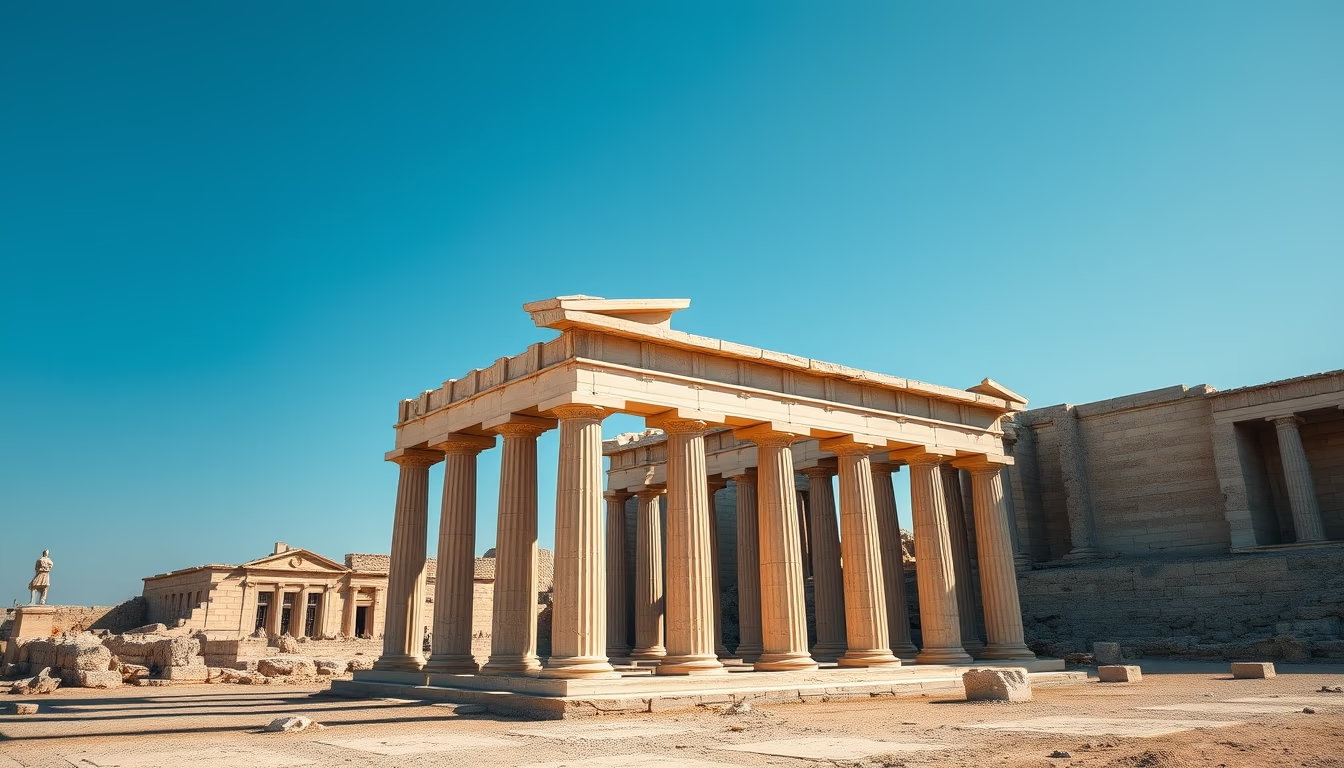
Ancient temple columns are architectural elements that upheld beliefs, power, and art of civilizations such as Egyptian, Greek, and Roman.
About this subject
Ancient temple columns are far more than structural supports; they carry centuries of symbolism and technical innovation. In Ancient Egypt, the columns of Karnak Temple, with capitals shaped like papyrus or lotus, rose over 20 meters tall and were carved from sandstone. They represented the primordial vegetation of the creation myth, connecting the temple to the cosmos. In Classical Greece, the architectural orders Doric, Ionic, and Corinthian defined mathematical proportions that influence architecture to this day. The Parthenon, for example, uses fluted Doric columns with entasis, a slight swelling in the shaft, to create an illusion of visual perfection.
The Romans inherited and expanded these styles, adding the Composite order and using concrete to erect structures like the Pantheon, whose monolithic Corinthian columns of Egyptian granite weigh about 60 tons each. Beyond structural function, columns were often adorned with narrative reliefs or inscriptions recording military victories and royal decrees. In the Temple of Hatshepsut, columns with Hathor-headed capitals blend religion and political propaganda.
Preservation of these columns varies by material and climate. While Greek marble withstands weathering better, Egyptian sandstone is more susceptible to wind erosion. Many columns were reused in later buildings, such as St. Peter’s Basilica, which incorporates columns from the Temple of Jupiter. Today, visitors and archaeologists study these structures to understand techniques of carving, transport, and assembly that challenged pre-industrial engineering.
Interestingly, the original colors of Greek and Roman columns were vibrant, with red, blue, and gold pigments, contrasting with today’s white marble image. Recent discoveries using ultraviolet light and chemical analysis have revealed traces of paint on the capitals of the Temple of Olympian Zeus and the Pantheon, changing historical perception of classical aesthetics.
Frequently Asked Questions
What is the difference between Doric, Ionic, and Corinthian orders?
The Doric order is the simplest, with sturdy columns without a base and a plain capital. The Ionic features capitals with volutes (spirals) and slender columns. The Corinthian is the most ornate, with capitals decorated by acanthus leaves.
Why do some ancient columns have vertical flutes?
Flutes, common in Greek and Roman columns, reduced the column’s weight, created light-and-shadow effects to enhance form, and helped disguise imperfections in the marble.
How were Egyptian columns transported and erected?
Egyptian columns were carved in quarries near the Nile, transported by barge during the river’s flood season, and erected using earth ramps and wooden levers, sometimes with hundreds of workers.
Direct URL
https://pub-c7d6a6ea828543ac903a74a341ccb2e1.r2.dev/imagens/temple-columns-ancient-studio-editorial-portrait-p5.avifHow to credit
Include a visible link back to UtilizAí. Copy one of the snippets below:
<a href="https://xn--utiliza-eza.com/en/midia/imagens/temple-columns-ancient-studio-editorial-portrait-p5">Temple columns ancient</a> by <a href="https://xn--utiliza-eza.com">UtilizAí</a>, licensed under <a href="https://creativecommons.org/licenses/by/4.0/">CC BY 4.0</a>.
[Temple columns ancient](https://xn--utiliza-eza.com/en/midia/imagens/temple-columns-ancient-studio-editorial-portrait-p5) by [UtilizAí](https://xn--utiliza-eza.com), CC BY 4.0
License: CC-BY-4.0