Telescope observatory dome
1344×768 · AVIF · CC BY 4.0
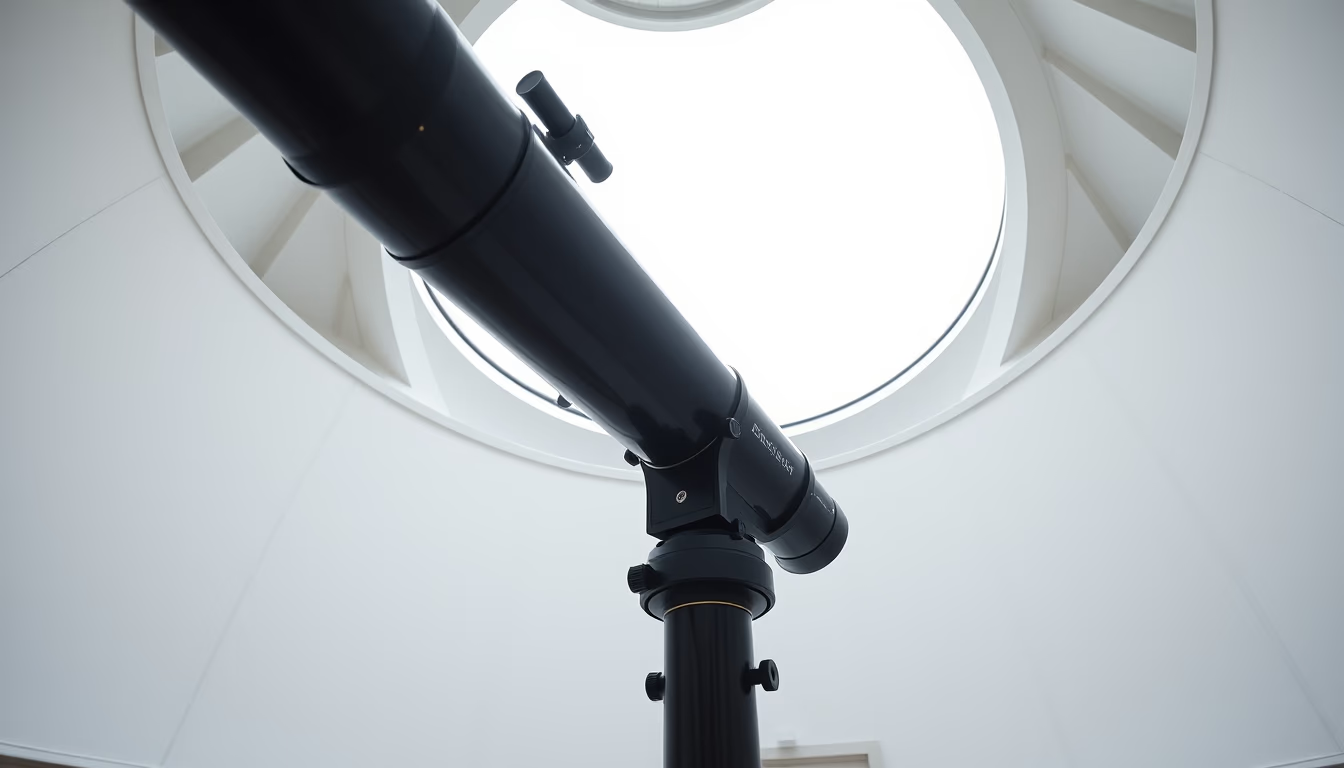
Observatory domes house telescopes and protect sensitive instruments from weather, serving as iconic symbols of modern astronomy.
About this subject
Observatory domes are hemispherical rotating structures designed to house optical telescopes, radio telescopes, or other astronomical instruments. Their rounded shape minimizes air turbulence around the telescope, reducing distortions in observations. The aperture in the dome, typically a slit that opens completely, allows the instrument to point at different sky regions. Famous examples include the Mauna Kea Observatory in Hawaii and the Very Large Telescope (VLT) in Chile, both located at high altitudes with low light pollution.
Historically, the first domes appeared in the 19th century, such as at the Pulkovo Observatory in Russia, built for refractor telescopes. The evolution of materials, from cast iron to aluminum and fiberglass, enabled lighter, more precise domes. Modern domes, like those at the James Webb Space Telescope ground test facilities, integrate automated opening and closing systems with wind and temperature sensors.
Fun fact: the largest optical observatory dome in the world is at the Hale Telescope in Palomar Observatory, California, with a 41-meter diameter. It weighs about 1,000 tons but can be moved with millimeter precision thanks to a hydraulic bearing system. The white color of domes is not aesthetic: it reflects sunlight to prevent overheating during the day, maintaining thermal balance with the night.
In Brazil, the National Observatory in Rio de Janeiro features historic domes from the 20th century. The Pico dos Dias Observatory, in Minas Gerais, operates with modern domes for astrophysical research. These structures symbolize humanity's quest for knowledge, bridging engineering, architecture, and science.
Frequently Asked Questions
Why are observatory domes always white?
The white color reflects sunlight during the day, preventing excessive heating inside. At night, the structure cools quickly, maintaining the thermal stability needed for precise astronomical observations.
What is the largest observatory dome in the world?
The largest optical observatory dome is at the Hale Telescope, Palomar Observatory, California, with a 41-meter diameter and about 1,000 tons.
How do domes move to track celestial objects?
Domes have motorized rotation systems supported by bearings or wheels that allow horizontal movement. The slit opens in the desired direction, and the internal telescope handles fine pointing.
Direct URL
https://pub-c7d6a6ea828543ac903a74a341ccb2e1.r2.dev/imagens/telescope-observatory-dome-minimalist-composition-p4.avifHow to credit
Include a visible link back to UtilizAí. Copy one of the snippets below:
<a href="https://xn--utiliza-eza.com/en/midia/imagens/telescope-observatory-dome-minimalist-composition-p4">Telescope observatory dome</a> by <a href="https://xn--utiliza-eza.com">UtilizAí</a>, licensed under <a href="https://creativecommons.org/licenses/by/4.0/">CC BY 4.0</a>.
[Telescope observatory dome](https://xn--utiliza-eza.com/en/midia/imagens/telescope-observatory-dome-minimalist-composition-p4) by [UtilizAí](https://xn--utiliza-eza.com), CC BY 4.0
License: CC-BY-4.0