Telescope observatory dome
1344×768 · AVIF · CC BY 4.0
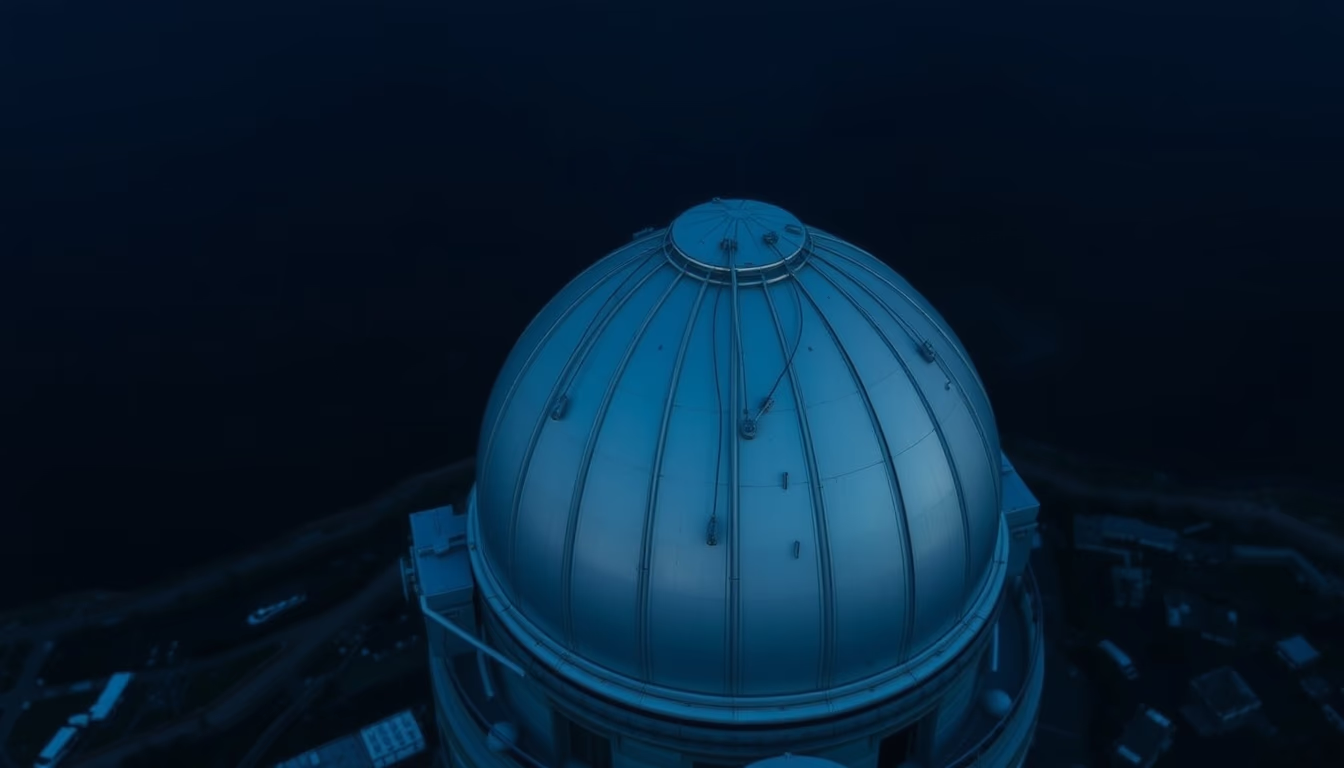
Astronomical observatory dome seen from above: an iconic structure of global space research, symbol of humanity's quest for the cosmos.
About this subject
Astronomical observatories are facilities dedicated to the study of celestial bodies. The dome, typically a hemispherical rotating structure, protects the telescope from weather while allowing precise openings for observations. These buildings emerged in the 19th century, with notable examples such as the Royal Observatory in Greenwich, London, and Pulkovo Observatory in Russia. Today, major centers like Mauna Kea Observatory in Hawaii and the Very Large Telescope in Chile house multiple telescope domes.
Location is critical for an observatory. High-altitude sites with clear skies and low light pollution are preferred, such as the Atacama Desert in Chile and the Canary Islands. The dome not only shelters the equipment but also helps maintain internal thermal stability, minimizing distortions in captured light. The circular shape reduces wind resistance and facilitates rotation to track stars.
Modern domes use lightweight materials like aluminum and carbon fiber to allow fast, quiet movements. Some observatories, such as the Roque de los Muchachos Observatory on La Palma, have domes that open completely, exposing the telescope to open air. Computerized control systems enable the dome to automatically follow the telescope’s motion, ensuring the slit remains aligned.
Fun fact: the largest astronomical dome in the world is for the 40-meter telescope of the European Extremely Large Telescope (E-ELT), still under construction in Chile. It will be about 85 meters in diameter. Domes are iconic symbols of astronomy, recognizable even to non-specialists, representing humanity's gateway to the universe.
Frequently Asked Questions
What is the main function of an observatory dome?
To protect the telescope from adverse weather like rain, wind, and dust, while maintaining thermal stability and allowing precise rotation to track celestial objects.
How are the domes rotated to follow stars?
They are mounted on rail or roller systems with computer-controlled electric motors that synchronize the dome's movement with the telescope.
Where are some of the world's largest observatories located?
In the Atacama Desert (Chile), Hawaii (Mauna Kea), the Canary Islands (Spain), and Arizona (USA), all in high-altitude areas with low light pollution.
Direct URL
https://pub-c7d6a6ea828543ac903a74a341ccb2e1.r2.dev/imagens/telescope-observatory-dome-aerial-drone-shot-p2.avifHow to credit
Include a visible link back to UtilizAí. Copy one of the snippets below:
<a href="https://xn--utiliza-eza.com/en/midia/imagens/telescope-observatory-dome-aerial-drone-shot-p2">Telescope observatory dome</a> by <a href="https://xn--utiliza-eza.com">UtilizAí</a>, licensed under <a href="https://creativecommons.org/licenses/by/4.0/">CC BY 4.0</a>.
[Telescope observatory dome](https://xn--utiliza-eza.com/en/midia/imagens/telescope-observatory-dome-aerial-drone-shot-p2) by [UtilizAí](https://xn--utiliza-eza.com), CC BY 4.0
License: CC-BY-4.0