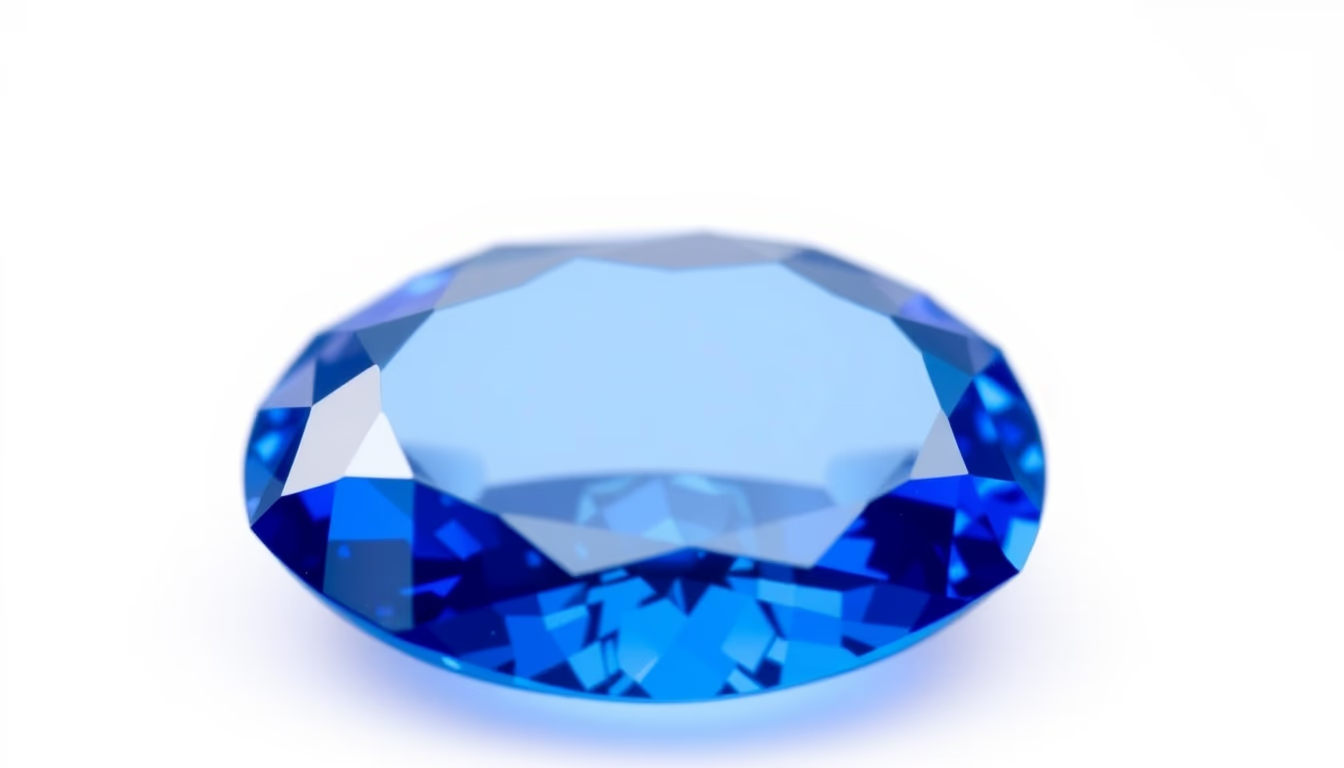
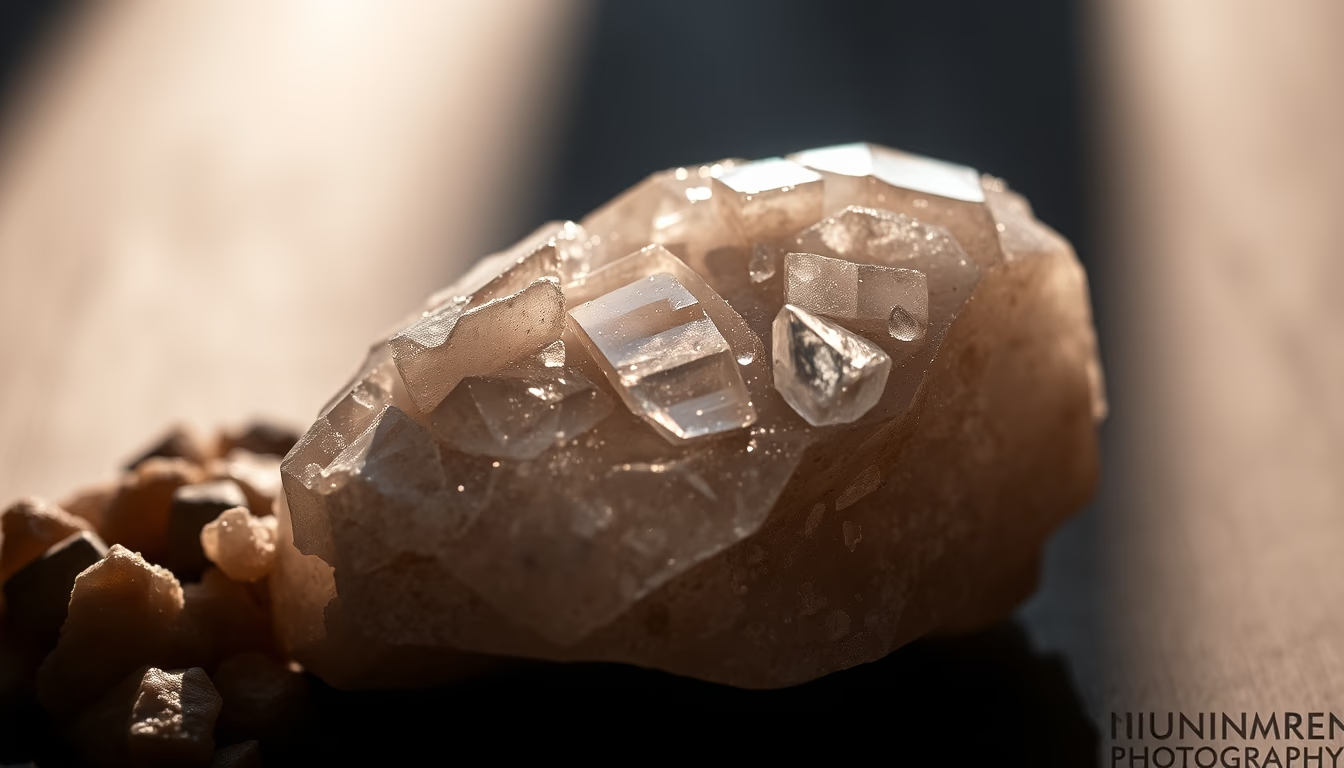
Tanzanite blue purple
1344×768 · AVIF · CC BY 4.0
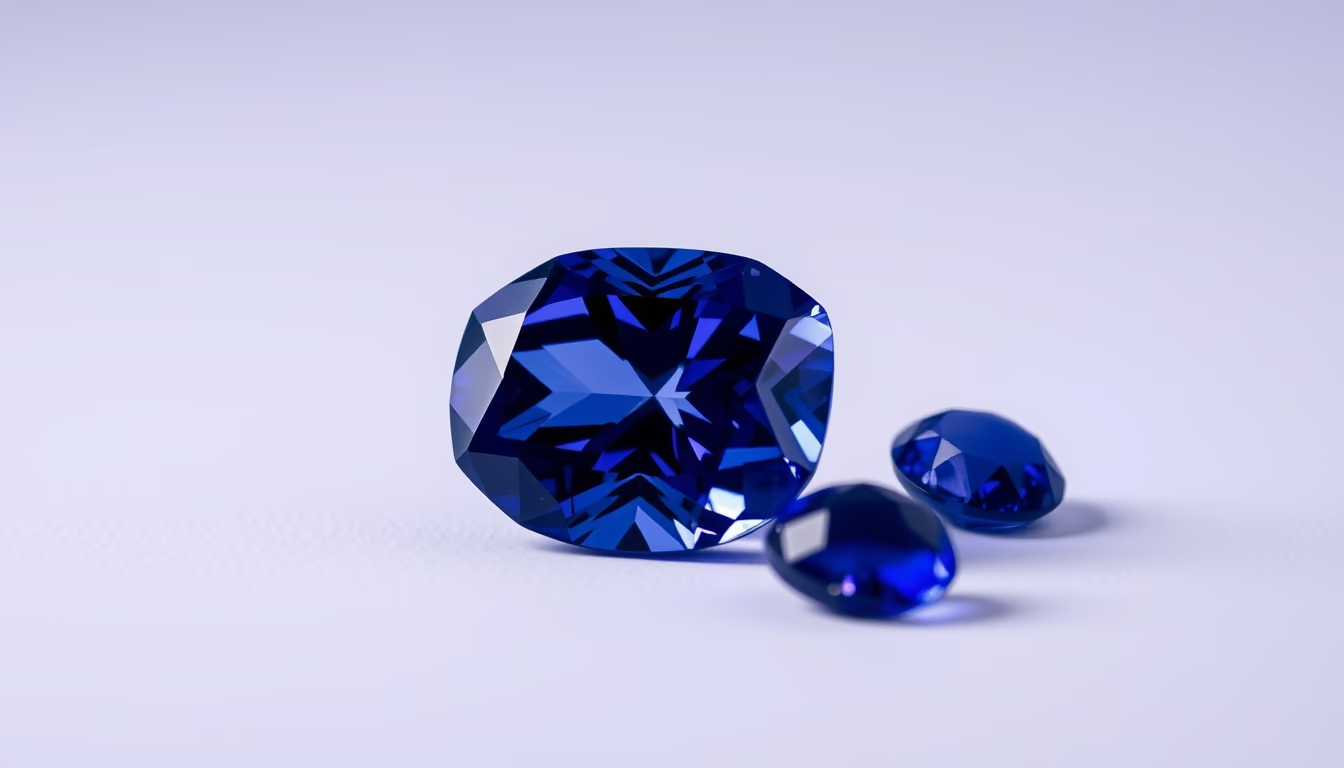
Tanzanite is a rare variety of the mineral zoisite, prized for its blue-to-violet color, and is found only in the foothills of Mount Kilimanjaro in Tanzania.
About this subject
Tanzanite is a stunning gemstone discovered in 1967 in the Mererani Hills of northern Tanzania, near the city of Arusha. It is a transparent blue-to-violet variety of zoisite, a mineral belonging to the silicate group. Its coveted color results from the presence of vanadium and chromium in its crystal structure, and it exhibits strong pleochroism: it can appear blue, violet, or red-purple depending on the viewing angle.
Geologically, tanzanite is found in only one location on Earth: a small area of about four square kilometers near Mount Kilimanjaro. This extreme rarity significantly drives its value. The gemstones are mined from alluvial deposits and hydrothermal veins. Given the limited reserves, it is estimated that commercial production could be exhausted within a few decades, adding to its allure.
Most tanzanite on the market undergoes heat treatment to enhance its blue-violet color. Controlled heating at around 500°C removes brownish or yellowish hues and intensifies the blue. On the Mohs scale, tanzanite has a hardness of 6.5 to 7, making it suitable for jewelry but requiring care to avoid scratches and impacts. It is commonly used in rings, earrings, and pendants.
Culturally, tanzanite has been marketed as an alternative to blue sapphire and is recognized as a December birthstone by some gemological organizations. Tiffany & Co. played a key role in promoting it globally after its discovery. In 2020, the Jewelers of America designated tanzanite as the 24th-anniversary gemstone. Its color is often described as 'blue-purple' or 'violet-blue,' and rare specimens with pure hues command very high prices.
Frequently Asked Questions
What is tanzanite?
Tanzanite is a transparent blue-to-violet variety of the mineral zoisite, discovered in 1967 in Tanzania. It is one of the rarest gemstones, found only in a small area near Mount Kilimanjaro.
Why is tanzanite blue and purple?
The color comes from vanadium and chromium in its crystal structure. Tanzanite is strongly pleochroic, showing blue, violet, and red-purple from different angles. Heat treatment is commonly used to enhance the blue and violet hues.
How should I care for tanzanite jewelry?
With a Mohs hardness of 6.5, 7, tanzanite is relatively soft. Avoid hard impacts, harsh chemicals, and sudden temperature changes. Clean with warm water and mild soap, using a soft brush. Store separately to prevent scratches.
Direct URL
https://pub-c7d6a6ea828543ac903a74a341ccb2e1.r2.dev/imagens/tanzanite-blue-purple-studio-still-life-p3.avifHow to credit
Include a visible link back to UtilizAí. Copy one of the snippets below:
<a href="https://xn--utiliza-eza.com/en/midia/imagens/tanzanite-blue-purple-studio-still-life-p3">Tanzanite blue purple</a> by <a href="https://xn--utiliza-eza.com">UtilizAí</a>, licensed under <a href="https://creativecommons.org/licenses/by/4.0/">CC BY 4.0</a>.
[Tanzanite blue purple](https://xn--utiliza-eza.com/en/midia/imagens/tanzanite-blue-purple-studio-still-life-p3) by [UtilizAí](https://xn--utiliza-eza.com), CC BY 4.0
License: CC-BY-4.0