Tanzanite blue purple
1344×768 · AVIF · CC BY 4.0
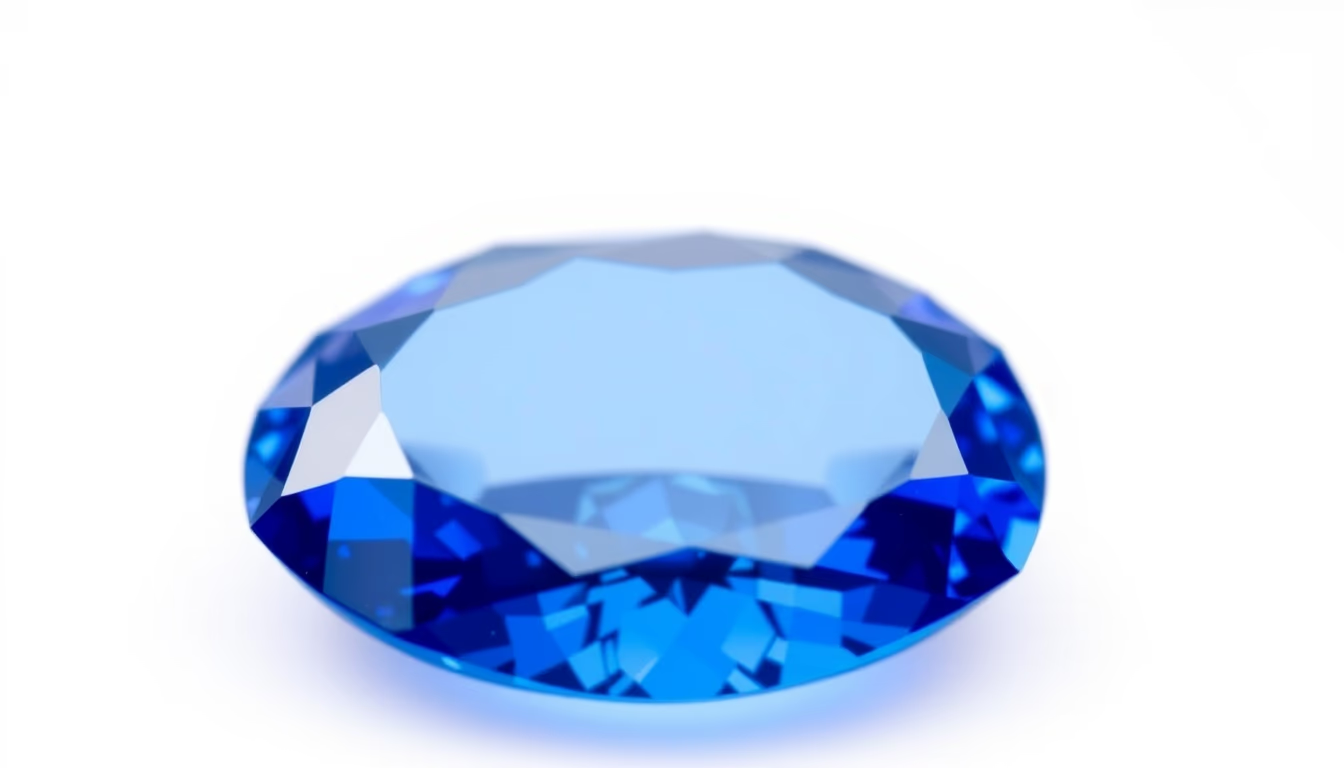
One of the rarest gemstones in the world, tanzanite displays an intense blue-purple color, found exclusively in Tanzania.
About this subject
Tanzanite is a variety of the mineral zoisite, renowned for its striking blue-purple color, ranging from violet to sapphire blue. Discovered in 1967 in the Merelani Hills of northern Tanzania, it is found only in this region, making it one of the rarest gemstones on Earth. Its characteristic color results from the presence of vanadium in its crystal structure, and the gem exhibits pleochroism, showing different hues when viewed from different angles.
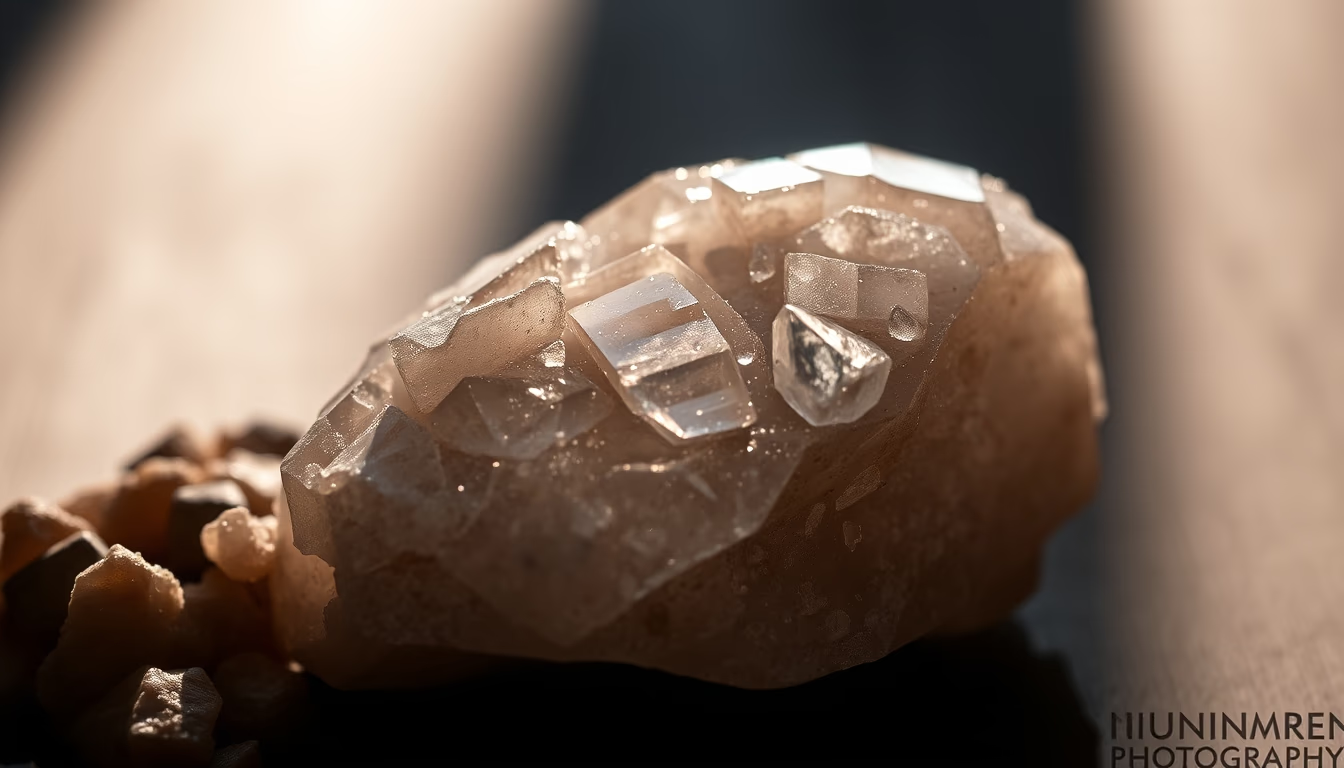
The discovery of tanzanite was made by a Maasai cattle herder, who found translucent crystals on the surface. The gem quickly gained worldwide fame after Tiffany & Co. promoted its unique beauty in the 1970s. Since then, tanzanite has become one of the most sought-after gems for fine jewelry, especially in engagement rings and necklaces. The Merelani area is the only known source, and mining is controlled by local cooperatives and international companies.
Geologically, tanzanite forms in high-pressure, high-temperature metamorphic rocks within hydrothermal veins. The gem is classified as a Type A precious stone, with color grades ranging from light blue to intense blue-purple. Heat treatment is common to enhance color and is accepted in the market. Due to its rarity and predicted depletion of reserves within a few decades, tanzanite is considered a valuable investment.
Culturally, tanzanite symbolizes transformation and renewal. It is the official birthstone for December (alternative to zircon) and is often associated with spiritual properties of balance and mental clarity. Due to its geographic exclusivity, it also represents Tanzania's national identity, promoted as a treasure of the country.
Frequently Asked Questions
Where is tanzanite found?
Tanzanite is found exclusively in the Merelani Hills of northern Tanzania, near Mount Kilimanjaro. There are no other known sources in the world.
What is the natural color of tanzanite?
The natural color of tanzanite ranges from light blue to intense blue-purple. It can exhibit pleochroism, showing different shades of blue, violet, and red when viewed from different angles.
Is tanzanite heat-treated?
Yes, most tanzanite on the market undergoes heat treatment to enhance the blue-purple color and remove brownish tones. This treatment is stable and widely accepted.
Direct URL
https://pub-c7d6a6ea828543ac903a74a341ccb2e1.r2.dev/imagens/tanzanite-blue-purple-long-exposure-p4.avifHow to credit
Include a visible link back to UtilizAí. Copy one of the snippets below:
<a href="https://xn--utiliza-eza.com/en/midia/imagens/tanzanite-blue-purple-long-exposure-p4">Tanzanite blue purple</a> by <a href="https://xn--utiliza-eza.com">UtilizAí</a>, licensed under <a href="https://creativecommons.org/licenses/by/4.0/">CC BY 4.0</a>.
[Tanzanite blue purple](https://xn--utiliza-eza.com/en/midia/imagens/tanzanite-blue-purple-long-exposure-p4) by [UtilizAí](https://xn--utiliza-eza.com), CC BY 4.0
License: CC-BY-4.0