Tanzanite blue purple
1344×768 · AVIF · CC BY 4.0
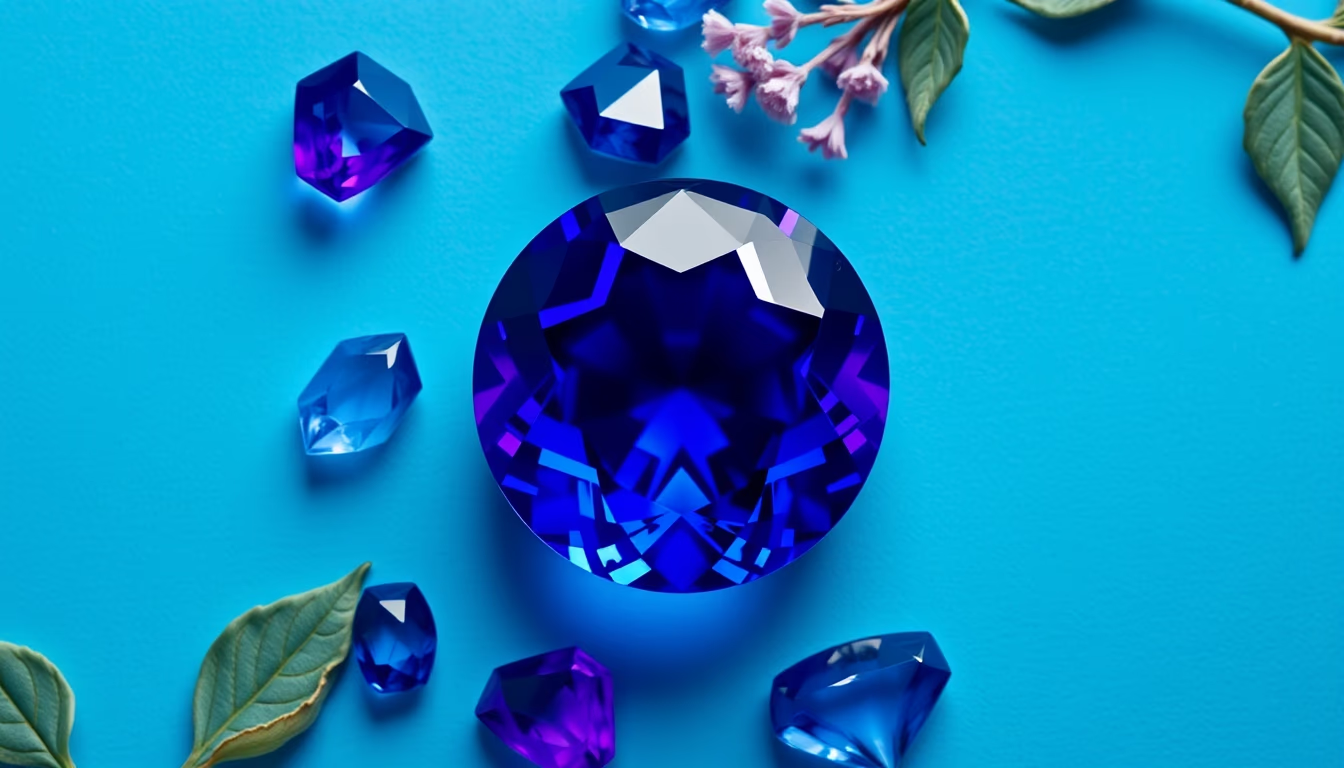
Tanzanite is a rare blue-violet gemstone discovered in Tanzania in 1967, highly prized for its beauty and scarcity.
About this subject
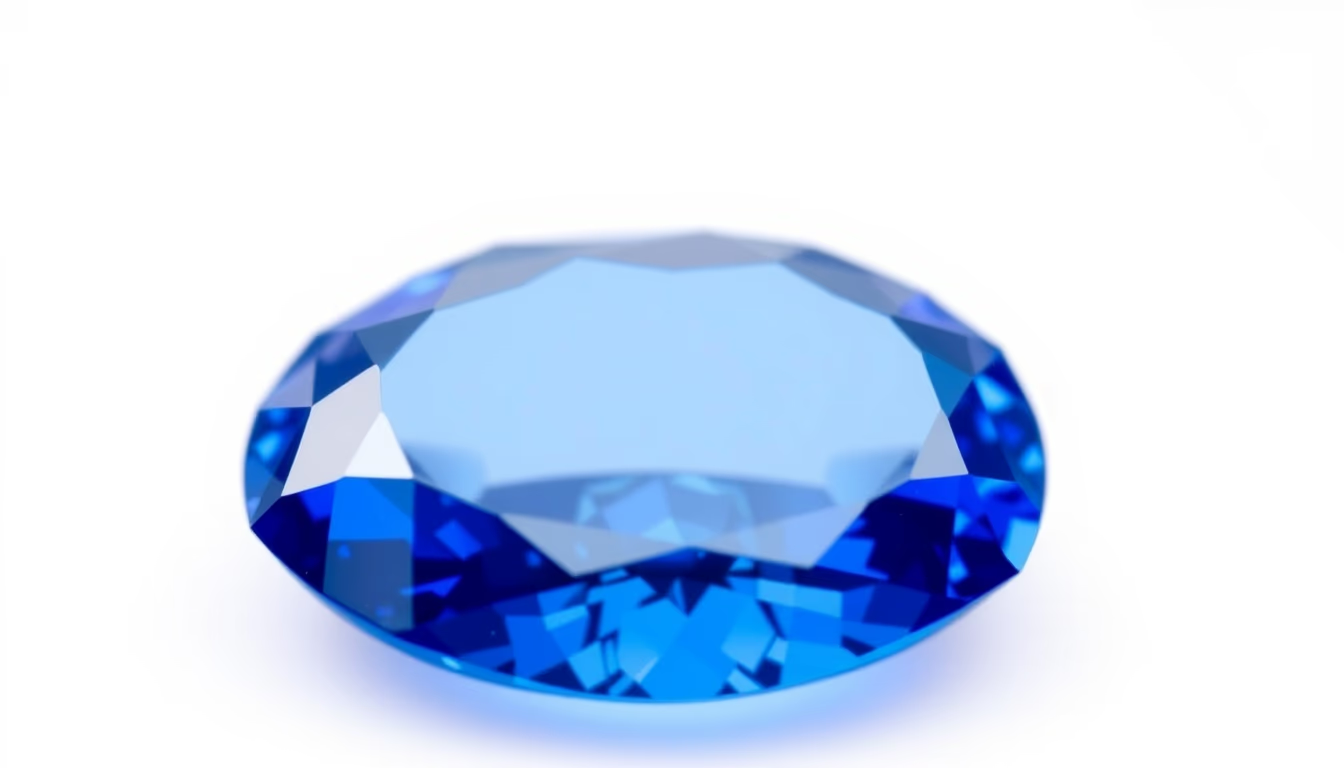
Tanzanite is a variety of the mineral zoisite, famed for its deep blue-violet hue ranging from sapphire blue to purple violet. Discovered in 1967 in the Merelani Hills near Mount Kilimanjaro, Tanzania, it is one of the most recent gemstones to enter the global precious stone market. Its unique color arises from vanadium and sometimes chromium content, often enhanced by heat treatment to intensify the blue tone. Tanzanite is found only in a small area of about 20 square kilometers, making it extremely rare, roughly a thousand times scarcer than diamond.
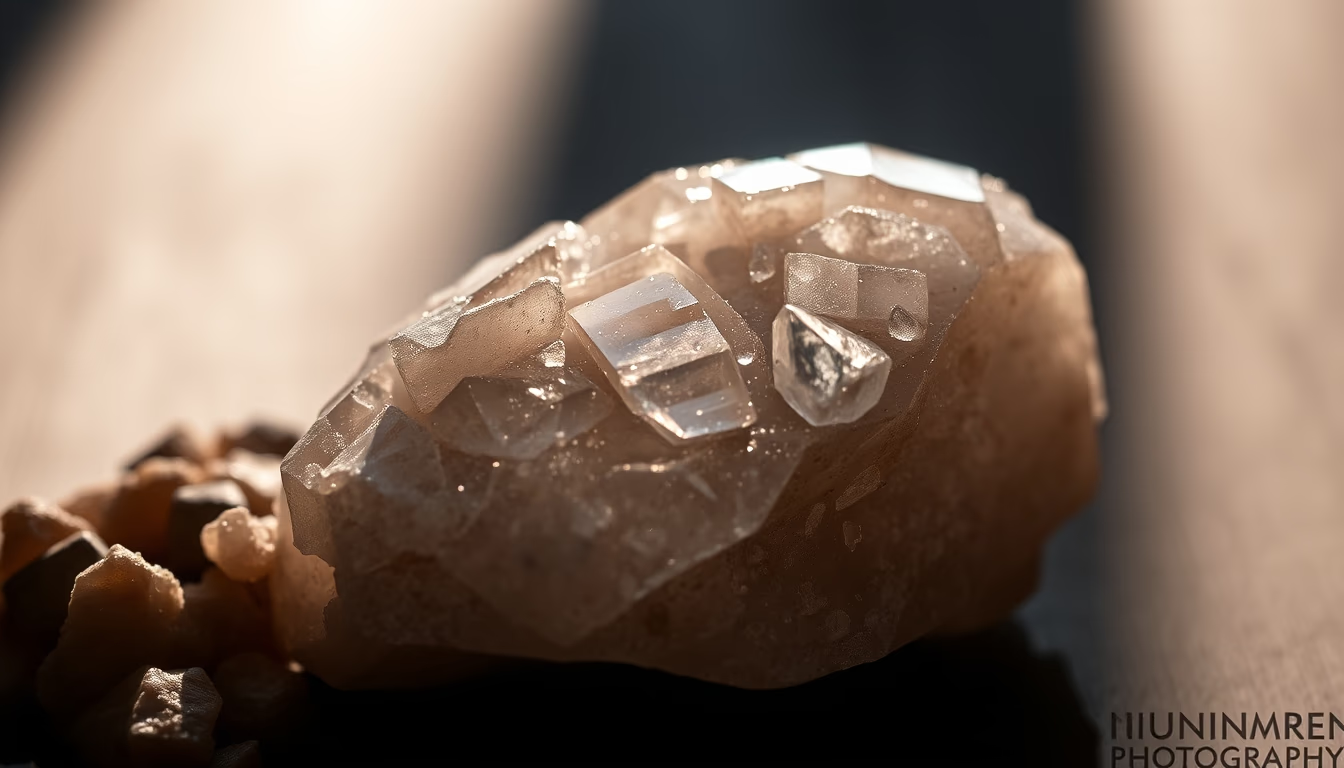
Initially mistaken for sapphire, tanzanite quickly established itself as an independent precious stone. Tiffany & Co. pioneered its global marketing in 1969, naming it after its country of origin. In 2002, the American Gem Trade Association (AGTA) added tanzanite to the December birthstone list, alongside turquoise and blue zircon. Raw tanzanite often exhibits pleochroism, showing different colors, blue, violet, and red, depending on the viewing angle, adding to its allure for collectors.
Mining of tanzanite is artisanal and controlled, with operations largely run by small-scale local miners. In 2019, the Tanzanian government announced the construction of a wall around the mining area to combat smuggling and better regulate production. The gem is typically cut into rectangular or oval shapes with faceted cuts to maximize brilliance and color. With a hardness of 6.5 to 7 on the Mohs scale, tanzanite is best suited for occasional wear jewelry like rings and necklaces, requiring care to avoid scratches and thermal shock.
Frequently Asked Questions
Where is tanzanite found?
Tanzanite is found exclusively in the Merelani Hills near Mount Kilimanjaro in northern Tanzania, Africa.
What is the natural color of tanzanite?
Its natural color ranges from sapphire blue to purple violet, often with red or brownish tones, with the intense blue-violet being the most prized.
Is tanzanite heat treated?
Yes, most commercial tanzanites undergo low-temperature heat treatment to remove undesirable tones and enhance the blue color.
Direct URL
https://pub-c7d6a6ea828543ac903a74a341ccb2e1.r2.dev/imagens/tanzanite-blue-purple-isometric-flat-lay-p5.avifHow to credit
Include a visible link back to UtilizAí. Copy one of the snippets below:
<a href="https://xn--utiliza-eza.com/en/midia/imagens/tanzanite-blue-purple-isometric-flat-lay-p5">Tanzanite blue purple</a> by <a href="https://xn--utiliza-eza.com">UtilizAí</a>, licensed under <a href="https://creativecommons.org/licenses/by/4.0/">CC BY 4.0</a>.
[Tanzanite blue purple](https://xn--utiliza-eza.com/en/midia/imagens/tanzanite-blue-purple-isometric-flat-lay-p5) by [UtilizAí](https://xn--utiliza-eza.com), CC BY 4.0
License: CC-BY-4.0