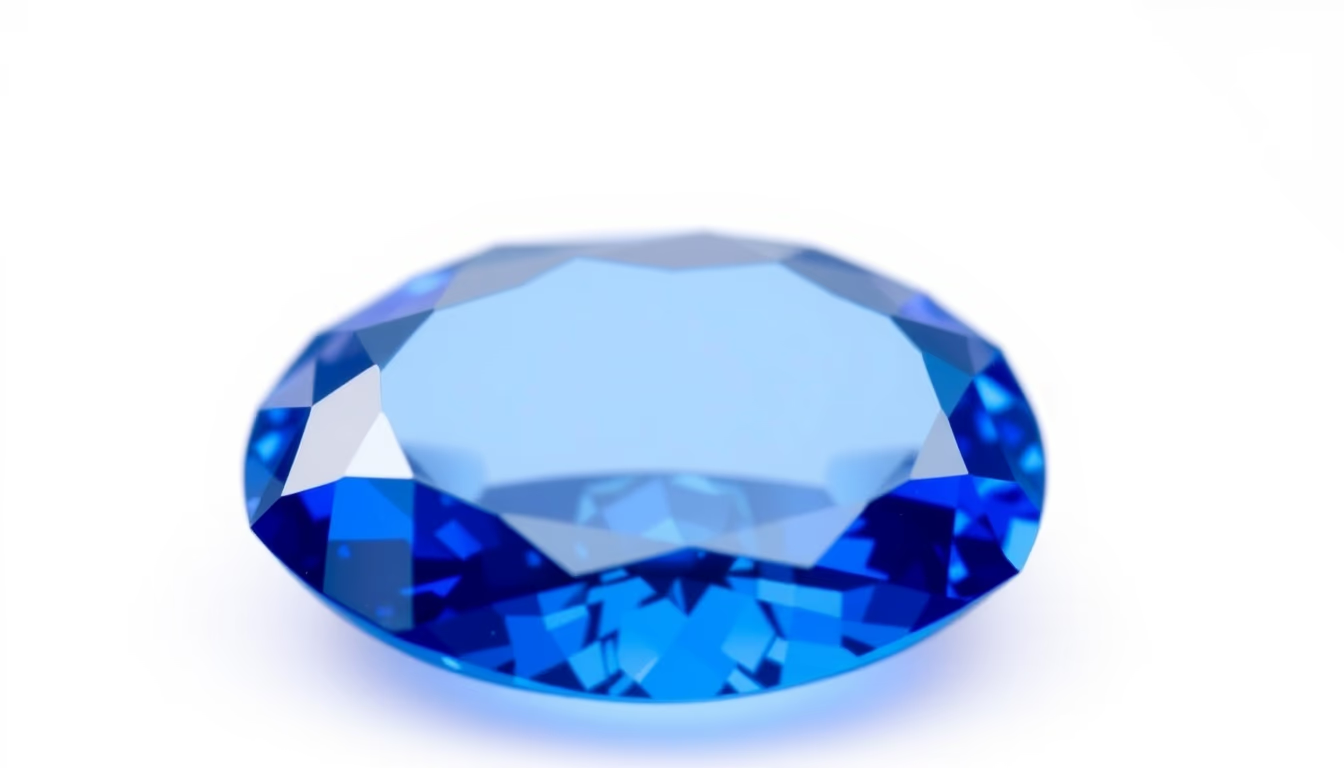
Tanzanite blue purple
1344×768 · AVIF · CC BY 4.0

Tanzanite, a blue-purple variety of the mineral zoisite, is one of the world's rarest gemstones, found exclusively at the foot of Mount Kilimanjaro in Tanzania.
About this subject
Tanzanite is a fascinating gemstone discovered only in 1967 in the Arusha region of Tanzania. Its intense blue-purple color results from the presence of vanadium in its crystal structure, and the gem exhibits strong pleochroism, shifting from blue to violet and even red depending on the viewing angle. Mining is concentrated in an area of about 20 km² near the Mererani plateau, making it extremely rare: estimates suggest that tanzanite supply may be exhausted within a few decades.
The gem was popularized by Tiffany & Co., which named it "tanzanite" after its country of origin. Unlike other blue gems such as sapphire, tanzanite is softer (hardness 6.5-7 on the Mohs scale) and requires special care in jewelry. As a relatively new gemstone on the market, its value has been steadily rising, especially for faceted pieces weighing over 5 carats.
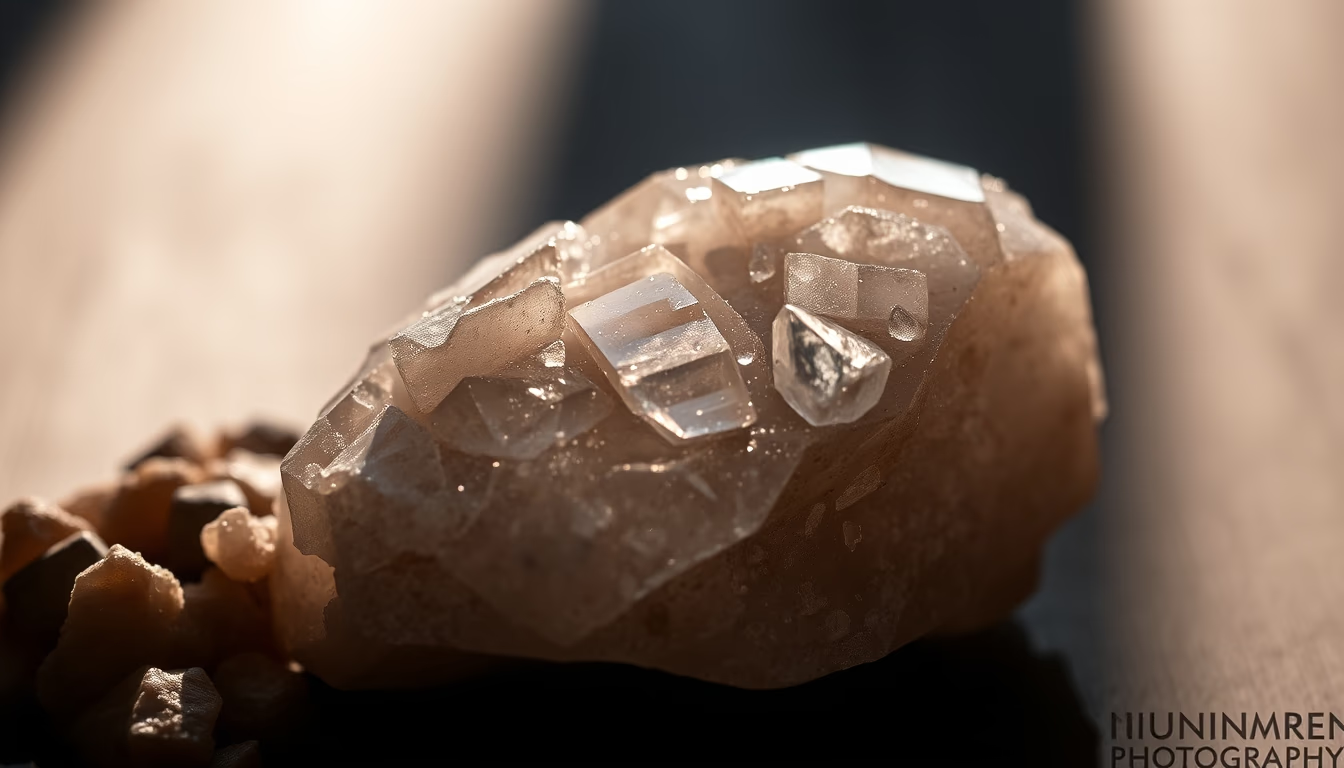
Geologically, tanzanite forms in metamorphic rocks under high pressure and moderate temperature conditions, associated with the tectonic event that formed the East African Rift Valley. Natural tanzanite is often brown or greenish; most blue-purple pieces on the market undergo low-temperature heat treatment (around 400-500 °C) to enhance the color. This treatment is internationally accepted and not considered artificial enhancement, as it produces a stable and permanent color.
Culturally, tanzanite is regarded as Tanzania's national gemstone and is associated with prosperity and spiritual healing. In 2002, the American Gem Trade Association named it the December birthstone, alongside blue zircon. Its rarity combined with unique beauty makes it one of the most coveted gemstones among collectors and investors.
Frequently Asked Questions
What is the difference between natural and heat-treated tanzanite?
Natural tanzanite is typically brown or greenish. Heat treatment at low temperatures (400-500 °C) removes unwanted tones and enhances the blue-purple color, a widely accepted and permanent practice.
Where is tanzanite found?
Tanzanite is found exclusively in the Mererani region near Mount Kilimanjaro in northern Tanzania, in an area of about 20 km².
Is tanzanite durable enough for everyday jewelry?
With a hardness of 6.5-7 on the Mohs scale, tanzanite is softer than sapphire or diamond. It is suitable for occasional wear but requires care to avoid scratches or impacts.
Direct URL
https://pub-c7d6a6ea828543ac903a74a341ccb2e1.r2.dev/imagens/tanzanite-blue-purple-documentary-photography-p8.avifHow to credit
Include a visible link back to UtilizAí. Copy one of the snippets below:
<a href="https://xn--utiliza-eza.com/en/midia/imagens/tanzanite-blue-purple-documentary-photography-p8">Tanzanite blue purple</a> by <a href="https://xn--utiliza-eza.com">UtilizAí</a>, licensed under <a href="https://creativecommons.org/licenses/by/4.0/">CC BY 4.0</a>.
[Tanzanite blue purple](https://xn--utiliza-eza.com/en/midia/imagens/tanzanite-blue-purple-documentary-photography-p8) by [UtilizAí](https://xn--utiliza-eza.com), CC BY 4.0
License: CC-BY-4.0