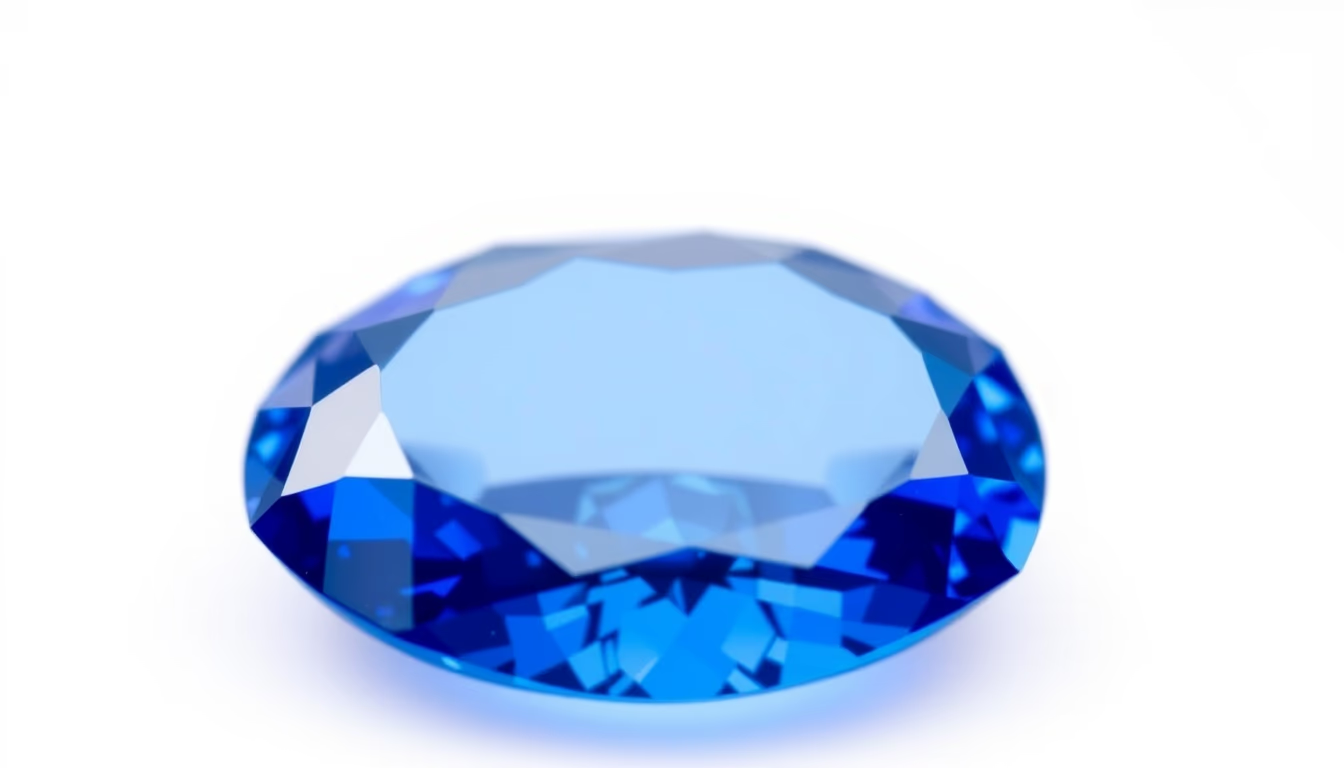
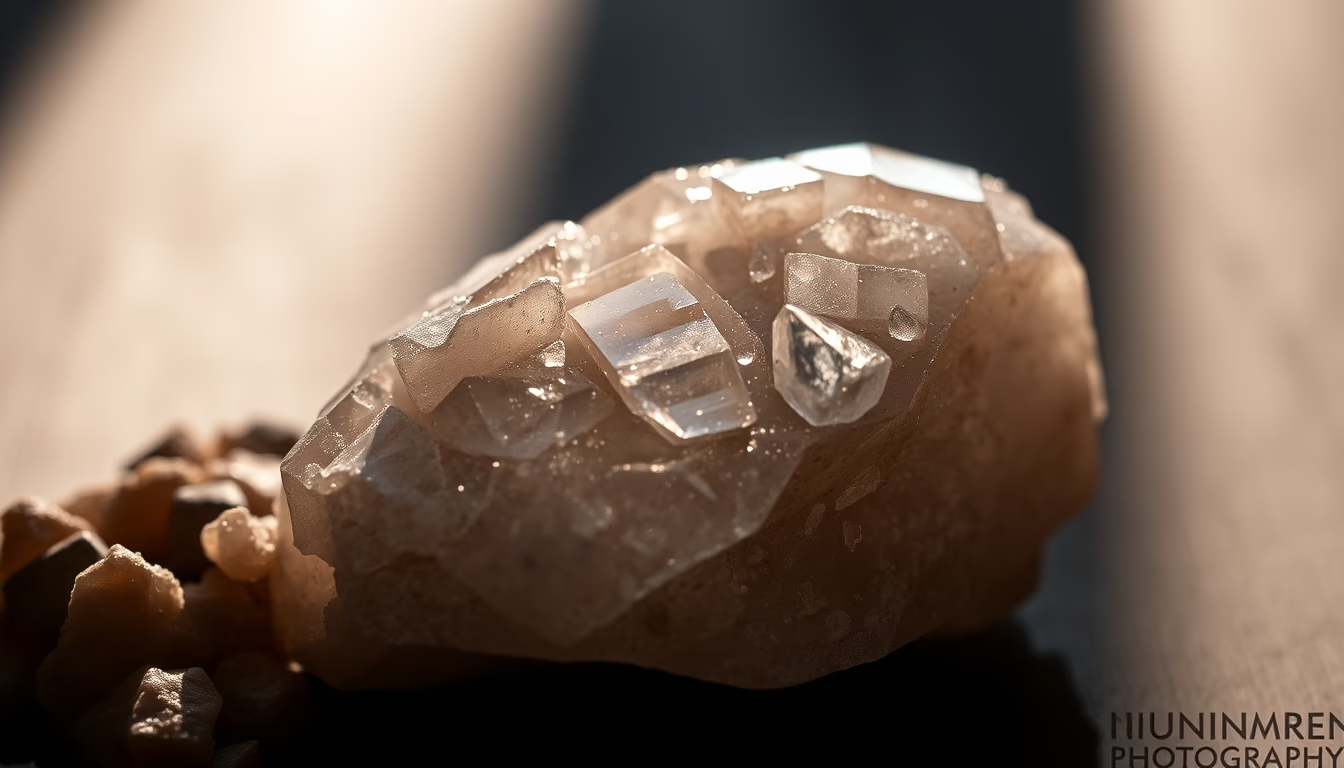
Tanzanite blue purple
1344×768 · AVIF · CC BY 4.0

Tanzanite, one of the rarest gemstones in the world, displays intense violet blue and is found exclusively in northern Tanzania.
About this subject
Tanzanite is a blue violet variety of the mineral zoisite, discovered in 1967 in the Merelani Hills near Mount Kilimanjaro, Tanzania. Its characteristic color comes from the presence of vanadium and, to a lesser extent, chromium, and the gemstone exhibits strong pleochroism, showing blue, violet, and red hues when rotated. The most valued color is an intense sapphire blue, often achieved by low-temperature heat treatment (about 400°C), which enhances blue and reduces greenish tones. The gem is known for its rarity: the only commercial source is an area of approximately 20 km², and it is estimated that the mine may be exhausted within 20 to 30 years.
The Tanzanite International Association classifies the gem into five color grades (A to AAA+) based on saturation and hue. Besides color, clarity and cut affect value; stones with visible inclusions are less valuable. Pieces over 2 carats are especially rare. Tanzanite is Tanzania's national gem and holds great economic significance for the country. In 2002, the American Gem Trade Association chose it as December's birthstone, although it is not a traditional birthstone. Due to its scarcity, tanzanite is often compared to sapphire but is softer (hardness 6.5 to 7 on the Mohs scale), requiring care in everyday jewelry.
A fun fact: tanzanite was popularized by Tiffany & Co., which named it after its country of origin and launched a marketing campaign that made it globally known. The gem also sparks discussions about sustainable mining and fair trade in the region, where artisanal mining coexists with large companies. For its beauty and rarity, tanzanite remains one of the most sought-after gemstones by collectors and investors.
Frequently Asked Questions
Is tanzanite natural or always heat-treated?
Most tanzanite on the market undergoes low-temperature heat treatment (around 400°C) to enhance the blue color. Completely natural, untreated stones tend to have more greenish or grayish tones and are extremely rare and valuable.
Where is tanzanite found?
The only known source of tanzanite is a small area of about 20 km² in the Merelani Hills of northern Tanzania, near Mount Kilimanjaro. No significant deposits exist anywhere else in the world.
Is tanzanite suitable for engagement rings?
With a hardness of 6.5 to 7 on the Mohs scale, tanzanite is softer than diamond or sapphire, making it more prone to scratches and chips. While it can be used in rings, it is recommended for occasional wear or protected in designs that minimize impacts, such as bezel settings.
Direct URL
https://pub-c7d6a6ea828543ac903a74a341ccb2e1.r2.dev/imagens/tanzanite-blue-purple-cinematic-wide-shot-p9.avifHow to credit
Include a visible link back to UtilizAí. Copy one of the snippets below:
<a href="https://xn--utiliza-eza.com/en/midia/imagens/tanzanite-blue-purple-cinematic-wide-shot-p9">Tanzanite blue purple</a> by <a href="https://xn--utiliza-eza.com">UtilizAí</a>, licensed under <a href="https://creativecommons.org/licenses/by/4.0/">CC BY 4.0</a>.
[Tanzanite blue purple](https://xn--utiliza-eza.com/en/midia/imagens/tanzanite-blue-purple-cinematic-wide-shot-p9) by [UtilizAí](https://xn--utiliza-eza.com), CC BY 4.0
License: CC-BY-4.0