Sun corona solar flare
1344×768 · AVIF · CC BY 4.0

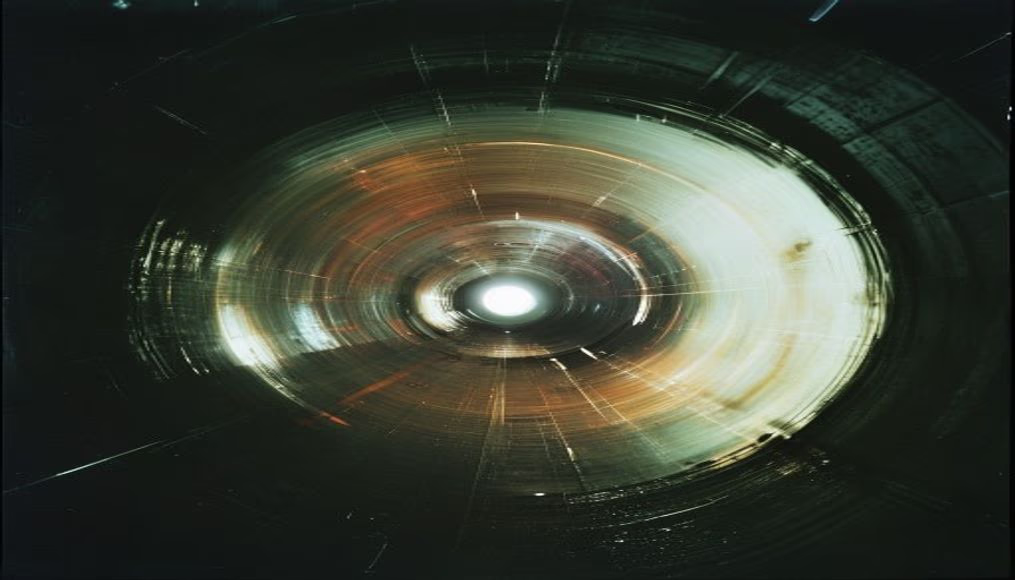
The solar corona, the outermost layer of the Sun's atmosphere, is the stage for gigantic magnetic explosions known as solar flares.
About this subject
The solar corona is a region of extremely hot plasma, with temperatures reaching millions of degrees Celsius, much hotter than the visible solar surface (photosphere). This intriguing phenomenon is studied by solar physics to understand coronal heating mechanisms. Solar flares are violent releases of energy stored in magnetic fields in the corona. They can last from minutes to hours and emit radiation across the entire electromagnetic spectrum, from radio waves to gamma rays.
When a solar flare is intense enough, it can cause geomagnetic storms on Earth, affecting satellite communications, power grids, and even astronaut health. The approximately 11-year solar cycle regulates the frequency of these events; at cycle peak, the number of flares increases significantly. The corona is also visible during total solar eclipses, when the Moon blocks the photosphere's light, revealing its filamentary structure and pearly white glow.
NASA's Parker Solar Probe and ESA's Solar Orbiter are currently studying the corona up close, collecting data to better predict solar flares. These missions have already revealed details about solar wind acceleration and coronal jet formation. Understanding these processes is crucial for astrophysics and for protecting technological infrastructure on Earth and in space.
Frequently Asked Questions
What causes solar flares?
Solar flares are caused by the sudden release of magnetic energy stored in the solar corona, resulting from the entanglement and reconnection of magnetic field lines.
How do solar flares affect Earth?
Intense solar flares can disrupt radio communications, damage satellites, cause power grid blackouts, and increase radiation risks for astronauts and high-latitude airline passengers.
What is the difference between the solar corona and the photosphere?
The photosphere is the visible surface of the Sun, at about 5,500°C, while the corona is the outer atmosphere, much thinner and hotter, reaching millions of degrees Celsius.
Direct URL
https://pub-c7d6a6ea828543ac903a74a341ccb2e1.r2.dev/imagens/sun-corona-solar-flare-magazine-editorial-p1.avifHow to credit
Include a visible link back to UtilizAí. Copy one of the snippets below:
<a href="https://xn--utiliza-eza.com/en/midia/imagens/sun-corona-solar-flare-magazine-editorial-p1">Sun corona solar flare</a> by <a href="https://xn--utiliza-eza.com">UtilizAí</a>, licensed under <a href="https://creativecommons.org/licenses/by/4.0/">CC BY 4.0</a>.
[Sun corona solar flare](https://xn--utiliza-eza.com/en/midia/imagens/sun-corona-solar-flare-magazine-editorial-p1) by [UtilizAí](https://xn--utiliza-eza.com), CC BY 4.0
License: CC-BY-4.0