Sugarcane field with controlled burn at sunset in countryside
1344×768 · AVIF · CC BY 4.0
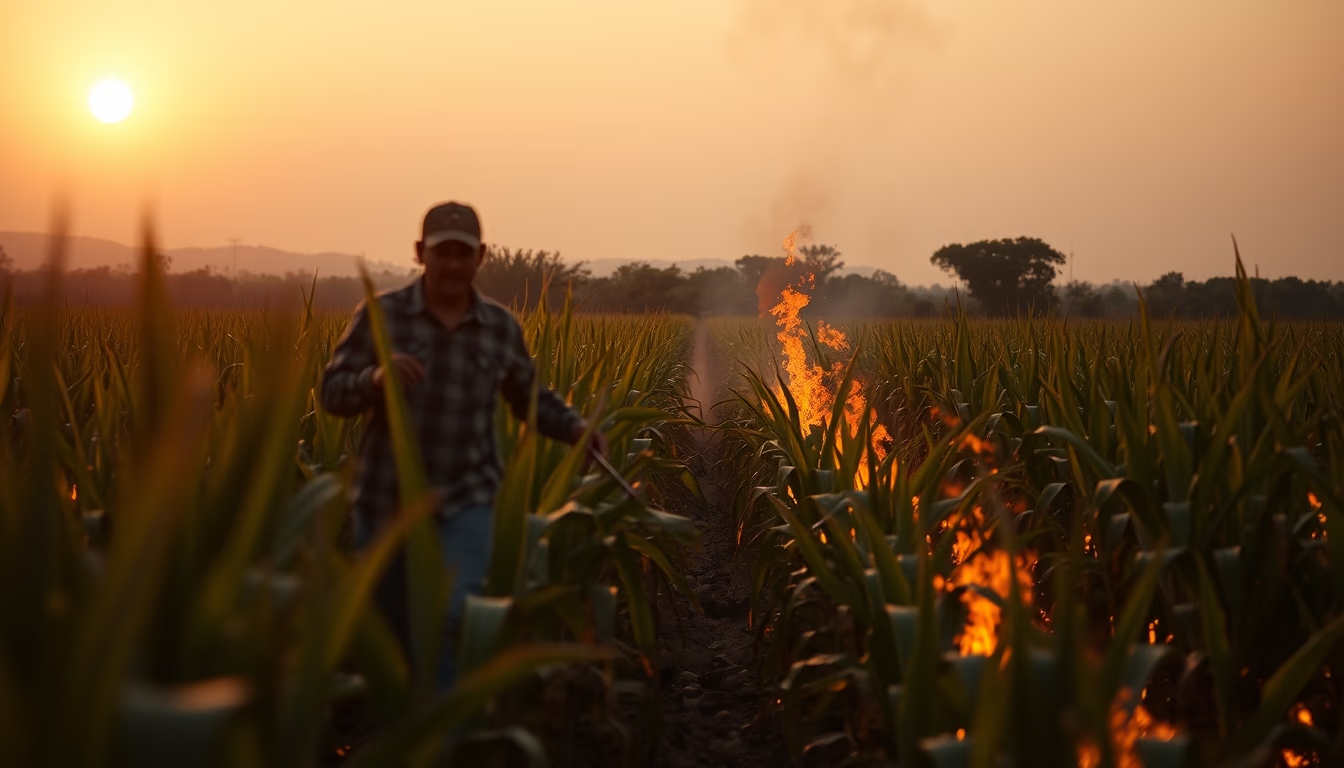
Controlled burning of sugarcane fields at sunset is a common agricultural practice in São Paulo's countryside, though contested due to environmental concerns.
About this subject
Controlled burning of sugarcane fields is a traditional technique used in sugarcane harvesting in Brazil, especially in São Paulo state, the country's largest producer. Fire is applied to burn the straw and dry leaves, facilitating manual or mechanical cutting and reducing the presence of venomous animals like snakes and spiders. This practice usually occurs in the late afternoon, when climatic conditions are more favorable, such as lower humidity and calmer winds, which explains the frequent association with sunset.
Sugarcane was introduced to Brazil in the 16th century and has since become a pillar of the agricultural economy. São Paulo state accounts for more than half of national production, with highlights in the regions of Ribeirão Preto, Piracicaba, and Araçatuba. Controlled burning, although efficient for harvesting, generates significant environmental impacts, such as greenhouse gas emissions (CO2, methane) and particulate matter, affecting air quality and the health of workers and nearby communities.
In recent years, mechanized harvesting has reduced the need for burning. São Paulo State Law 11.241/2002 establishes deadlines for the gradual elimination of sugarcane burning, aiming to phase it out by 2031 in mechanizable areas. However, on sloping or difficult-to-access terrain, burning is still allowed. The image portrays this contrasting scenario: the visual beauty of fire at dusk versus environmental and labor dilemmas.
Interestingly, controlled burning also has a cultural aspect. For many rural workers, fire symbolizes the start of the harvest and the renewal of the agricultural cycle. The soot covering the landscape is remembered by generations of sugarcane cutters who faced harsh working conditions. The transition to mechanized harvesting, although positive for the environment, raises questions about rural employment and the preservation of traditions.
Frequently Asked Questions
Why is sugarcane burned before harvesting?
Controlled burning removes straw and dry leaves, making manual or mechanical cutting easier and reducing the risk of accidents with venomous animals, while also increasing harvesting efficiency.
Is sugarcane burning allowed by law?
Yes, but with restrictions. In São Paulo, Law 11.241/2002 establishes deadlines for the gradual elimination of burning, aiming to phase it out by 2031 in mechanizable areas. On steep terrain, the practice is still permitted.
What are the environmental impacts of sugarcane burning?
Burning emits greenhouse gases (CO2, methane) and particulate matter, harming air quality and human health. It also contributes to soil degradation and biodiversity loss.
Direct URL
https://pub-c7d6a6ea828543ac903a74a341ccb2e1.r2.dev/imagens/sugarcane-field-on-fire-being-controlled-at-sunset-in-sao-paulo-countryside-symmetric-bright-midday-5.avifHow to credit
Include a visible link back to UtilizAí. Copy one of the snippets below:
<a href="https://xn--utiliza-eza.com/en/midia/imagens/sugarcane-field-on-fire-being-controlled-at-sunset-in-sao-paulo-countryside-symmetric-bright-midday-5">Sugarcane field with controlled burn at sunset in countryside</a> by <a href="https://xn--utiliza-eza.com">UtilizAí</a>, licensed under <a href="https://creativecommons.org/licenses/by/4.0/">CC BY 4.0</a>.
[Sugarcane field with controlled burn at sunset in countryside](https://xn--utiliza-eza.com/en/midia/imagens/sugarcane-field-on-fire-being-controlled-at-sunset-in-sao-paulo-countryside-symmetric-bright-midday-5) by [UtilizAí](https://xn--utiliza-eza.com), CC BY 4.0
License: CC-BY-4.0