Sugarcane field with controlled burn at sunset in countryside
1344×768 · AVIF · CC BY 4.0
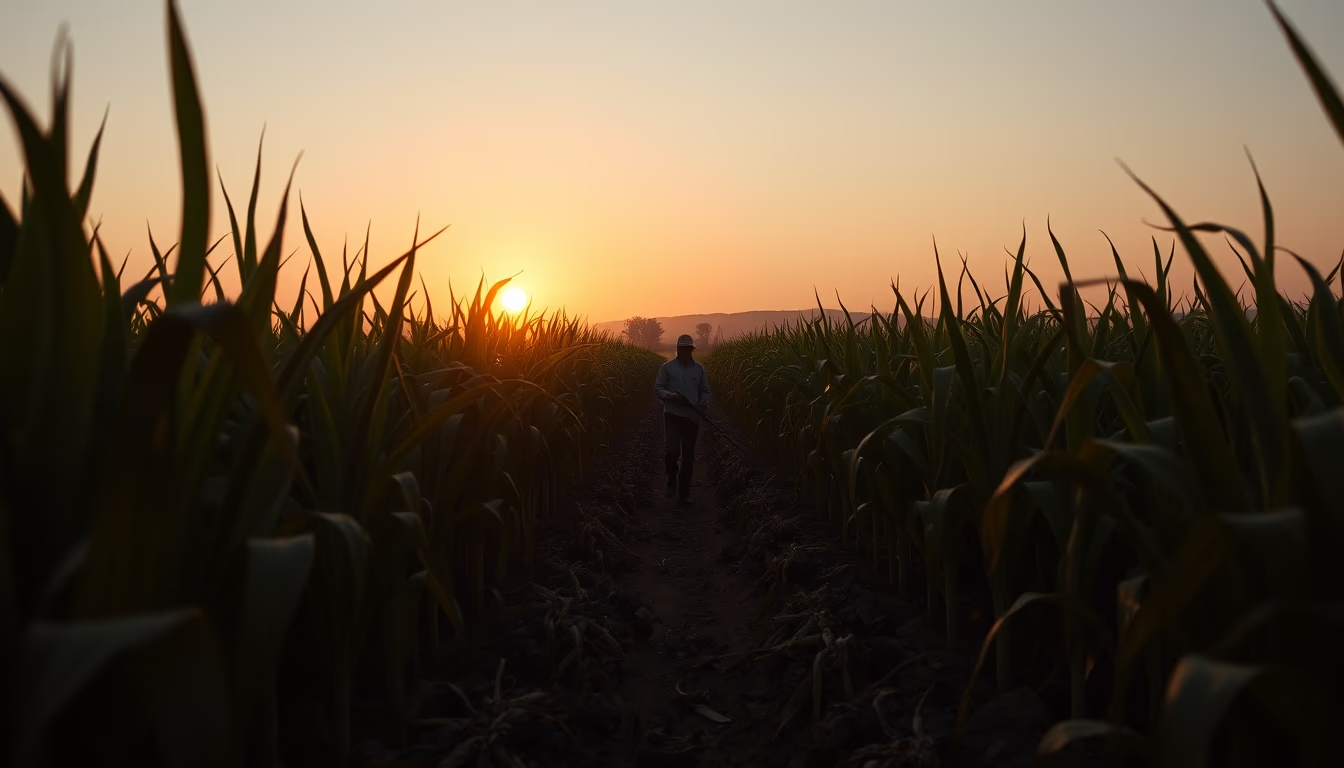
Controlled burning of sugarcane straw in São Paulo countryside at sunset, an agricultural practice preceding mechanized harvest.
About this subject
Controlled burning of sugarcane straw is a traditional agricultural technique in Brazil, especially in São Paulo state, the country's largest sugarcane producer. The fire removes dry leaves and facilitates manual or mechanized cutting, reducing risks of accidents with venomous animals and increasing productivity. The practice typically occurs in the late afternoon or early evening when weather conditions are more favorable, such as lower wind intensity and higher relative humidity.
In the São Paulo countryside, regions like Ribeirão Preto, Piracicaba, and Araçatuba concentrate vast sugarcane plantations that supply sugar and ethanol mills. Controlled burning is regulated by state and federal laws, which determine allowed hours and periods, as well as requiring authorization from environmental agencies. Although it generates atmospheric pollutants such as particulate matter and carbon monoxide, the technique is considered less impactful than forest wildfires, as the fire is confined and monitored.
Interestingly, controlled burning is gradually being replaced by mechanized harvesting without burning, which preserves straw on the soil, improving moisture retention and reducing erosion. However, in areas with rugged terrain or low mechanization, burning is still necessary. The contrast of fire with the orange sky at sunset creates a visual spectacle that records a crucial stage of the ethanol production cycle, a fuel that powers a large portion of the Brazilian fleet.
The image captures this moment in the São Paulo countryside, highlighting the symmetry of the sugarcane rows and the intense brightness of the fire under the evening light. The practice reflects the complex relationship between agriculture, environment, and energy in Brazil, where sugarcane is a symbol of development and also of sustainability debates.
Frequently Asked Questions
Why is sugarcane burned before harvest?
Controlled burning removes dry leaves and facilitates manual or mechanized cutting, reducing risks of accidents with venomous animals and increasing productivity.
Is controlled burning legal?
Yes, it is regulated by state and federal laws that determine allowed hours and periods, as well as requiring authorization from environmental agencies.
Is burning being replaced by other practices?
Yes, mechanized harvesting without burning is growing, as it preserves straw on the soil, improving moisture retention and reducing erosion.
Direct URL
https://pub-c7d6a6ea828543ac903a74a341ccb2e1.r2.dev/imagens/sugarcane-field-on-fire-being-controlled-at-sunset-in-sao-paulo-countryside-symmetric-bright-midday-4.avifHow to credit
Include a visible link back to UtilizAí. Copy one of the snippets below:
<a href="https://xn--utiliza-eza.com/en/midia/imagens/sugarcane-field-on-fire-being-controlled-at-sunset-in-sao-paulo-countryside-symmetric-bright-midday-4">Sugarcane field with controlled burn at sunset in countryside</a> by <a href="https://xn--utiliza-eza.com">UtilizAí</a>, licensed under <a href="https://creativecommons.org/licenses/by/4.0/">CC BY 4.0</a>.
[Sugarcane field with controlled burn at sunset in countryside](https://xn--utiliza-eza.com/en/midia/imagens/sugarcane-field-on-fire-being-controlled-at-sunset-in-sao-paulo-countryside-symmetric-bright-midday-4) by [UtilizAí](https://xn--utiliza-eza.com), CC BY 4.0
License: CC-BY-4.0