Sugarcane field with controlled burn at sunset in countryside
1344×768 · AVIF · CC BY 4.0
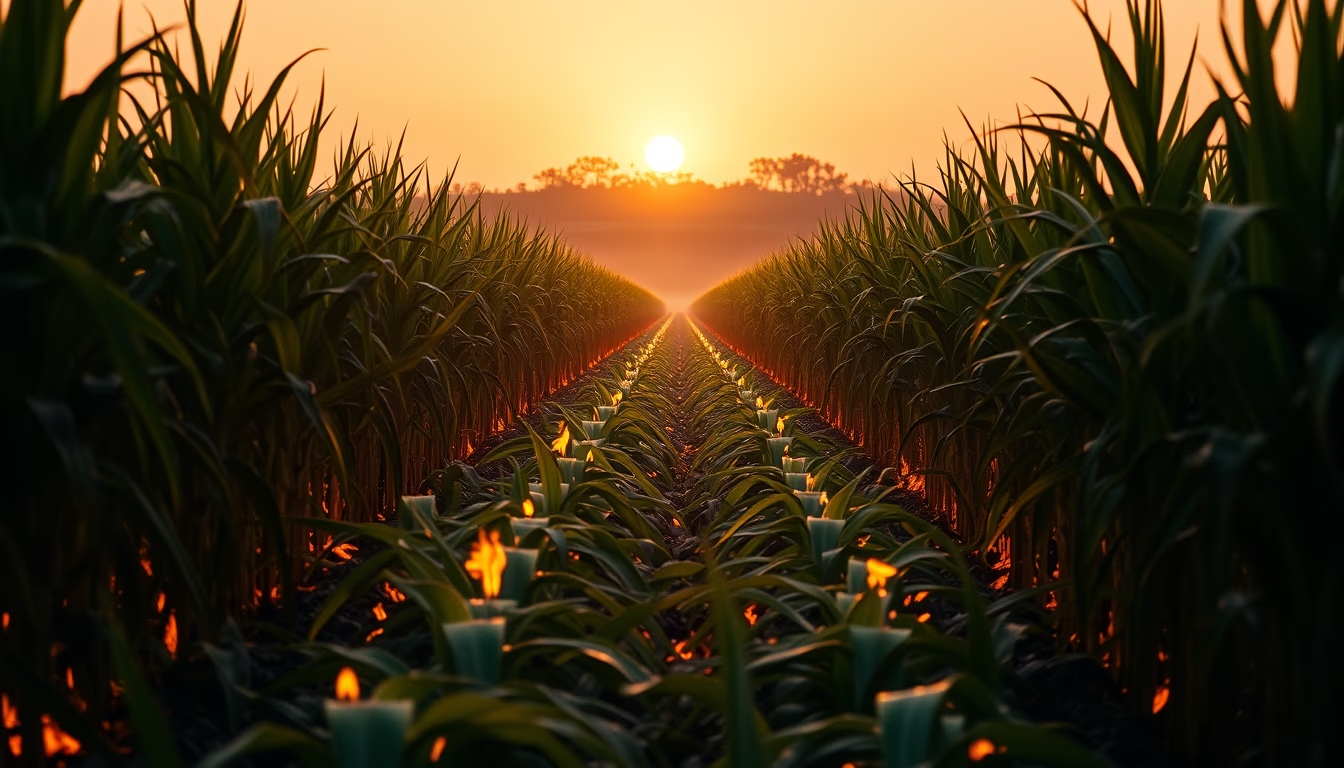
Controlled burn of sugarcane fields in São Paulo countryside at sunset, an agricultural practice that prepares harvest and sparks environmental debate.
About this subject
Controlled burning of sugarcane fields is a traditional technique in Brazilian agribusiness, especially in São Paulo state, the country's largest sugarcane producer. Fire removes straw and dry leaves, facilitating manual harvesting and reducing the risk of accidents with venomous animals. However, the practice is criticized for emitting pollutants and particulate matter that affect respiratory health of nearby populations.
The image shows a sugarcane field on fire at dusk, when climatic conditions (calmer winds and higher relative humidity) make fire control safer. The contrast between intense flames and orange sunset sky creates a dramatic scene common in regions like Ribeirão Preto and Piracicaba, where sugarcane dominates the landscape.
Since 2007, State Law 11.241/2002 has established a gradual phase-out of sugarcane burning in São Paulo, with a complete elimination target by 2031. Mechanized harvesting, which eliminates the need for burning, already covers over 90% of the harvested area in the state. Nevertheless, burning is still used in steep slopes or where mechanization is unfeasible.
The debate over controlled burning involves economic aspects (lower cost for producers), environmental concerns (CO₂ and particulate emissions), and social issues (jobs in manual cutting). Images like this capture a transitional moment in Brazilian agriculture, between tradition and modernization.
Frequently Asked Questions
Why is sugarcane burning done?
Burning facilitates manual harvesting by removing straw and dry leaves, reduces risks of accidents with venomous animals, and increases cutters' productivity.
Is controlled burning allowed by law?
Yes, but with restrictions. In São Paulo, Law 11.241/2002 mandates a gradual phase-out by 2031, allowing burning only where mechanized harvesting is unfeasible.
What are the environmental impacts of sugarcane burning?
Burning releases CO₂, particulate matter, and other pollutants, contributing to respiratory issues and local warming. It also eliminates organic matter that could be used as soil cover.
Direct URL
https://pub-c7d6a6ea828543ac903a74a341ccb2e1.r2.dev/imagens/sugarcane-field-on-fire-being-controlled-at-sunset-in-sao-paulo-countryside-symmetric-bright-midday.avifHow to credit
Include a visible link back to UtilizAí. Copy one of the snippets below:
<a href="https://xn--utiliza-eza.com/en/midia/imagens/sugarcane-field-on-fire-being-controlled-at-sunset-in-sao-paulo-countryside-symmetric-bright-midday">Sugarcane field with controlled burn at sunset in countryside</a> by <a href="https://xn--utiliza-eza.com">UtilizAí</a>, licensed under <a href="https://creativecommons.org/licenses/by/4.0/">CC BY 4.0</a>.
[Sugarcane field with controlled burn at sunset in countryside](https://xn--utiliza-eza.com/en/midia/imagens/sugarcane-field-on-fire-being-controlled-at-sunset-in-sao-paulo-countryside-symmetric-bright-midday) by [UtilizAí](https://xn--utiliza-eza.com), CC BY 4.0
License: CC-BY-4.0