Sugarcane field with controlled burn at sunset in countryside
1344×768 · AVIF · CC BY 4.0
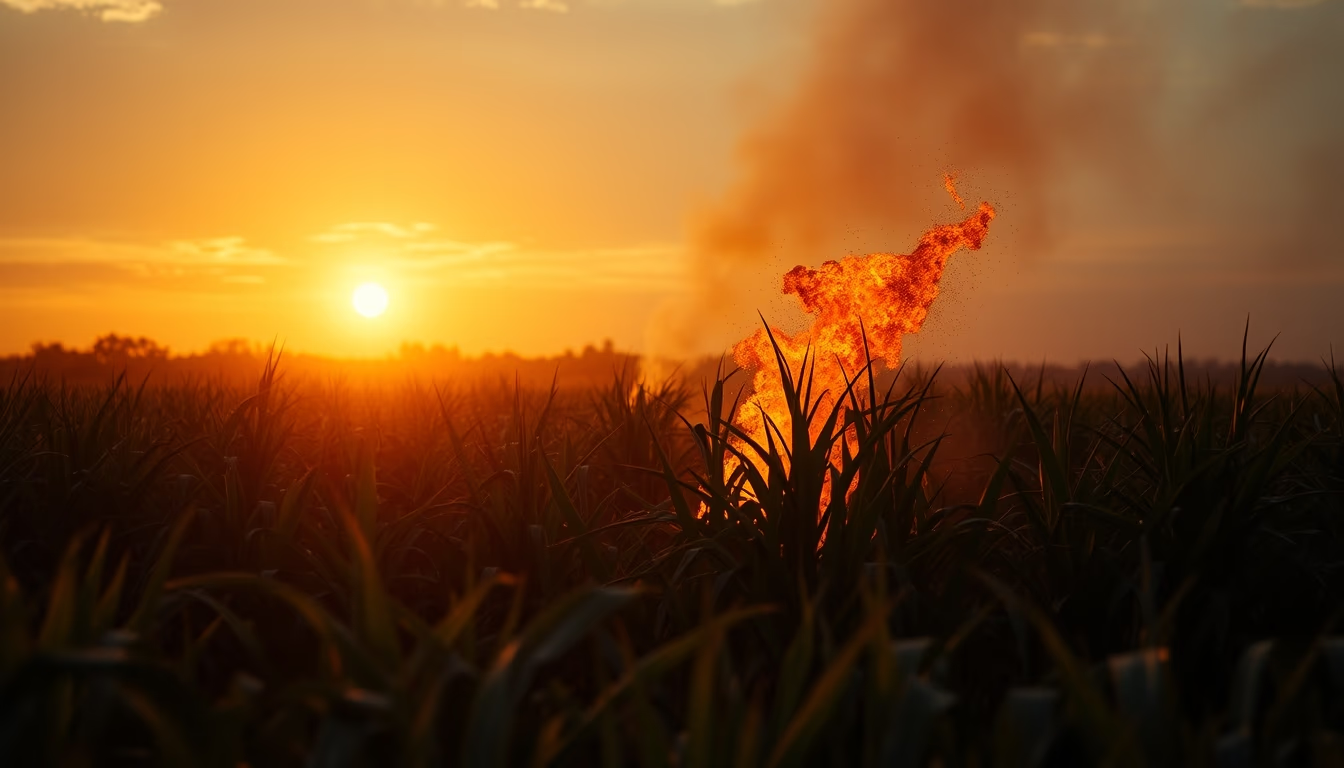
Controlled burn in a sugarcane field at sunset in São Paulo countryside, an agricultural technique to facilitate manual harvesting of sugarcane.
About this subject
Controlled burning in sugarcane fields is a traditional agricultural practice in Brazil, especially in the state of São Paulo, the largest national producer of sugarcane. Fire is applied to burn the dry leaves of the plant, removing the straw and exposing the stalks, which facilitates manual cutting by rural workers. This technique reduces the risk of accidents with venomous animals and increases cutting productivity. However, burning also releases large amounts of smoke and greenhouse gases, contributing to air pollution and respiratory health problems in nearby communities.
The practice has been gradually replaced by mechanized harvesting, which does not require burning and is more sustainable. The state of São Paulo has laws prohibiting burning in mechanizable areas since 2002, with deadlines for complete elimination by 2031. Despite this, in regions with rugged terrain or where mechanization is unfeasible, controlled burning is still allowed under environmental agency authorization. Sunset is a common time for burning because atmospheric conditions are usually more favorable for controlling the fire and reducing smoke dispersion.
Historically, sugarcane was introduced to Brazil in the 16th century, but it was from the 18th century onward that it consolidated as an economic base, especially in the Northeast. In the 20th century, production expanded to the Southeast, driven by the Proálcool program in the 1970s. Today, Brazil is the world's largest sugarcane producer, with São Paulo accounting for about 50% of national production. Sugarcane cultivation generates direct and indirect jobs, but also faces environmental and social challenges, such as working conditions in the fields and pollution from burning.
The image depicts a sugarcane field on fire at sunset, with workers monitoring the fire to prevent it from spreading. The contrast between the flames and the orange sky creates a dramatic scene, symbolizing the complex relationship between agriculture, tradition, and sustainability. Although controlled burning is an old technique, the sector seeks cleaner alternatives, such as mechanized harvesting and using straw for bioelectricity generation.
Frequently Asked Questions
Why are sugarcane fields burned before harvesting?
Controlled burning removes dry leaves and straw from sugarcane, making manual cutting easier. It reduces the risk of accidents with venomous animals and increases worker productivity.
Is sugarcane burning banned in Brazil?
It is not completely banned. In São Paulo, burning is prohibited in mechanizable areas since 2002, with a deadline for total elimination by 2031. In non-mechanizable areas, it is still allowed with environmental authorization.
What are the environmental impacts of sugarcane burning?
Burning releases smoke, greenhouse gases, and particulate matter, contributing to air pollution and respiratory problems. It can also cause soil degradation and loss of local biodiversity.
Direct URL
https://pub-c7d6a6ea828543ac903a74a341ccb2e1.r2.dev/imagens/sugarcane-field-on-fire-being-controlled-at-sunset-in-sao-paulo-countryside-editorial-overcast-daytime-6.avifHow to credit
Include a visible link back to UtilizAí. Copy one of the snippets below:
<a href="https://xn--utiliza-eza.com/en/midia/imagens/sugarcane-field-on-fire-being-controlled-at-sunset-in-sao-paulo-countryside-editorial-overcast-daytime-6">Sugarcane field with controlled burn at sunset in countryside</a> by <a href="https://xn--utiliza-eza.com">UtilizAí</a>, licensed under <a href="https://creativecommons.org/licenses/by/4.0/">CC BY 4.0</a>.
[Sugarcane field with controlled burn at sunset in countryside](https://xn--utiliza-eza.com/en/midia/imagens/sugarcane-field-on-fire-being-controlled-at-sunset-in-sao-paulo-countryside-editorial-overcast-daytime-6) by [UtilizAí](https://xn--utiliza-eza.com), CC BY 4.0
License: CC-BY-4.0