Sugarcane field with controlled burn at sunset in countryside
1344×768 · AVIF · CC BY 4.0
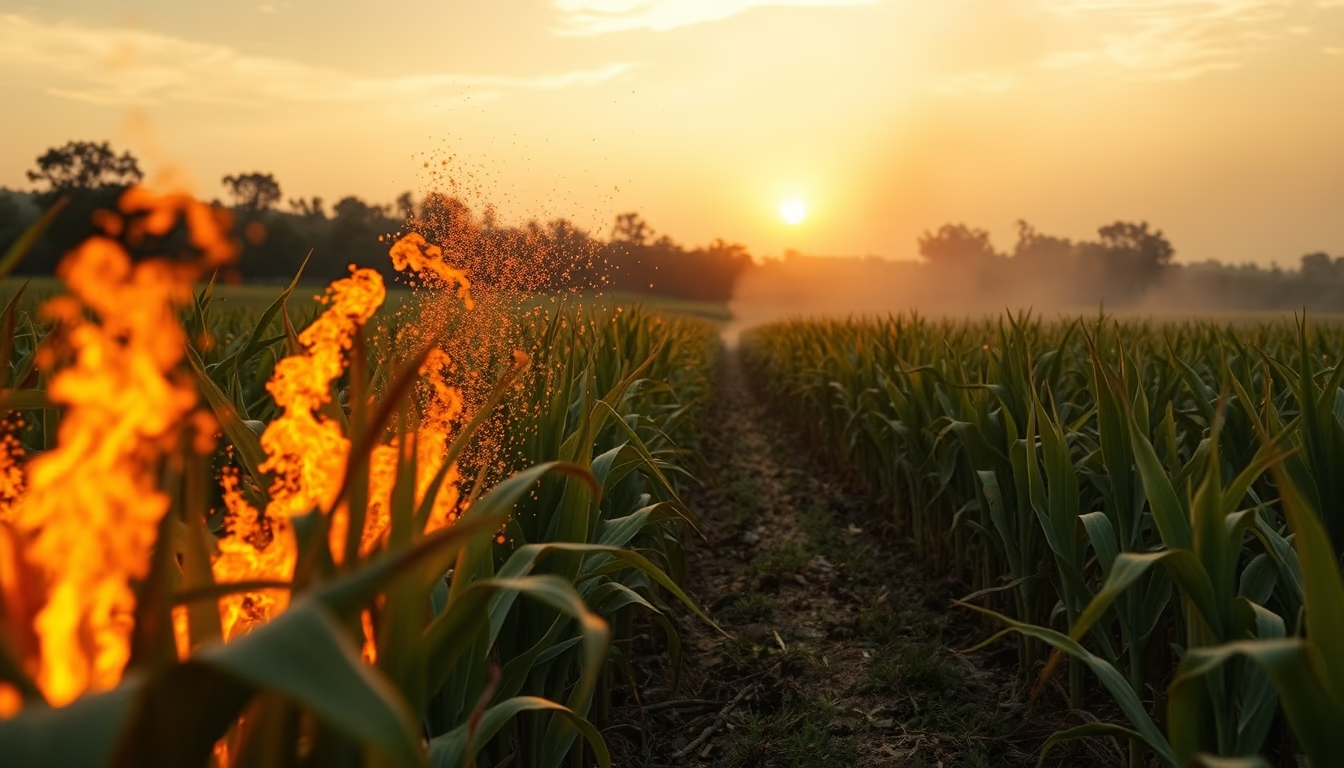
Controlled burning of sugarcane fields at sunset in São Paulo's countryside, an agricultural technique used to facilitate manual harvesting and its environmental impacts.
About this subject
Controlled burning of sugarcane fields is a historic agricultural practice in Brazil, especially in São Paulo state, the country's largest sugarcane producer. Carried out mainly during the harvest season from April to November, the burn aims to remove straw, dry leaves, and venomous animals, facilitating manual cutting and increasing worker productivity. However, the technique faces environmental criticism: it releases large amounts of CO2 and particulate matter, contributing to air pollution and respiratory issues in nearby communities.
The scene depicts dusk in the São Paulo countryside, when burns are more common due to favorable weather conditions, such as calmer winds and lower temperatures. The contrast between fire and the reddish sunset sky creates a striking image, symbolizing the dilemma between agricultural productivity and sustainability. Although mechanized harvesting is gradually replacing manual labor, about 30% of São Paulo's sugarcane is still harvested with pre-burning, according to data from the Sugarcane Industry Union (UNICA).
The practice is regulated by state laws, such as Law 11.241/2002, which establishes deadlines for the gradual elimination of burning by 2031 in mechanizable areas. However, in steep slopes or stony soils where machines cannot operate, burning is still allowed. The discussion also involves social aspects: mechanization reduces jobs, impacting thousands of sugarcane cutters who migrate from the Northeast to the Center-South during the harvest.
The burning sugarcane field at sunset is a complex symbol of Brazilian agribusiness. On one hand, it represents economic efficiency and renewable energy generation, as sugarcane bagasse is used for electricity cogeneration. On the other, it exposes the environmental and labor challenges of a transforming sector. The photograph, taken on an overcast day, adds drama to the scene, highlighting the smoke spreading across the horizon.
Frequently Asked Questions
Why are sugarcane fields burned before harvest?
Controlled burning removes straw, dry leaves, and dangerous animals, making manual cutting easier and increasing worker productivity. It also reduces the volume of material to be processed.
Is sugarcane burning legal in Brazil?
Yes, but it is regulated by state laws. In São Paulo, Law 11.241/2002 mandates the gradual elimination of burning by 2031 in mechanizable areas, but allows it on steep slopes or stony soils.
What are the environmental impacts of sugarcane burning?
It releases CO2 and particulate matter, contributing to air pollution and respiratory issues. It can also harm local wildlife and increase the risk of wildfires.
Direct URL
https://pub-c7d6a6ea828543ac903a74a341ccb2e1.r2.dev/imagens/sugarcane-field-on-fire-being-controlled-at-sunset-in-sao-paulo-countryside-editorial-overcast-daytime-4.avifHow to credit
Include a visible link back to UtilizAí. Copy one of the snippets below:
<a href="https://xn--utiliza-eza.com/en/midia/imagens/sugarcane-field-on-fire-being-controlled-at-sunset-in-sao-paulo-countryside-editorial-overcast-daytime-4">Sugarcane field with controlled burn at sunset in countryside</a> by <a href="https://xn--utiliza-eza.com">UtilizAí</a>, licensed under <a href="https://creativecommons.org/licenses/by/4.0/">CC BY 4.0</a>.
[Sugarcane field with controlled burn at sunset in countryside](https://xn--utiliza-eza.com/en/midia/imagens/sugarcane-field-on-fire-being-controlled-at-sunset-in-sao-paulo-countryside-editorial-overcast-daytime-4) by [UtilizAí](https://xn--utiliza-eza.com), CC BY 4.0
License: CC-BY-4.0