Sugarcane field with controlled burn at sunset in countryside
1344×768 · AVIF · CC BY 4.0
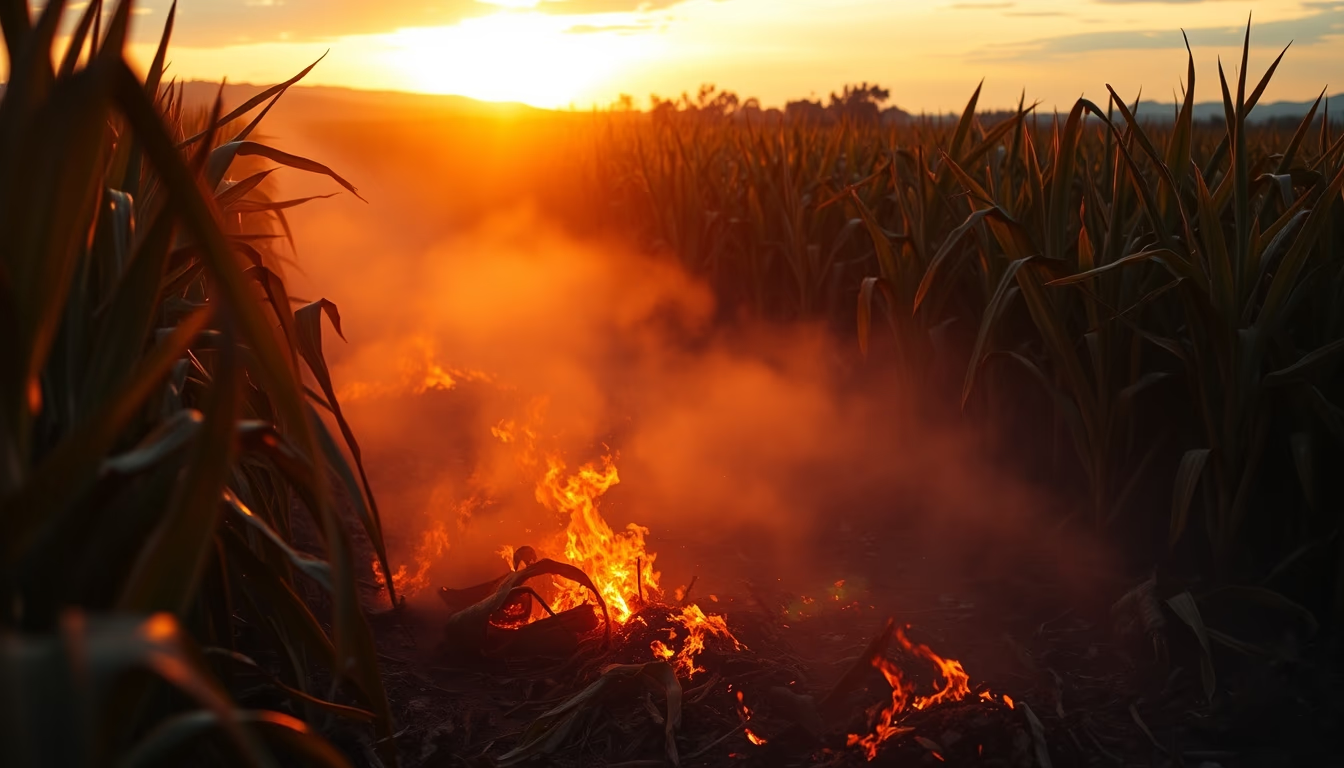
Controlled burn in a sugarcane field at sunset in São Paulo countryside, a common agricultural practice for harvesting.
About this subject
Controlled burning in sugarcane fields is a traditional technique used in Brazil to facilitate manual harvesting. The fire burns dry leaves and straw, eliminating venomous animals and reducing the volume of material to be cut. This practice is common in the state of São Paulo, the largest national sugarcane producer, responsible for about 60% of Brazilian production. Sunset is the preferred time for burning, as wind and humidity conditions are more favorable for fire control.
Despite its efficiency, controlled burning generates significant environmental impacts, such as greenhouse gas emissions and particulate matter. Therefore, since 2017, the state of São Paulo has established a schedule to gradually eliminate this practice, replacing it with mechanized harvesting. It is estimated that by 2031 the burning will be completely banned in mechanizable areas. However, in steep slopes or among small producers, the technique still persists.
The burning sugarcane field creates a striking visual contrast with the orange sunset sky, a scene that symbolizes both the productivity and environmental challenges of the sugar-energy sector. Brazil is the world's largest sugarcane producer, with annual harvests exceeding 600 million tons. The crop is the basis for sugar, ethanol, and bioelectricity production, sectors that move billions of reais and generate thousands of rural jobs.
Frequently Asked Questions
Why is controlled burning performed in sugarcane fields?
Controlled burning facilitates manual harvesting by removing dry leaves and straw, reducing material volume and repelling venomous animals such as snakes and spiders.
Will controlled burning be completely banned in São Paulo?
Yes, the state of São Paulo has a schedule to gradually eliminate burning, with a total ban in mechanizable areas expected by 2031.
What is the environmental impact of burning in sugarcane fields?
The practice emits greenhouse gases and particulate matter, contributing to air pollution and climate change, and eliminates beneficial fauna.
Direct URL
https://pub-c7d6a6ea828543ac903a74a341ccb2e1.r2.dev/imagens/sugarcane-field-on-fire-being-controlled-at-sunset-in-sao-paulo-countryside-editorial-overcast-daytime-3.avifHow to credit
Include a visible link back to UtilizAí. Copy one of the snippets below:
<a href="https://xn--utiliza-eza.com/en/midia/imagens/sugarcane-field-on-fire-being-controlled-at-sunset-in-sao-paulo-countryside-editorial-overcast-daytime-3">Sugarcane field with controlled burn at sunset in countryside</a> by <a href="https://xn--utiliza-eza.com">UtilizAí</a>, licensed under <a href="https://creativecommons.org/licenses/by/4.0/">CC BY 4.0</a>.
[Sugarcane field with controlled burn at sunset in countryside](https://xn--utiliza-eza.com/en/midia/imagens/sugarcane-field-on-fire-being-controlled-at-sunset-in-sao-paulo-countryside-editorial-overcast-daytime-3) by [UtilizAí](https://xn--utiliza-eza.com), CC BY 4.0
License: CC-BY-4.0