Sugarcane field with controlled burn at sunset in countryside
1344×768 · AVIF · CC BY 4.0
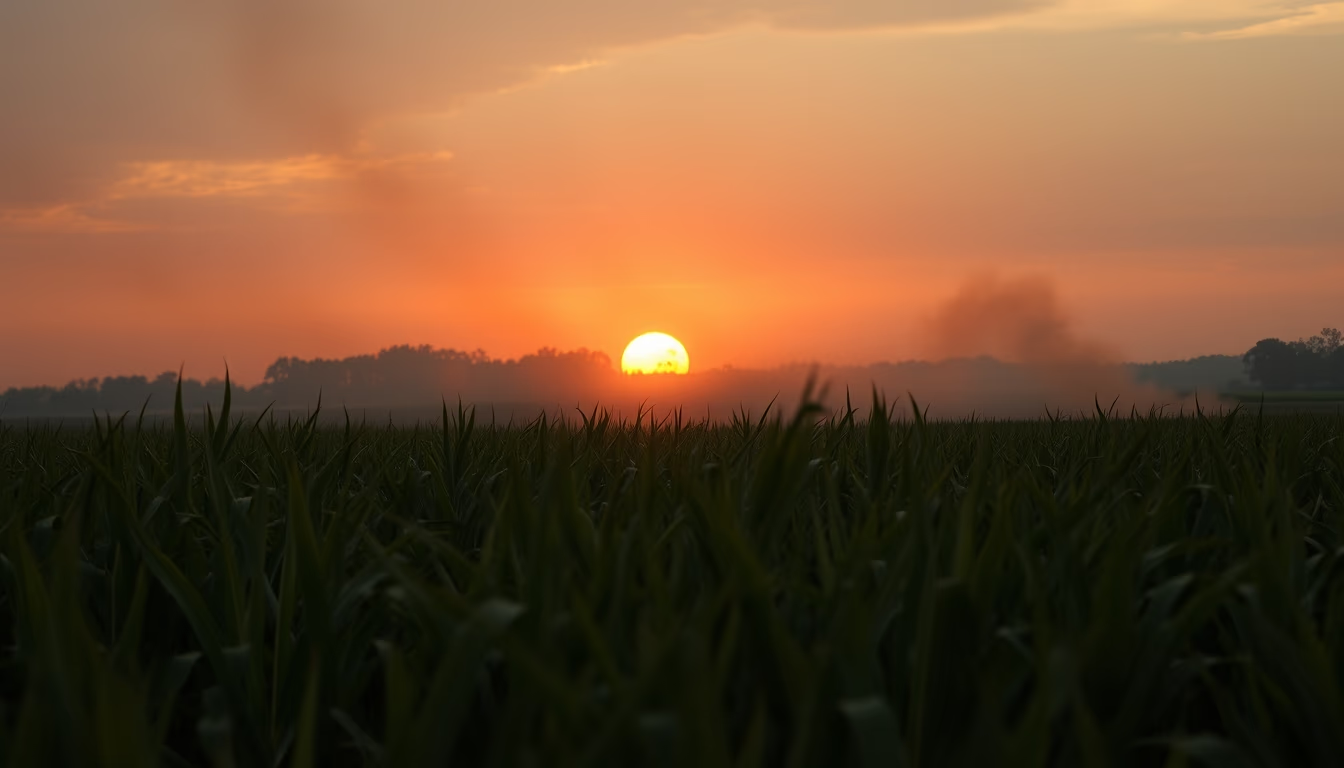
Controlled burning of sugarcane straw in São Paulo countryside, a traditional agricultural practice in decline.
About this subject
Controlled burning of sugarcane straw, known as 'cana queimada', is a traditional agricultural practice in São Paulo state, Brazil's largest sugarcane producer. Historically, fire is used to remove dry leaves and facilitate manual harvesting, reducing the risk of accidents with venomous animals and increasing worker productivity. The scene, captured at sunset, shows the contrast between flames and the orange sky, highlighting the scale of the operation.
Despite its efficiency, controlled burning is gradually being replaced by mechanized harvesting, which does not use fire and reduces pollutant emissions. Since 2002, the Agro-environmental Protocol of the São Paulo sugarcane sector set deadlines for phasing out burning: by 2014 in mechanizable areas and by 2017 in others. However, in steep terrain or among small producers, the practice still persists.
The smoke from burning contains particulate matter and gases such as CO2 and CO, impacting air quality and respiratory health of nearby communities. Conversely, straw left on the ground after mechanized harvesting acts as mulch, protecting against erosion and conserving moisture. Studies by Embrapa indicate that the transition to green harvesting can increase soil organic matter by up to 20% over time.
In Brazil, sugarcane occupies about 10 million hectares, with São Paulo accounting for over 50% of national production. Although in decline, burning remains a topic of environmental and labor debates, especially in regions where mechanization is economically unfeasible.
Frequently Asked Questions
Why are sugarcane fields burned before harvest?
Burning removes dry leaves, making manual cutting easier and reducing the risk of accidents with venomous animals such as snakes and spiders.
Is sugarcane burning legal?
Yes, but with restrictions. In São Paulo, the Agro-environmental Protocol sets deadlines for its elimination, prioritizing mechanized harvesting in flat areas.
What are the environmental impacts of controlled burning?
It emits polluting gases and particulate matter, affecting air quality and health. However, on a small scale, fire can control pests and renew the soil.
Direct URL
https://pub-c7d6a6ea828543ac903a74a341ccb2e1.r2.dev/imagens/sugarcane-field-on-fire-being-controlled-at-sunset-in-sao-paulo-countryside-editorial-overcast-daytime-2.avifHow to credit
Include a visible link back to UtilizAí. Copy one of the snippets below:
<a href="https://xn--utiliza-eza.com/en/midia/imagens/sugarcane-field-on-fire-being-controlled-at-sunset-in-sao-paulo-countryside-editorial-overcast-daytime-2">Sugarcane field with controlled burn at sunset in countryside</a> by <a href="https://xn--utiliza-eza.com">UtilizAí</a>, licensed under <a href="https://creativecommons.org/licenses/by/4.0/">CC BY 4.0</a>.
[Sugarcane field with controlled burn at sunset in countryside](https://xn--utiliza-eza.com/en/midia/imagens/sugarcane-field-on-fire-being-controlled-at-sunset-in-sao-paulo-countryside-editorial-overcast-daytime-2) by [UtilizAí](https://xn--utiliza-eza.com), CC BY 4.0
License: CC-BY-4.0