Sugarcane field with controlled burn at sunset in countryside
1344×768 · AVIF · CC BY 4.0
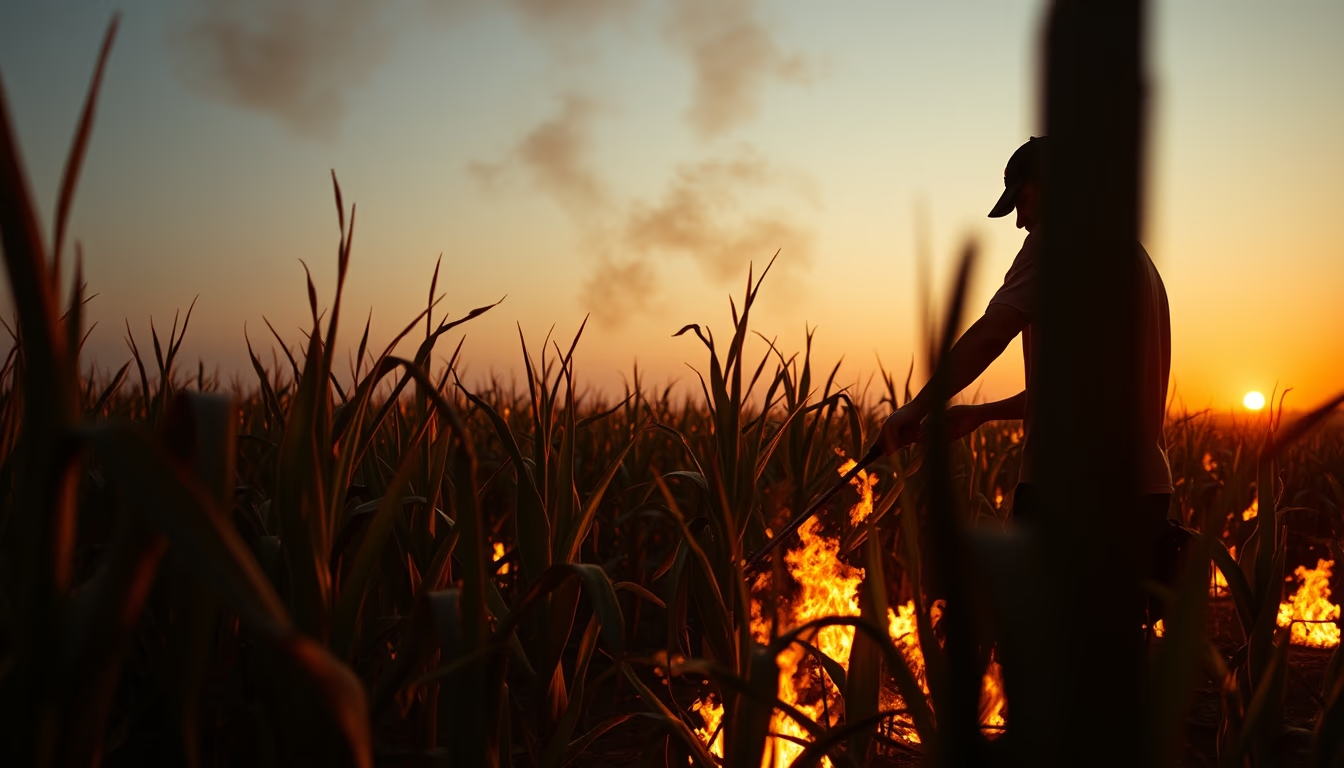
Controlled burning of sugarcane fields in São Paulo's countryside is a historic agricultural practice that prepares for manual harvesting and eliminates pests.
About this subject
Controlled burning of sugarcane is a traditional technique used in Brazil, especially in São Paulo state, the country's largest sugarcane producer. The fire is applied in a planned manner to burn dry leaves and straw, facilitating manual cutting and reducing the presence of venomous animals such as snakes and spiders. This practice usually occurs at dusk, when weather conditions are more favorable, calmer winds and higher humidity, to prevent uncontrolled spread of flames.
São Paulo accounts for about 60% of Brazil's sugarcane production, with emphasis on the regions of Ribeirão Preto, Piracicaba, and Araçatuba. Controlled burning is regulated by state and federal laws, which require prior authorization from environmental agencies and compliance with minimum distances from urban and preservation areas. Despite controversy due to pollutant and greenhouse gas emissions, the practice remains common in areas where manual harvesting persists, although it is gradually being replaced by mechanized harvesting, which eliminates the need for burning.
Interestingly, sugarcane was introduced to Brazil by the Portuguese in the 16th century and became the basis of the colonial economy. Today, Brazil is the world's largest producer of sugarcane, mainly used for sugar and ethanol production. Controlled burning, while efficient for manual cutting, has significant environmental impacts, contributing to air pollution and soil degradation. Therefore, many producers have adopted non-burning harvesting systems, known as "green cane," which preserve the straw on the soil, improving moisture retention and reducing erosion.
Frequently Asked Questions
Why is sugarcane burned before harvesting?
Controlled burning removes dry leaves and straw, making manual cutting easier and reducing the risk of accidents with venomous animals. It also increases cutting productivity.
Is sugarcane burning allowed by law?
Yes, but it is regulated by state and federal laws. Authorization from environmental agencies is required, and minimum distances from urban and preservation areas must be respected.
What are the environmental impacts of sugarcane burning?
Burning emits pollutants and greenhouse gases, contributing to air pollution and global warming. It can also degrade soil and affect local biodiversity. Alternatives like mechanized harvesting without burning are more sustainable.
Direct URL
https://pub-c7d6a6ea828543ac903a74a341ccb2e1.r2.dev/imagens/sugarcane-field-on-fire-being-controlled-at-sunset-in-sao-paulo-countryside-closeup-twilight-6.avifHow to credit
Include a visible link back to UtilizAí. Copy one of the snippets below:
<a href="https://xn--utiliza-eza.com/en/midia/imagens/sugarcane-field-on-fire-being-controlled-at-sunset-in-sao-paulo-countryside-closeup-twilight-6">Sugarcane field with controlled burn at sunset in countryside</a> by <a href="https://xn--utiliza-eza.com">UtilizAí</a>, licensed under <a href="https://creativecommons.org/licenses/by/4.0/">CC BY 4.0</a>.
[Sugarcane field with controlled burn at sunset in countryside](https://xn--utiliza-eza.com/en/midia/imagens/sugarcane-field-on-fire-being-controlled-at-sunset-in-sao-paulo-countryside-closeup-twilight-6) by [UtilizAí](https://xn--utiliza-eza.com), CC BY 4.0
License: CC-BY-4.0