Submarine deep ocean
1344×768 · AVIF · CC BY 4.0
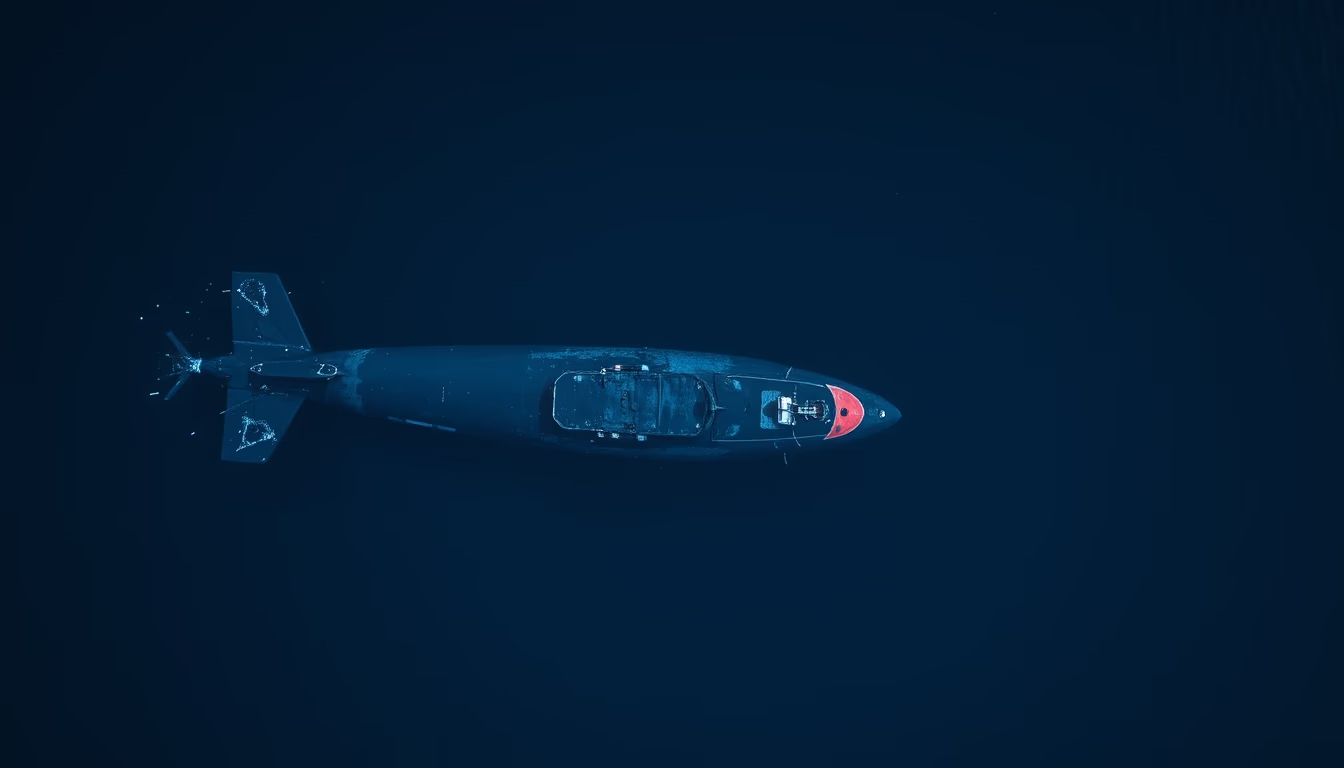
Deep-sea submarines explore ocean trenches, extreme environments where pressure and darkness challenge human technology.
About this subject
Deep-sea submarines, also known as research submersibles, are vehicles designed to operate at the greatest ocean depths. Unlike military submarines, which typically navigate to depths of up to 300 meters, these vehicles can reach the bottom of abyssal trenches, such as the Mariana Trench, which reaches 10,994 meters deep. Notable examples include Alvin, operated by the Woods Hole Oceanographic Institution, the French Nautile, and the Japanese Shinkai 6500, capable of diving to 6,500 meters. The first manned vehicle to reach the Mariana Trench was the bathyscaphe Trieste in 1960, a historic mission that proved the existence of life under extreme conditions.
Building these vehicles requires special materials, such as titanium and spherical ceramics, to withstand pressures over 1,000 atmospheres. The spherical hull is the most efficient shape for resisting uniform compression. Additionally, buoyancy systems, high-capacity batteries, and robotic arms are essential for collecting samples and conducting experiments. Electric propulsion allows quiet and precise maneuvers on the seafloor.
From a scientific perspective, deep-sea submarines have revolutionized knowledge about hydrothermal vent ecosystems, where chemical energy sustains biological communities independent of sunlight. Discoveries such as the blind shrimp Rimicaris exoculata and giant tube worms (Riftia pachyptila) have expanded understanding of life's limits on Earth. They are also crucial for marine geology, enabling the study of tectonic faults and submarine volcanoes.
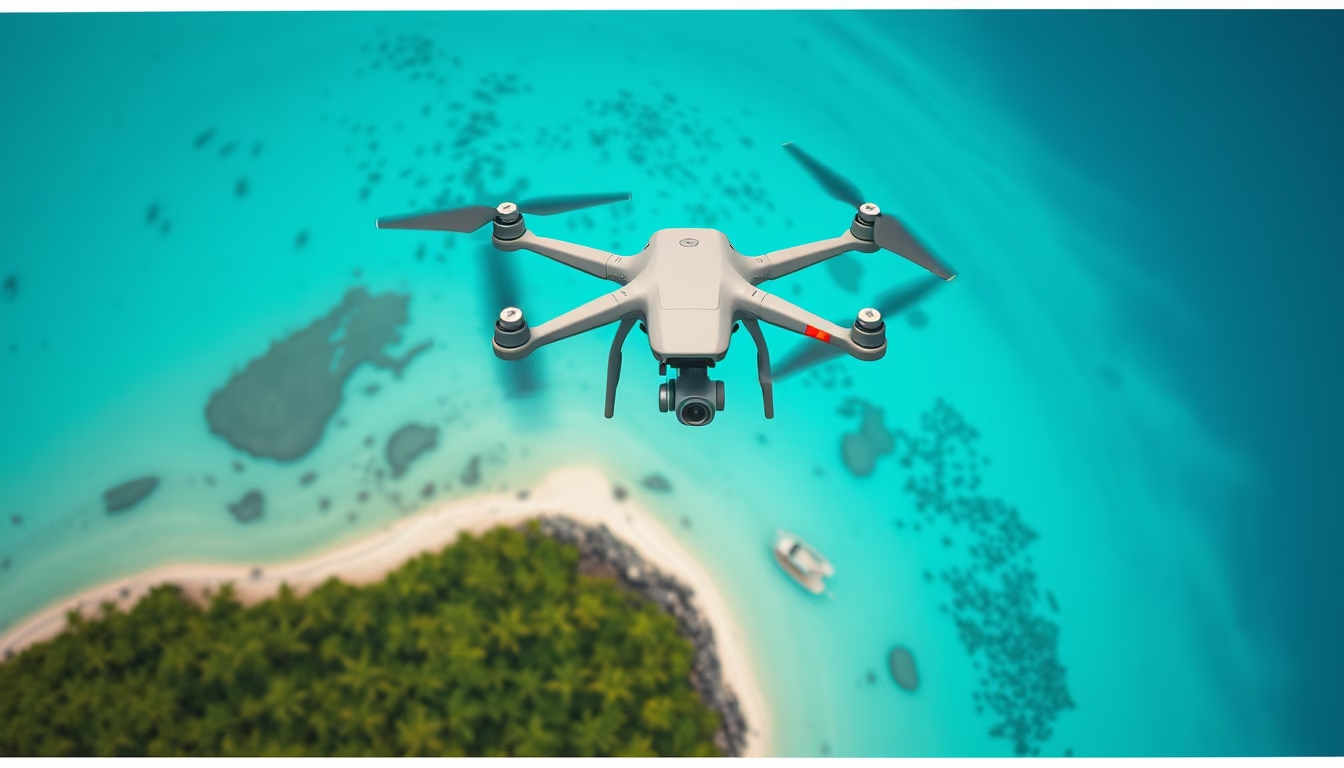
Interestingly, military technology has also driven advances in unmanned submersibles (ROVs and AUVs), used for exploring shipwrecks and environmental monitoring. Today, private companies like Triton Submarines offer tourist trips to the Mariana Trench, making an experience once reserved for scientists and military personnel accessible. The use of aerial drones, such as the one that captured this image, complements the observation of submarines on the surface, facilitating tracking and mission documentation.
Frequently Asked Questions
What is the maximum depth a research submarine can reach?
The most advanced submersibles, like the Deepsea Challenger, reach 10,994 meters, the deepest point in the ocean, in the Mariana Trench. Common models, such as Alvin, dive to 4,500 meters.
How do submarines withstand extreme pressure on the ocean floor?
They use spherical hulls made of titanium or high-strength steel. The spherical shape evenly distributes pressure, and materials like ceramics are used for critical components.
Why are submarines important for ocean science?
They enable direct exploration of hydrothermal vent ecosystems, discovery of new species, and collection of rock and sediment samples. They also aid in studying climate change and marine pollution.
Direct URL
https://pub-c7d6a6ea828543ac903a74a341ccb2e1.r2.dev/imagens/submarine-deep-ocean-aerial-drone-shot-p0.avifHow to credit
Include a visible link back to UtilizAí. Copy one of the snippets below:
<a href="https://xn--utiliza-eza.com/en/midia/imagens/submarine-deep-ocean-aerial-drone-shot-p0">Submarine deep ocean</a> by <a href="https://xn--utiliza-eza.com">UtilizAí</a>, licensed under <a href="https://creativecommons.org/licenses/by/4.0/">CC BY 4.0</a>.
[Submarine deep ocean](https://xn--utiliza-eza.com/en/midia/imagens/submarine-deep-ocean-aerial-drone-shot-p0) by [UtilizAí](https://xn--utiliza-eza.com), CC BY 4.0
License: CC-BY-4.0