Studio lights set production
1344×768 · AVIF · CC BY 4.0
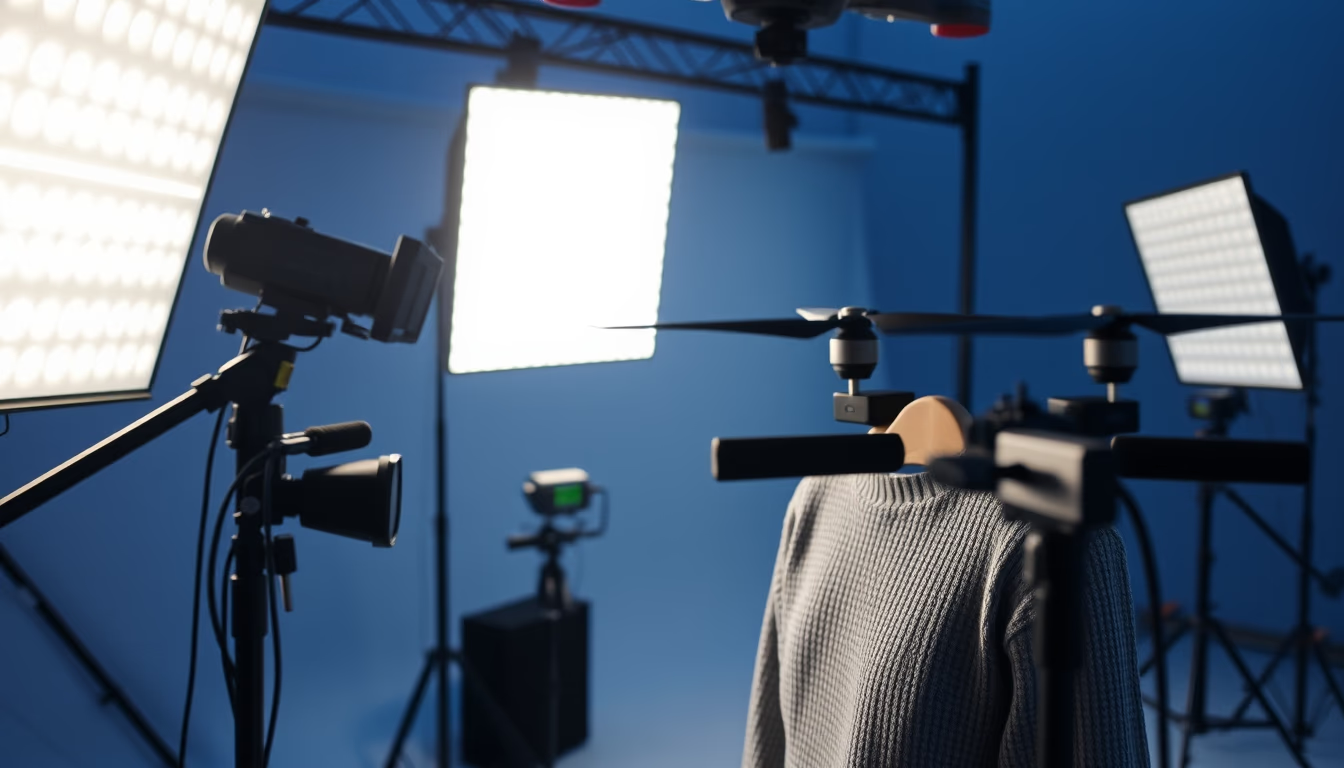
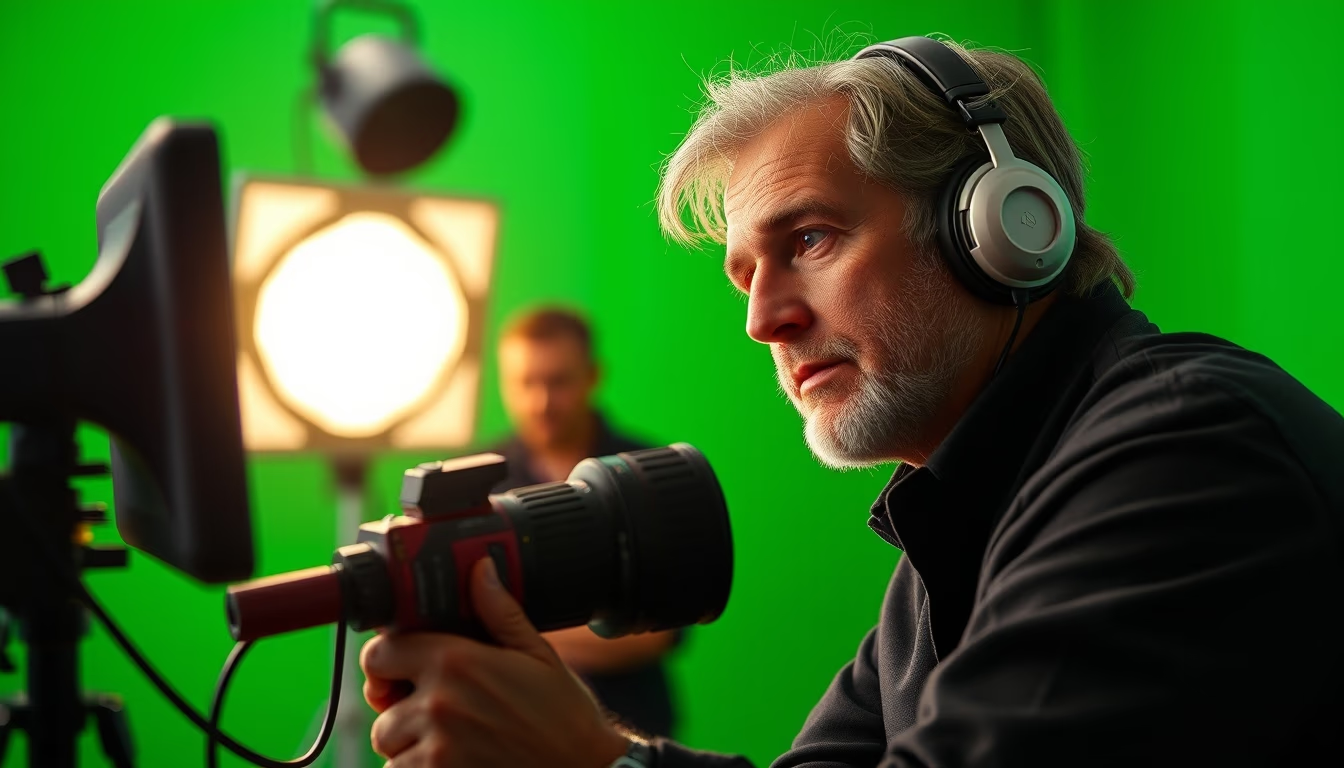
Film studios use strategically positioned light sets to create atmospheres and highlight scene elements, with precise control over intensity and color.
About this subject
Studio lighting is a cornerstone of film production, responsible for defining not only visibility but the emotional tone of every scene. A typical studio light set includes key light, fill light, and back light, forming the classic three-point lighting scheme. Each type has a specific function: the key light establishes direction and main shadows, the fill light softens contrast, and the back light separates the subject from the background, creating depth.
In recent decades, lighting technology has evolved dramatically. Incandescent and halogen lamps have been replaced by high-power LEDs, offering adjustable color temperature (typically between 2700K and 6500K) and lower energy consumption. Panels like the Arri SkyPanel and Quasar Science are widely used on Brazilian and international sets. Additionally, gels and diffusers allow modification of light quality, simulating everything from midday sun to soft window light.
The arrangement of lights is meticulously planned by the director of photography together with the gaffer. Floor plans indicate the position of each fixture, power, and angle. In large-scale productions such as soap operas and blockbuster films, up to two hundred or more reflectors are used, controlled by digital lighting consoles that allow real-time changes. An aerial view of a studio with all lights turned on reveals the geometric complexity and precision required for each shot.
Fun fact: in silent cinema, lights were extremely hot and required actors to wear sweat-proof makeup. Today, LED virtually eliminates excessive heat, improving comfort on set. Moreover, studio lighting directly influences post-production: well-lit scenes require less color correction and save editing time.
Frequently Asked Questions
What are the main types of lights in a film studio?
The main types are key light, fill light, and back light. Together they form the three-point lighting scheme, the foundation of cinematic lighting.
How has studio lighting evolved with LED technology?
Incandescent and halogen lamps have been replaced by LEDs that offer adjustable color temperature, lower energy consumption, and almost no heat, improving comfort and efficiency on set.
Why is lighting important for post-production?
Well-planned lighting reduces the need for color correction during editing, saving time and ensuring visual consistency between scenes.
Direct URL
https://pub-c7d6a6ea828543ac903a74a341ccb2e1.r2.dev/imagens/studio-lights-set-production-aerial-drone-shot-p0.avifHow to credit
Include a visible link back to UtilizAí. Copy one of the snippets below:
<a href="https://xn--utiliza-eza.com/en/midia/imagens/studio-lights-set-production-aerial-drone-shot-p0">Studio lights set production</a> by <a href="https://xn--utiliza-eza.com">UtilizAí</a>, licensed under <a href="https://creativecommons.org/licenses/by/4.0/">CC BY 4.0</a>.
[Studio lights set production](https://xn--utiliza-eza.com/en/midia/imagens/studio-lights-set-production-aerial-drone-shot-p0) by [UtilizAí](https://xn--utiliza-eza.com), CC BY 4.0
License: CC-BY-4.0