Storyboard sketches rough
1344×768 · AVIF · CC BY 4.0
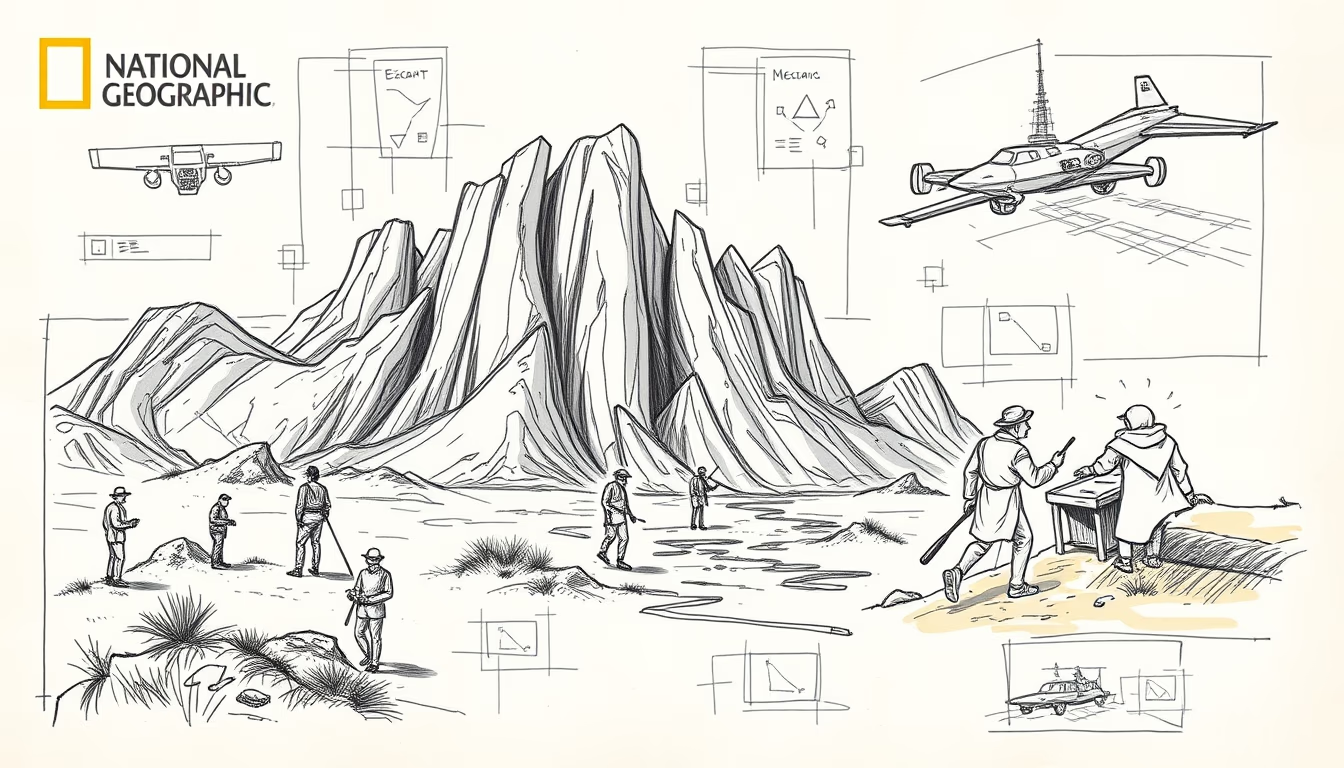
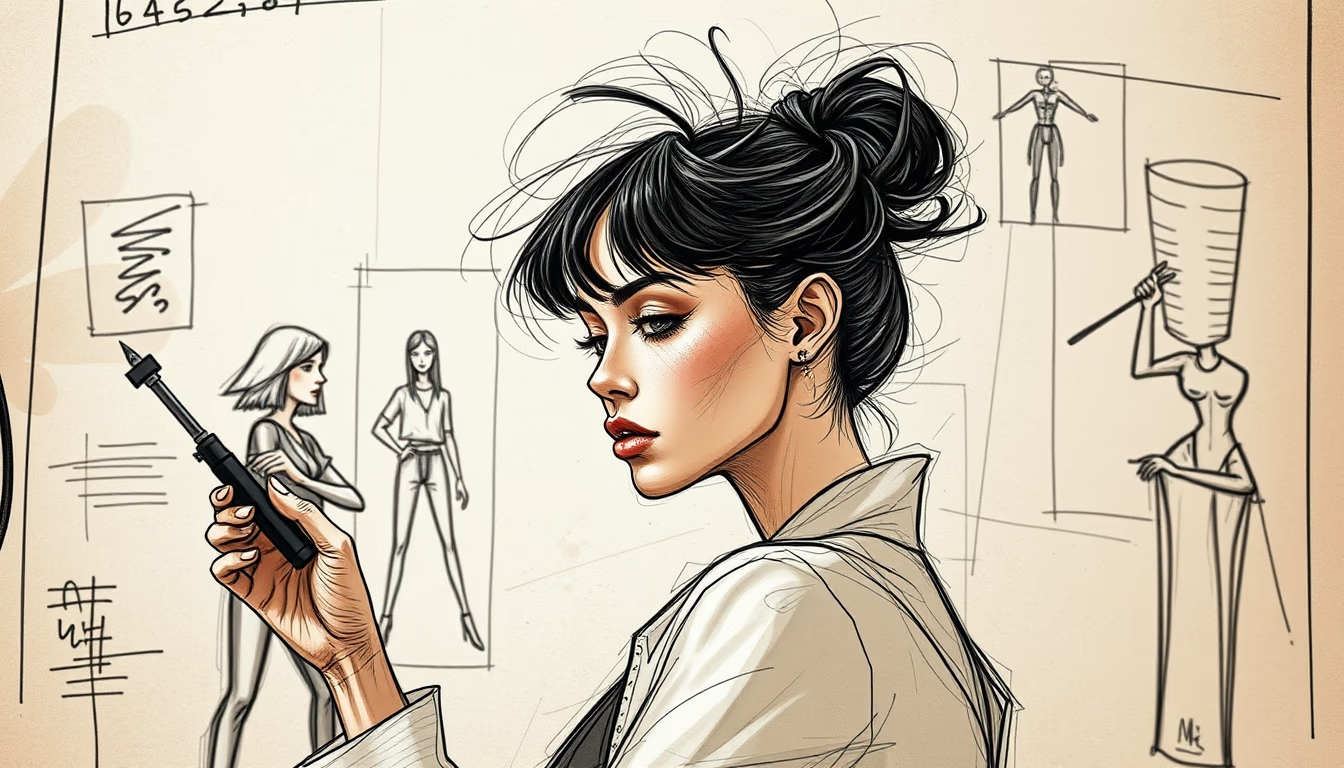
Storyboards are sequential sketches used in filmmaking to plan scenes. In National Geographic style, they combine technical precision with impactful visual storytelling.
About this subject
Storyboards are essential tools in film pre-production. They consist of sequential drawings representing each scene, defining framing, camera movements, actor positions, and transitions. Rough sketches are initial versions, quickly drawn by hand or digitally, focusing on capturing the core idea before refinement.
In the National Geographic style, storyboarding takes on a documentary approach. Productions like "Planet Earth" or "One Strange Rock" require storyboards that anticipate extreme light conditions, terrain, and animal behavior. The art team draws each shot considering natural light, angles that convey immersion, and compositions that tell a story without artificial intervention.
Famous directors have always valued this technique. Alfred Hitchcock storyboarded every shot of his films, such as in "Psycho". Steven Spielberg is also known for his detailed drawings that guided iconic scenes in "Jaws" and "Indiana Jones". For National Geographic productions, the process is adapted: storyboards are looser, allowing improvisation during field shoots, but still focusing on scientific and emotional narrative.
The use of National Geographic-style storyboards extends beyond film. It is also employed in interactive exhibits, educational series, and even adventure reality shows. The trend for 2026 points to greater integration with augmented reality, where digital storyboards can be overlaid on real location images to aid documentary pre-visualization.
Frequently Asked Questions
What is the difference between a rough storyboard and a finished one?
A rough storyboard is an initial version with quick sketches and no details, focusing on conveying the idea and flow of the scene. A finished storyboard has more elaborate drawings with colors, shading, and precise indications of framing, lighting, and camera movements.
How does the National Geographic style influence storyboarding?
The National Geographic style prioritizes authenticity and immersion. Storyboards are drawn to capture natural light, frames that bring the viewer closer to nature, and compositions that respect the real environment without artificial elements. This requires detailed planning of locations and weather conditions.
Why are storyboards essential in filmmaking?
Storyboards allow the entire team (director, cinematographer, actors) to visualize the scene before shooting, saving time and resources. They help anticipate continuity issues, block camera movements, and ensure the visual narrative aligns with the script.
Direct URL
https://pub-c7d6a6ea828543ac903a74a341ccb2e1.r2.dev/imagens/storyboard-sketches-rough-national-geographic-style-p5.avifHow to credit
Include a visible link back to UtilizAí. Copy one of the snippets below:
<a href="https://xn--utiliza-eza.com/en/midia/imagens/storyboard-sketches-rough-national-geographic-style-p5">Storyboard sketches rough</a> by <a href="https://xn--utiliza-eza.com">UtilizAí</a>, licensed under <a href="https://creativecommons.org/licenses/by/4.0/">CC BY 4.0</a>.
[Storyboard sketches rough](https://xn--utiliza-eza.com/en/midia/imagens/storyboard-sketches-rough-national-geographic-style-p5) by [UtilizAí](https://xn--utiliza-eza.com), CC BY 4.0
License: CC-BY-4.0