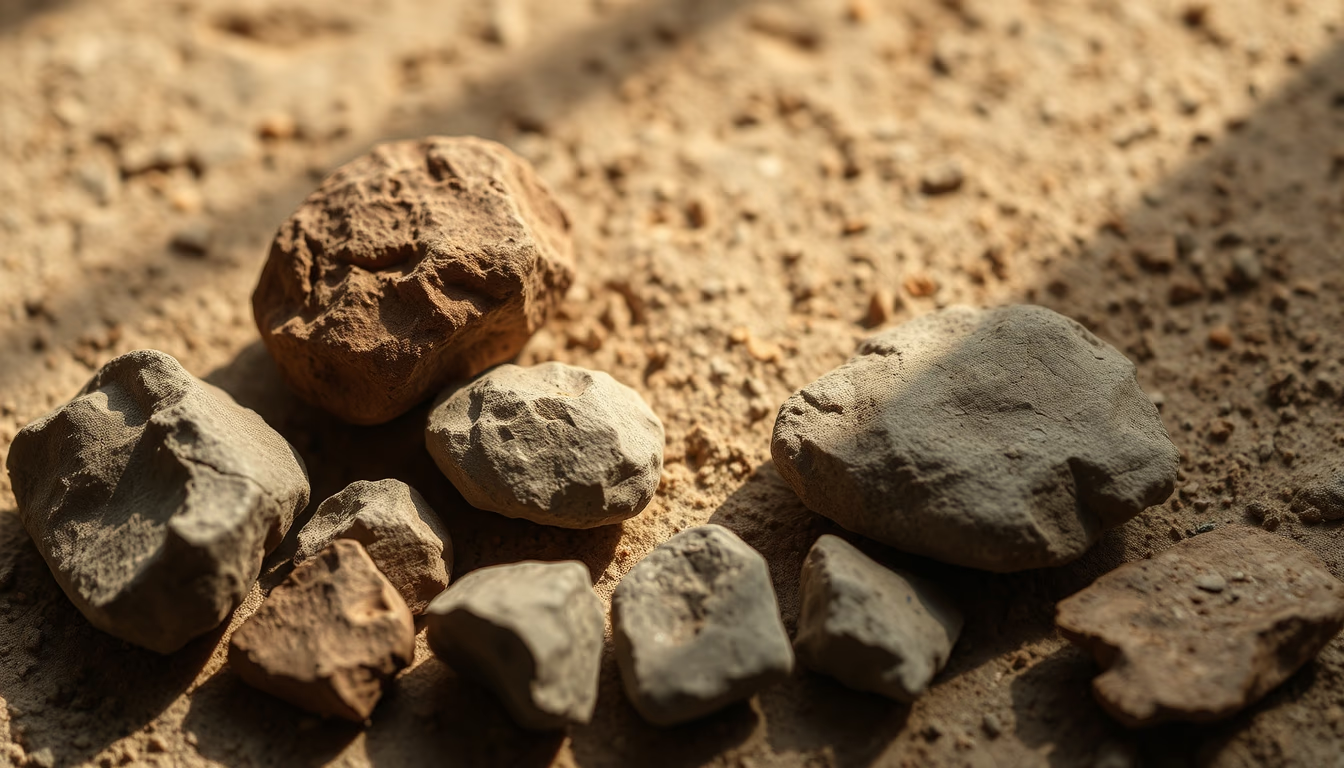
Stone tools paleolithic
1344×768 · AVIF · CC BY 4.0
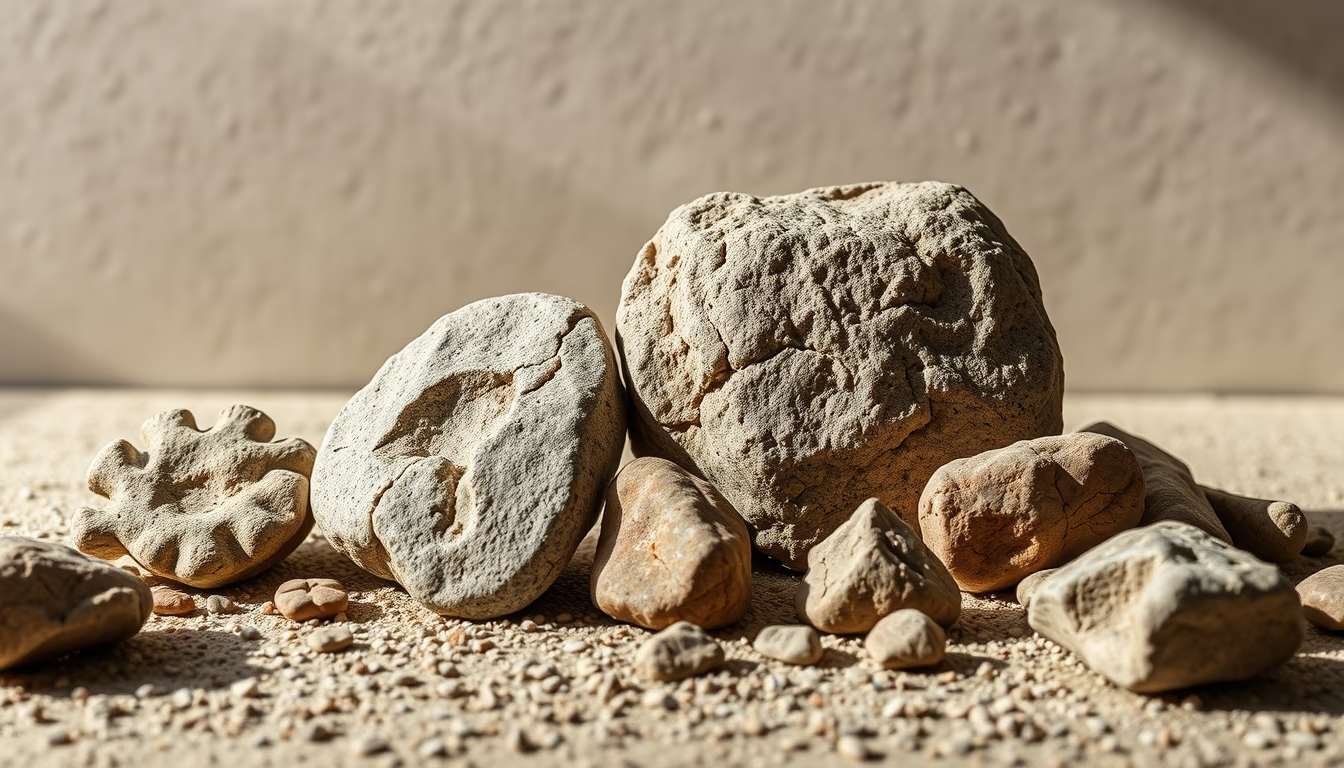
Paleolithic stone tools, the oldest human artifacts, reveal manufacturing techniques and uses that shaped cultural evolution.
About this subject
Paleolithic stone tools represent the oldest human technology, dating back approximately 3.3 million years, as evidenced by artifacts found at Lomekwi, Kenya. These tools, primarily made from flint, quartz, and basalt, were produced by knapping: the intentional flaking of stone to create sharp edges. Major categories include choppers (pebble tools), handaxes, scrapers, and spear points, each serving specific functions in food processing, hunting, and woodworking.
Different periods of the Paleolithic witnessed technical advances. The Lower Paleolithic (up to 300,000 years ago) is characterized by the Oldowan industry, with simple flaked stones, such as those found in Olduvai Gorge, Tanzania. The Middle Paleolithic (300,000, 40,000 years ago) is dominated by the Levallois technique, which allowed more precise control over flake shape, associated with Neanderthals and Homo sapiens. The Upper Paleolithic (40,000, 10,000 years ago) brought more specialized tools like blades, burins, and bone needles, indicating increased social and economic complexity.
The geographical distribution of these tools is global, with archaeological sites on every inhabited continent. In Brazil, for instance, Serra da Capivara (Piauí) contains artifacts dated to up to 50,000 years ago, challenging theories about the peopling of the Americas. Microscopic use-wear analysis allows identification of activities performed, such as cutting meat, scraping hides, or working wood, evidencing diverse cultural adaptations to different environments.
Interestingly, stone tool manufacture is not exclusive to hominins. Capuchin monkeys (Sapajus libidinosus) also use broken stones as tools, albeit with less sophisticated techniques. The shift toward more elaborate tools is linked to increased brain volume and fine motor coordination, key aspects in human evolution.
Frequently Asked Questions
How were Paleolithic stone tools made?
They were made by knapping, striking a stone core with a hammerstone to produce sharp-edged flakes. Advanced techniques like Levallois allowed more controlled flake shapes.
What are the main types of Paleolithic tools?
Major types include choppers, handaxes, scrapers, spear points, and blades. Each type was designed for specific tasks such as cutting, scraping, or piercing.
Where have the oldest stone tools been found?
The oldest known come from Lomekwi, Kenya, dating to about 3.3 million years ago. Other key sites include Olduvai Gorge (Tanzania) and Serra da Capivara (Brazil).
Direct URL
https://pub-c7d6a6ea828543ac903a74a341ccb2e1.r2.dev/imagens/stone-tools-paleolithic-minimalist-composition-p9.avifHow to credit
Include a visible link back to UtilizAí. Copy one of the snippets below:
<a href="https://xn--utiliza-eza.com/en/midia/imagens/stone-tools-paleolithic-minimalist-composition-p9">Stone tools paleolithic</a> by <a href="https://xn--utiliza-eza.com">UtilizAí</a>, licensed under <a href="https://creativecommons.org/licenses/by/4.0/">CC BY 4.0</a>.
[Stone tools paleolithic](https://xn--utiliza-eza.com/en/midia/imagens/stone-tools-paleolithic-minimalist-composition-p9) by [UtilizAí](https://xn--utiliza-eza.com), CC BY 4.0
License: CC-BY-4.0