Sticky notes colorful brainstorm
1344×768 · AVIF · CC BY 4.0
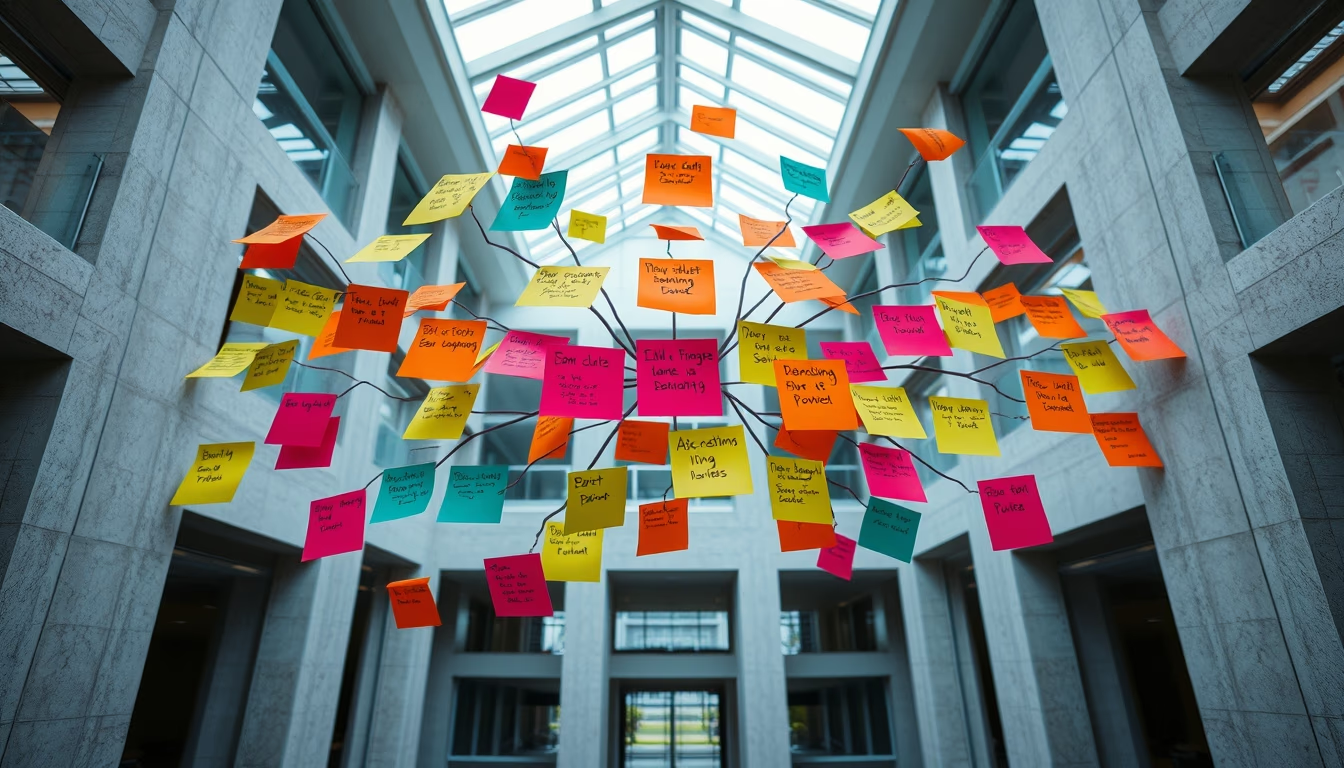
Colorful sticky notes are essential tools in brainstorming sessions, visually organizing ideas on boards or walls.
About this subject
Sticky notes, popularly known as Post-it notes, were accidentally invented by 3M scientist Spencer Silver in 1968 while trying to create a super-strong adhesive. The product was commercially launched in 1977 and quickly became an icon in offices and creative environments worldwide. Their key feature is the low-tack adhesive that allows repeated repositioning without damaging surfaces.
In brainstorming sessions, sticky notes are used to externalize ideas quickly and tangibly. Techniques such as Kanban, Design Thinking, and affinity diagramming rely on these colorful papers to represent tasks, concepts, or problems. Often, each color carries meaning: yellow for main ideas, blue for actions, pink for questions, green for resources. This color coding speeds up board reading and prioritization.
Beyond corporate use, sticky notes have become tools for study and personal organization. Artists and writers use them to map plots or sketch compositions. In 2016, the Museum of Modern Art in New York (MoMA) acquired Post-it as part of its design collection, acknowledging its importance in contemporary work culture. The versatility of sticky notes keeps them relevant even in the digital age, combining low cost, simplicity, and visual stimulation.
Frequently Asked Questions
What is the origin of sticky notes?
Sticky notes were invented in 1968 by 3M scientist Spencer Silver while trying to create a super-strong adhesive. The resulting low-tack adhesive was patented, and in 1977 3M launched the Post-it Note in the US market.
How do sticky note colors help in brainstorming?
Colors allow quick categorization: yellow for main ideas, blue for actions, pink for questions, green for resources. This visual coding speeds up board reading and prioritization during creative sessions.
Are sticky notes still used in digital environments?
Yes, digital versions exist in apps like Trello, Miro, and Microsoft Teams. They replicate the physical experience, enabling remote teams to collaborate visually in real time.
Direct URL
https://pub-c7d6a6ea828543ac903a74a341ccb2e1.r2.dev/imagens/sticky-notes-colorful-brainstorm-architectural-photography-p3.avifHow to credit
Include a visible link back to UtilizAí. Copy one of the snippets below:
<a href="https://xn--utiliza-eza.com/en/midia/imagens/sticky-notes-colorful-brainstorm-architectural-photography-p3">Sticky notes colorful brainstorm</a> by <a href="https://xn--utiliza-eza.com">UtilizAí</a>, licensed under <a href="https://creativecommons.org/licenses/by/4.0/">CC BY 4.0</a>.
[Sticky notes colorful brainstorm](https://xn--utiliza-eza.com/en/midia/imagens/sticky-notes-colorful-brainstorm-architectural-photography-p3) by [UtilizAí](https://xn--utiliza-eza.com), CC BY 4.0
License: CC-BY-4.0