Starfield night clear sky
1344×768 · AVIF · CC BY 4.0
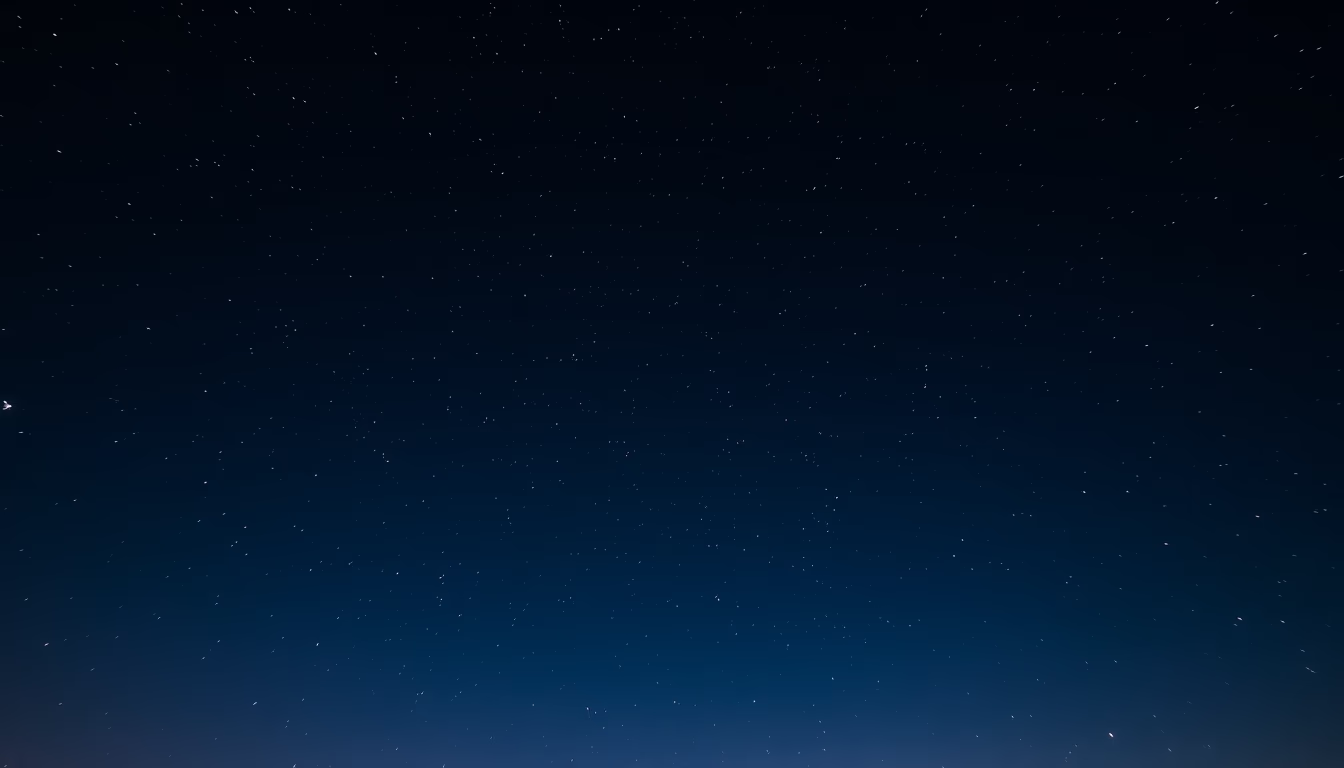
A starfield on a clear night reveals the Milky Way and hundreds of stars visible to the naked eye, a rare phenomenon in urban areas.
About this subject
A starfield is a region of the night sky where a large number of stars are visible to the naked eye or through optical equipment. On clear nights away from light pollution, thousands of stars, open clusters, and even nebulae can be observed. The Milky Way, our galaxy, appears as a milky band across the sky, with impressive stellar densities. Locations with Bortle Scale class 1 or 2, such as the Atacama Desert or Death Valley National Park, offer the best conditions. In tropical regions like Brazil, the galactic center is higher during winter, providing spectacular views of the Southern Cross, Alpha Centauri, and the Carina Nebula.
Starfield observation is an ancient practice, from astronomical navigation to mythology. Today, astrophotography captures these fields with DSLR cameras and wide-angle lenses, revealing colors and details invisible to the eye. The use of star trackers and image stacking enhances faint nebulae and stars. Urban light pollution hides most stars; however, special filters and long exposures can still record starfields even in cities.
Culturally, starfields inspire both science and art. Projects like the Hipparcos Catalog and Gaia map stellar positions precisely, while contemporary artists use long-exposure photos for abstract compositions. In Brazil, astronomical sites like the Pico dos Dias Observatory and dark-sky parks such as the Bela Vista Biological Refuge of Itaipu host observation events. The night sky is a threatened natural heritage, and initiatives like the International Dark Sky Association advocate for light pollution reduction.
Frequently Asked Questions
What is a starfield?
A starfield is a region of the night sky with a high density of visible stars, typically observed in areas with low light pollution. It can be seen with the naked eye or captured via astrophotography.
What is the difference between a starfield and deep-sky photography?
Starfield focuses on wide angles to capture large stellar areas, including the Milky Way. Deep-sky photography uses telescopes for specific objects like galaxies and nebulae.
How to photograph a starfield?
Use a camera with a wide-angle lens on a tripod, set to maximum aperture and high ISO (1600, 6400). Exposures of 15, 30 seconds prevent star trails. In dark locations, stacking multiple images improves results.
Direct URL
https://pub-c7d6a6ea828543ac903a74a341ccb2e1.r2.dev/imagens/starfield-night-clear-sky-fine-art-photography-p0.avifHow to credit
Include a visible link back to UtilizAí. Copy one of the snippets below:
<a href="https://xn--utiliza-eza.com/en/midia/imagens/starfield-night-clear-sky-fine-art-photography-p0">Starfield night clear sky</a> by <a href="https://xn--utiliza-eza.com">UtilizAí</a>, licensed under <a href="https://creativecommons.org/licenses/by/4.0/">CC BY 4.0</a>.
[Starfield night clear sky](https://xn--utiliza-eza.com/en/midia/imagens/starfield-night-clear-sky-fine-art-photography-p0) by [UtilizAí](https://xn--utiliza-eza.com), CC BY 4.0
License: CC-BY-4.0