Starfield night clear sky
1344×768 · AVIF · CC BY 4.0
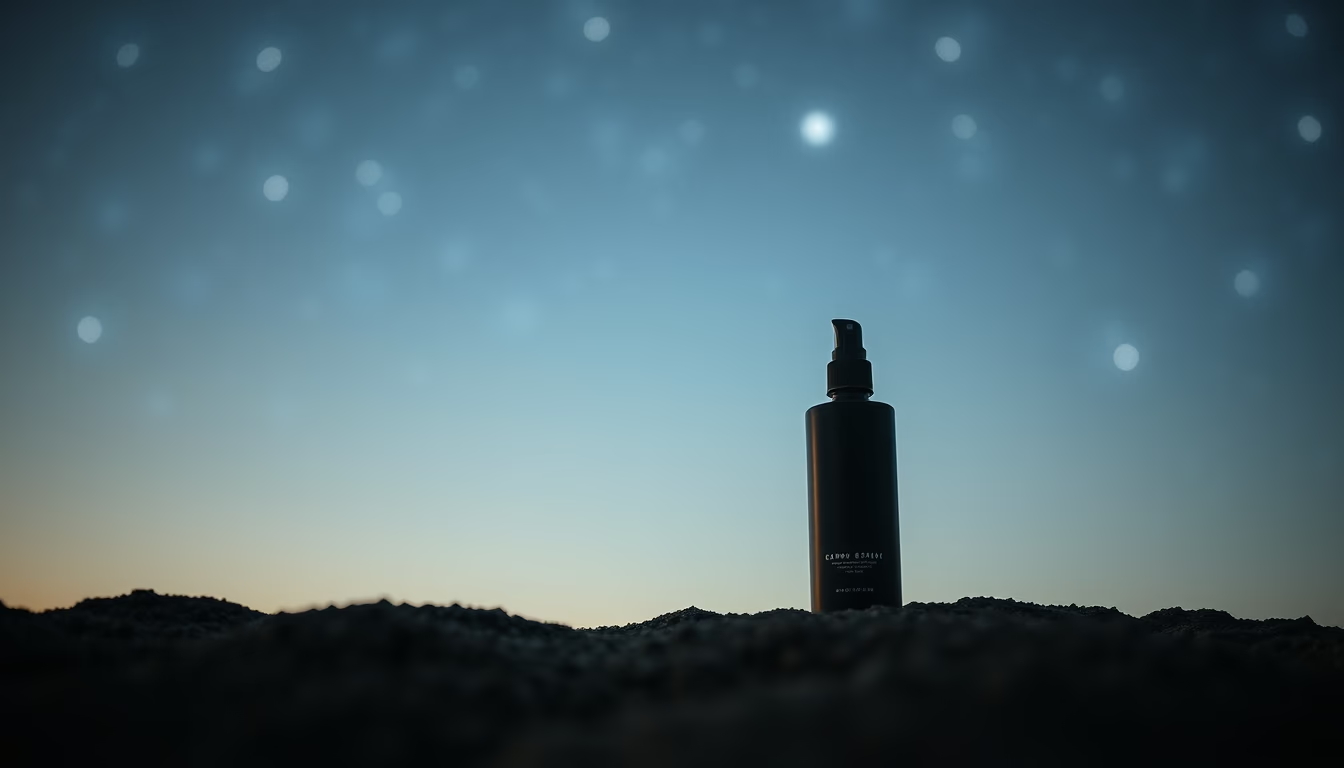
A clear starry night sky, often used as a backdrop in commercial product photography, is an astronomical spectacle that delights and inspires.
About this subject
A starry sky on a cloudless night consists of thousands of stars visible to the naked eye, along with planets, constellations, and, under good conditions, the luminous band of the Milky Way. In locations with low light pollution, such as deserts or remote mountains, it is possible to observe up to 4,500 stars on a clear night. Visibility depends on factors like humidity, altitude, and moon phase. Uninhabited regions like the Atacama Desert in Chile or the Namib Desert are recognized as some of the best astronomical observation points on the planet.
In product photography, a starry background conveys feelings of tranquility, luxury, and connection with nature. Brands of perfumes, watches, and camping equipment frequently use this setting to evoke dreams and adventure. Techniques such as long exposure and noise control are essential to capture stellar brightness without compromising the sharpness of the main subject. The composition often balances the product in the foreground with the vastness of the cosmos in the background, creating a visual narrative of exclusivity and mystery.
Culturally, the starry sky has guided navigators and farmers for millennia. Constellations like the Southern Cross and the Big Dipper aided nighttime orientation. Today, light pollution in urban areas prevents most people from seeing more than a few dozen stars. Movements such as Dark Sky Places aim to preserve locations with dark skies, encouraging ecotourism and astrophotography. The Milky Way, our galaxy, appears as a diffuse band made up of billions of stars and interstellar dust; its observation is most intense during winter in the southern hemisphere.
For those wanting to photograph the starry sky, it is recommended to use a tripod, a wide aperture (f/2.8 or smaller), and an exposure time between 10 and 25 seconds to avoid star trails. Apps like Stellarium or SkySafari help predict the position of stars and the Milky Way. On moonless nights, contrast is higher and details of cosmic dust appear more clearly. The combination of nighttime silence with starry vastness creates an almost mystical experience that commercial photography seeks to translate into consumer desire.
Frequently Asked Questions
How many stars can be seen with the naked eye on a clear night?
Under ideal conditions, away from light pollution, a person can observe between 2,500 and 4,500 stars with the naked eye. In urban areas, this number drops to a few dozen.
What is the best time to photograph the Milky Way?
The Milky Way is most visible during winter in the southern hemisphere and summer in the northern hemisphere. Peak brightness occurs between May and August in the south and between June and September in the north. Moonless nights are recommended.
Why are starry skies used in product photography?
A starry background evokes emotions like tranquility, exclusivity, and adventure. It helps position the product as special, connecting it to a natural and inspiring context that appeals to consumers.
Direct URL
https://pub-c7d6a6ea828543ac903a74a341ccb2e1.r2.dev/imagens/starfield-night-clear-sky-commercial-product-photography-p2.avifHow to credit
Include a visible link back to UtilizAí. Copy one of the snippets below:
<a href="https://xn--utiliza-eza.com/en/midia/imagens/starfield-night-clear-sky-commercial-product-photography-p2">Starfield night clear sky</a> by <a href="https://xn--utiliza-eza.com">UtilizAí</a>, licensed under <a href="https://creativecommons.org/licenses/by/4.0/">CC BY 4.0</a>.
[Starfield night clear sky](https://xn--utiliza-eza.com/en/midia/imagens/starfield-night-clear-sky-commercial-product-photography-p2) by [UtilizAí](https://xn--utiliza-eza.com), CC BY 4.0
License: CC-BY-4.0