St patricks shamrock parade
1344×768 · AVIF · CC BY 4.0
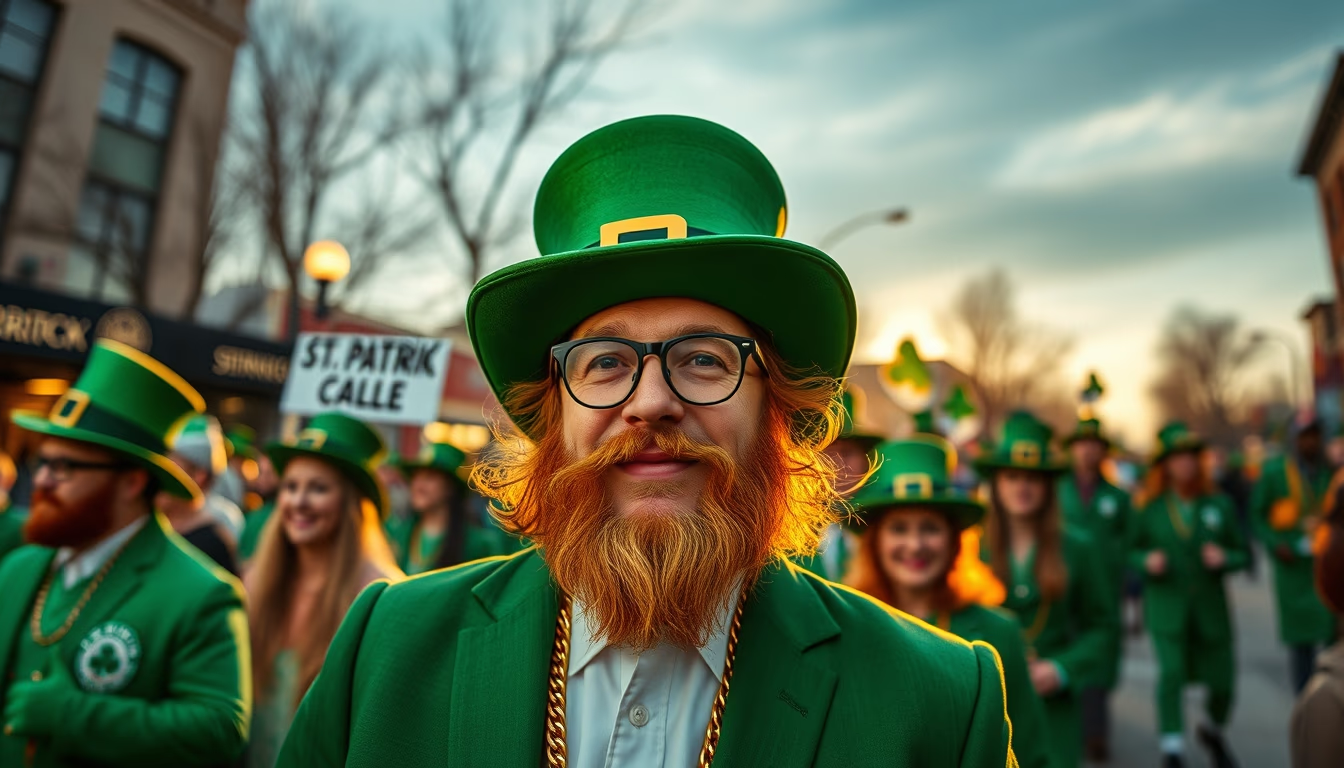
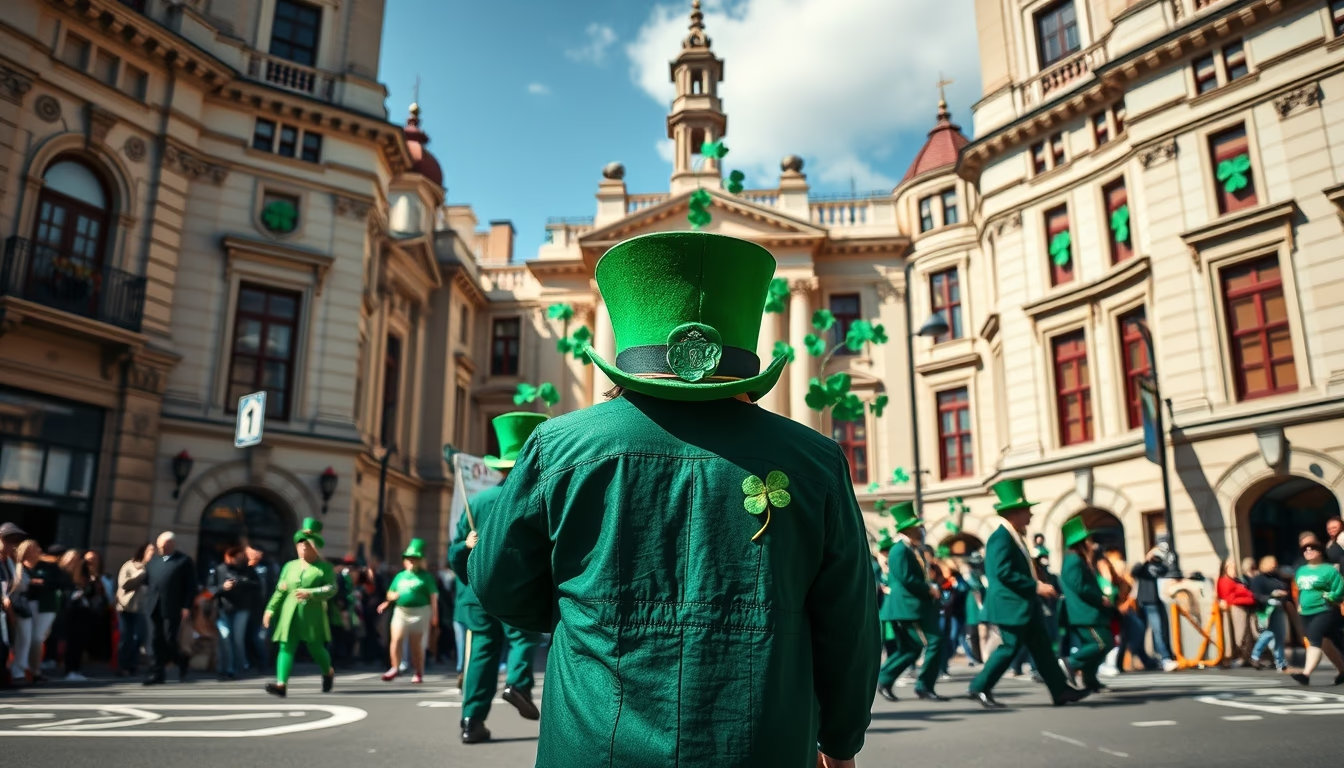
The St. Patrick's Day Parade, featuring the iconic shamrock, celebrates Irish culture worldwide, uniting communities in a festival of music, dance, and ethnic pride.
About this subject
St. Patrick's Day, celebrated on March 17, honors Ireland's patron saint, who according to legend used a three-leafed shamrock to explain the Holy Trinity to pagans. The parade tradition, which began in the United States in the 18th century, has spread globally, becoming one of the largest cultural events worldwide. Cities such as New York, Dublin, and Chicago host grand processions featuring bands, dancers, and floats decorated in green, a color symbolizing both Ireland's landscape and the republican movement.
The shamrock (Trifolium repens) is the central symbol of the celebration. Beyond its religious origin, it has been Ireland's national emblem since the 19th century, adopted by cultural and sports societies. During parades, participants hand out real or artificial shamrocks, and many wear green clothing adorned with the leaf. The tradition of 'pinching anyone not wearing green' is a popular joke in the United States, though less common in Ireland itself.
Historically, the first St. Patrick's Day parade took place in 1737 in Boston, organized by Irish immigrants. New York's parade began in 1762 and now attracts over 2 million spectators. In Ireland, the St. Patrick's Festival is a multi-day national holiday with parades in every city, notably Dublin, which welcomes around 500,000 tourists. Irish folk music, featuring instruments like the fiddle and uilleann pipes, along with step dance, are constant elements.
Interestingly, the shamrock was not always linked to the saint. The first documented reference to its use on St. Patrick's Day appears in a 1681 poem by Luke Wadding. Today, the shamrock appears on everything from T-shirts to beer cans, and its design is trademarked by the Irish government. The celebration, which began as a religious feast, has become a secular phenomenon of inclusion, promoting Irish culture and uniting people from diverse backgrounds.
Frequently Asked Questions
Why is the three-leaf clover (shamrock) the symbol of St. Patrick's Day?
According to tradition, St. Patrick used the shamrock to explain the Holy Trinity to the pagan Irish. The three leaves represent the Father, Son, and Holy Spirit. Over time, the shamrock became Ireland's national emblem.
What is the origin of the St. Patrick's Day parade?
The first parade took place in 1737 in Boston, organized by Irish immigrants. The largest parade in the world is in New York City, which began in 1762 and now attracts millions of spectators.
How is St. Patrick's Day celebrated in Ireland?
In Ireland, it is a national holiday with the multi-day St. Patrick's Festival. There are parades in every city, Irish music and dance performances, fireworks, and cultural events.
Direct URL
https://pub-c7d6a6ea828543ac903a74a341ccb2e1.r2.dev/imagens/st-patricks-shamrock-parade-cinematic-wide-shot-fresh8.avifHow to credit
Include a visible link back to UtilizAí. Copy one of the snippets below:
<a href="https://xn--utiliza-eza.com/en/midia/imagens/st-patricks-shamrock-parade-cinematic-wide-shot-fresh8">St patricks shamrock parade</a> by <a href="https://xn--utiliza-eza.com">UtilizAí</a>, licensed under <a href="https://creativecommons.org/licenses/by/4.0/">CC BY 4.0</a>.
[St patricks shamrock parade](https://xn--utiliza-eza.com/en/midia/imagens/st-patricks-shamrock-parade-cinematic-wide-shot-fresh8) by [UtilizAí](https://xn--utiliza-eza.com), CC BY 4.0
License: CC-BY-4.0