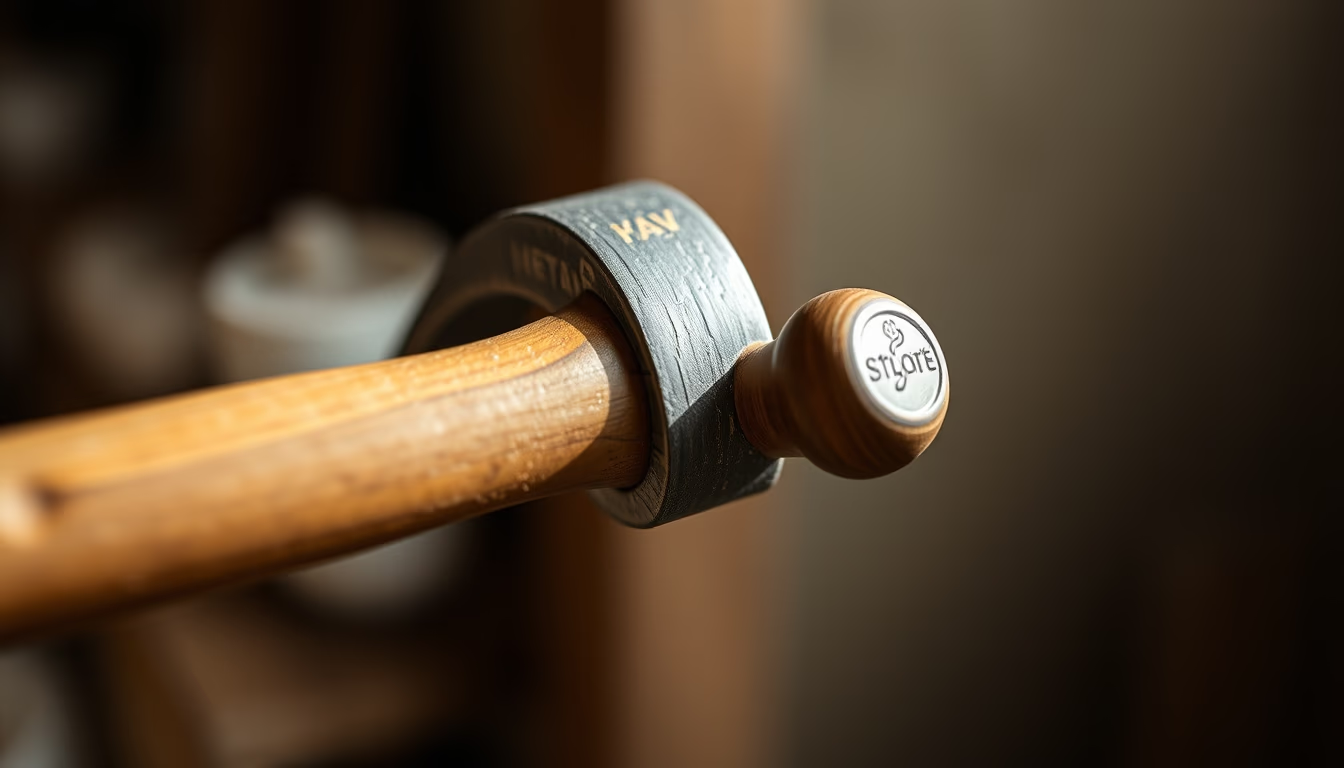
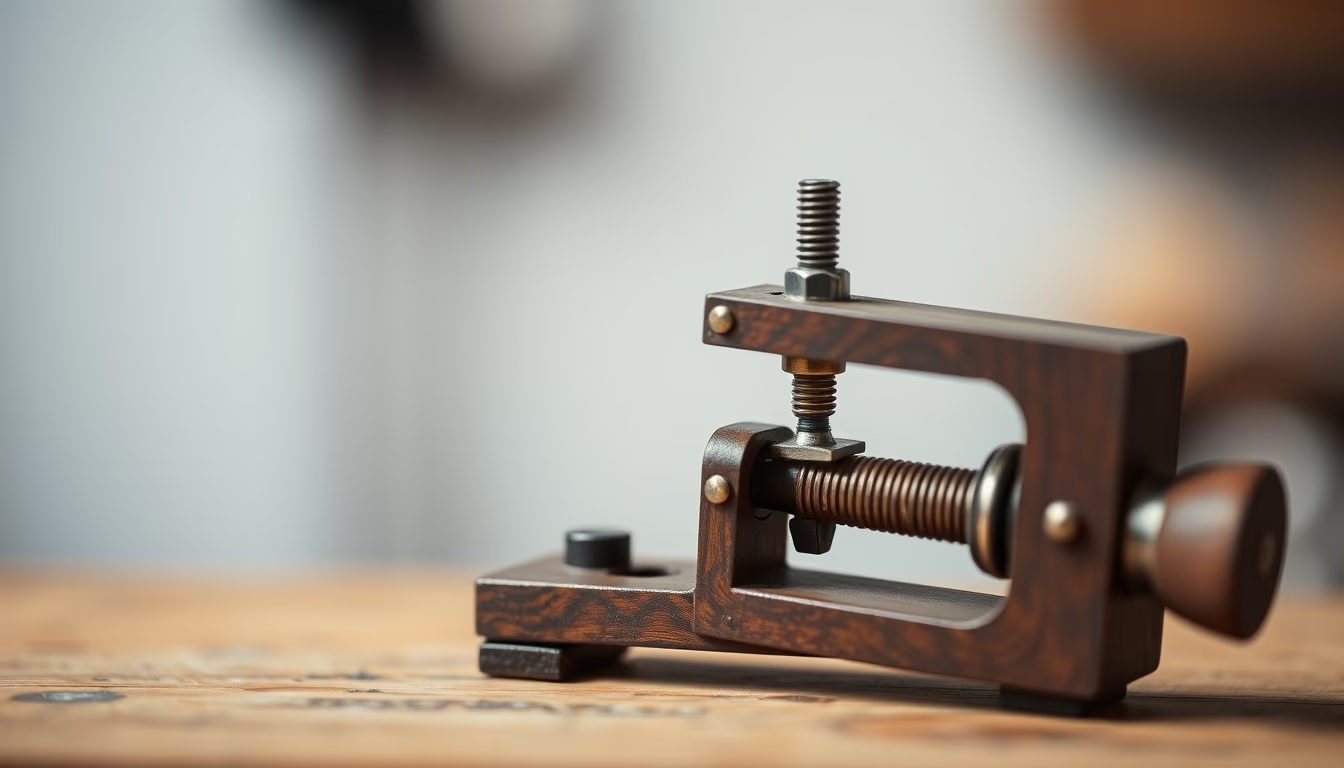
Square machinist
1344×768 · AVIF · CC BY 4.0

The machinist square is a precision tool essential in metalworking for checking and marking right angles. Its history dates back to industrial development.
About this subject
The machinist square, also known as a precision square, is a fundamental tool in metalworking and precision mechanics. Composed of a blade and a base (or head) at a right angle, usually made of hardened steel to resist wear, its main purpose is to check perpendicularity between surfaces and assist in marking straight lines on metal parts. Unlike common carpenter squares, the machinist square has much tighter tolerances, on the order of hundredths of a millimeter, and is calibrated against national and international standards.
Its origin is closely tied to the Industrial Revolution, when the need for interchangeable parts demanded precise measuring tools. In the 19th century, manufacturers like Starrett in the United States and Brown & Sharpe popularized adjustable squares, such as the combination square, which integrates a ruler, level, and protractor. In Brazil, the use of these tools spread with industrialization after 1930, especially in automotive and machinery sectors. Maintenance includes avoiding drops and corrosion, storing it in a protective case.
A technical curiosity: the machinist square is not only an angle checker but also a reference for truing other tools like clamps and jigs. Its precision is so critical that in tool and die shops, it is often verified on granite surface plates with dial indicators. Variations include the cylinder square, used to check internal diameters, and the clamp square for irregular parts. Despite advances in digital instruments, the manual square is still preferred for its robustness and independence from batteries.
In the context of maker culture and restoration of old machines, the machinist square has become a collector's item. Pieces from the 19th and 20th centuries, with brands like Lufkin, P & W, or Mitutoyo, are valued for their historical precision. Additionally, the technique of layout with a square and scriber is taught in vocational courses as a foundation of mechanical metrology.
Frequently Asked Questions
What is a machinist square used for?
It is used to check right angles (90 degrees) on metal parts, lay out perpendicular lines, and align components during machining or assembly.
What is the difference between a machinist square and a common square?
A machinist square has much tighter tolerances (on the order of hundredths of a millimeter) and is made of hardened steel, while common squares are used in carpentry with lower accuracy requirements.
How should a machinist square be maintained?
Avoid dropping it, keep it clean and dry, and store it in a case or protected area to prevent corrosion and damage to its precise edges.
Direct URL
https://pub-c7d6a6ea828543ac903a74a341ccb2e1.r2.dev/imagens/square-machinist-magazine-editorial-fresh1.avifHow to credit
Include a visible link back to UtilizAí. Copy one of the snippets below:
<a href="https://xn--utiliza-eza.com/en/midia/imagens/square-machinist-magazine-editorial-fresh1">Square machinist</a> by <a href="https://xn--utiliza-eza.com">UtilizAí</a>, licensed under <a href="https://creativecommons.org/licenses/by/4.0/">CC BY 4.0</a>.
[Square machinist](https://xn--utiliza-eza.com/en/midia/imagens/square-machinist-magazine-editorial-fresh1) by [UtilizAí](https://xn--utiliza-eza.com), CC BY 4.0
License: CC-BY-4.0