Square machinist
1344×768 · AVIF · CC BY 4.0
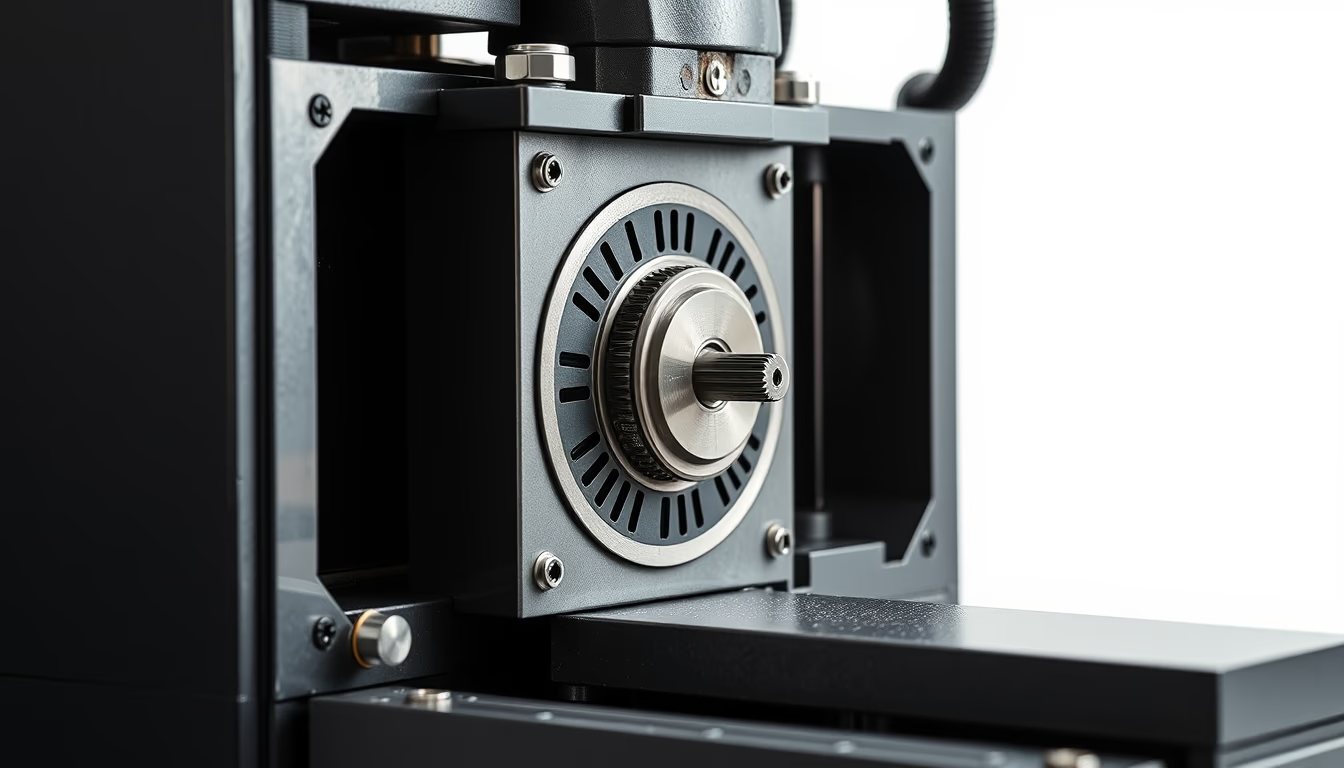
Machinist square: precision tool used in metalworking to check right angles. An essential piece in machine shops since the 19th century.
About this subject
The machinist square, also known as a precision square or steel square, is an angular measuring tool designed to check right angles (90 degrees) on metal parts. Composed of a thin blade and a thicker base, usually made of hardened steel or cast iron, its construction ensures thermal stability and wear resistance. Unlike common carpenter squares, this instrument has ground edges with tolerances on the order of 0.01 mm, being calibrated for use in machining environments.
Its origins trace back to the early Industrial Revolution, when the need for interchangeable parts demanded standardized measuring tools. English engineer Sir Joseph Whitworth (1803-1887) was one of the first to popularize the use of precision squares as part of his thread and gauge system. In the 20th century, brands such as Starrett, Mitutoyo, and Brown & Sharpe became references in manufacturing these instruments, adopting alloy steels and tempering techniques that minimize distortion.
The machinist square is periodically verified in metrology laboratories using granite surface plates and gauge blocks. Precision classes such as AA (most accurate) and A (standard accuracy) are defined by standards like DIN 875 or ISO 2768. A common test involves placing the square against a flat surface and checking for light transmission between the blade and the part: any gap indicates the need for reconditioning.
Collectors and restorers of antique tools particularly value squares manufactured between 1850 and 1950, often found at antique fairs or in decommissioned workshops. The square in the image, with signs of use and surface oxidation, likely belonged to a lathe operator or fitter, still functional for work that does not require micrometric precision. The patina and scratches tell the story of decades of service in an industry that shaped the modern world.
Frequently Asked Questions
What is the difference between a machinist square and a common carpenter's square?
A machinist square is made of hardened steel or cast iron with ground edges, offering precision up to 0.01 mm. A common carpenter's square is usually made of wood or plastic and has much looser tolerances, unsuitable for metalworking.
How to calibrate a machinist square?
Calibration is performed using a granite surface plate and a right-angle gauge block. The square is placed on the plate, and any light passing between the blade and the block indicates a deviation, requiring professional regrinding.
Which brands are references in vintage machinist squares?
Brands such as Starrett, Mitutoyo, Brown & Sharpe, Lufkin, and P&W (Pratt & Whitney) are highly regarded. Models from the late 19th and early 20th centuries are especially sought after by collectors.
Direct URL
https://pub-c7d6a6ea828543ac903a74a341ccb2e1.r2.dev/imagens/square-machinist-commercial-product-photography-fresh2.avifHow to credit
Include a visible link back to UtilizAí. Copy one of the snippets below:
<a href="https://xn--utiliza-eza.com/en/midia/imagens/square-machinist-commercial-product-photography-fresh2">Square machinist</a> by <a href="https://xn--utiliza-eza.com">UtilizAí</a>, licensed under <a href="https://creativecommons.org/licenses/by/4.0/">CC BY 4.0</a>.
[Square machinist](https://xn--utiliza-eza.com/en/midia/imagens/square-machinist-commercial-product-photography-fresh2) by [UtilizAí](https://xn--utiliza-eza.com), CC BY 4.0
License: CC-BY-4.0