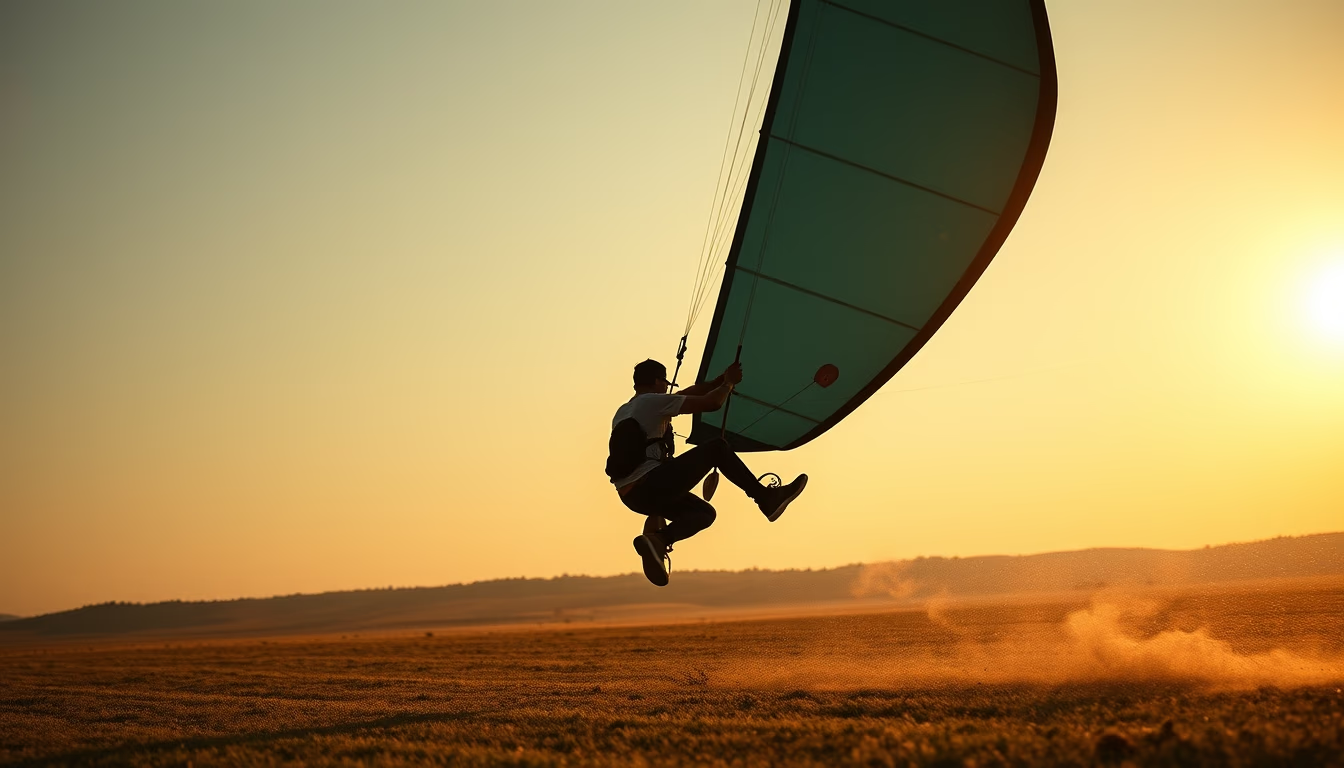
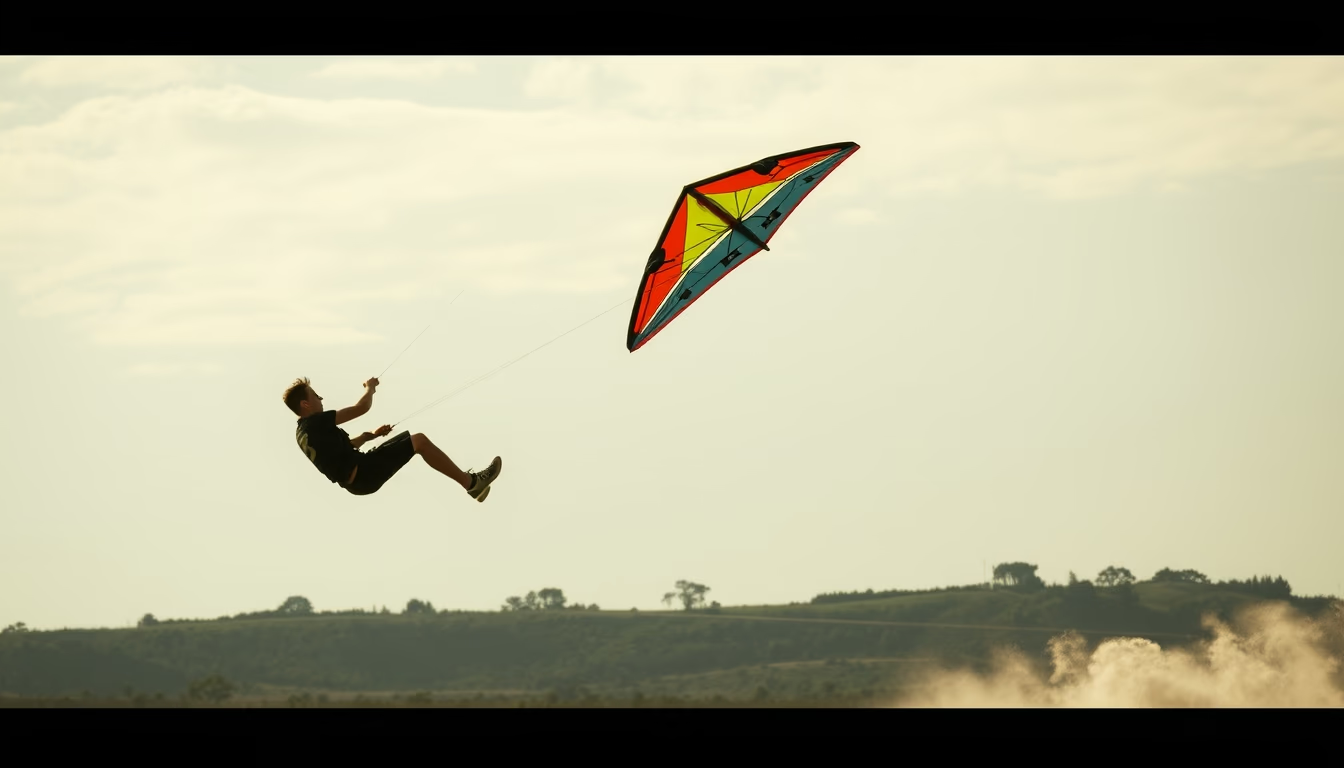
Sport kite stunt
1344×768 · AVIF · CC BY 4.0
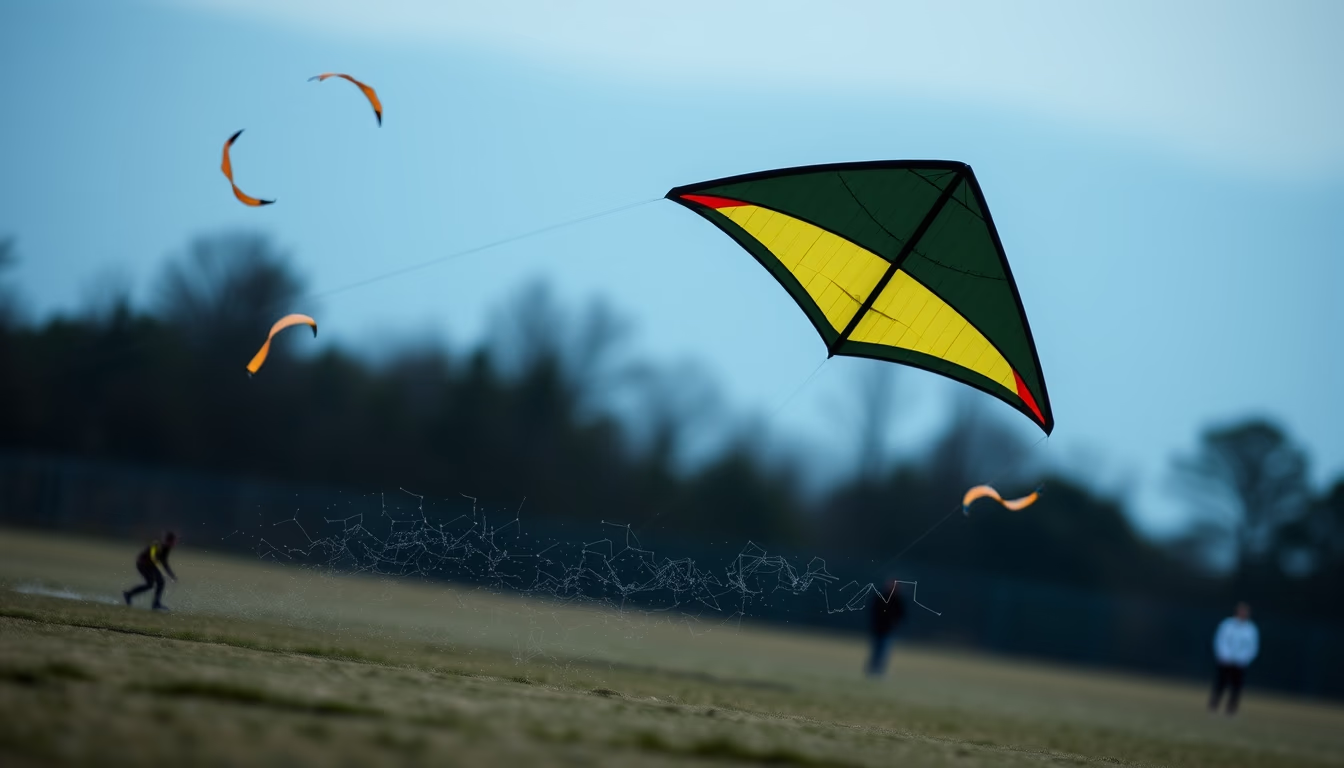
Dual-line stunt kites, also called sport kites, enable precise maneuvers and aerial tricks, used in competitions and festivals worldwide.
About this subject
Stunt kites, also called sport kites, emerged in the 1970s when enthusiasts began experimenting with dual-line designs for greater control. English innovator Peter Powell is often credited with the pioneer model in 1974, which became widely popular. Unlike traditional single-line kites, stunt kites have two or four lines, allowing pilots to perform sharp turns, loops, dives, and complex patterns like the 'walking cobra'.
Today, competitive disciplines include ballet (freestyle), where pilots choreograph routines to music, and precision flying, requiring accurate navigation through fixed points in the sky. These kites can reach speeds over 100 km/h (62 mph), demanding quick reflexes. Typical materials include ripstop nylon, carbon fiber, and aluminum, balancing lightness and durability.
Major festivals such as the Washington State International Kite Festival in the USA and Berck-sur-Mer in France attract top pilots. In Brazil, events like 'Pipas do Mundo' in São Paulo and the Brazilian Championship of Acrobatic Kites promote the sport. A fun fact: the world record for longest continuous flight with a stunt kite exceeds 10 hours, achieved under suitable wind conditions.
The tilt-shift miniature tag relates to a photographic technique that gives aerial images a model-like appearance, but it does not affect the essence of the sport. The main focus remains on pilot skill and kite engineering, which constantly evolves with new designs such as modified delta and diamond shapes.
Frequently Asked Questions
What is the difference between a stunt kite and a regular kite?
The main difference is the number of lines: stunt kites use two or four lines, allowing full directional control and complex maneuvers. Regular kites have a single line and fly freely in the wind.
Is it hard to fly a stunt kite?
It can take practice, but beginners can learn the basics in a few hours. The key is coordinating hand movements and sensing the wind. Many clubs offer lessons and lightweight trainer kites.
What is the best wind for flying stunt kites?
Wind speeds between 10 and 30 km/h (6, 18 mph) are ideal for most models. Light wind may not provide enough lift, while strong wind can damage the kite or require greater strength from the pilot.
Direct URL
https://pub-c7d6a6ea828543ac903a74a341ccb2e1.r2.dev/imagens/sport-kite-stunt-tilt-shift-miniature-fresh15.avifHow to credit
Include a visible link back to UtilizAí. Copy one of the snippets below:
<a href="https://xn--utiliza-eza.com/en/midia/imagens/sport-kite-stunt-tilt-shift-miniature-fresh15">Sport kite stunt</a> by <a href="https://xn--utiliza-eza.com">UtilizAí</a>, licensed under <a href="https://creativecommons.org/licenses/by/4.0/">CC BY 4.0</a>.
[Sport kite stunt](https://xn--utiliza-eza.com/en/midia/imagens/sport-kite-stunt-tilt-shift-miniature-fresh15) by [UtilizAí](https://xn--utiliza-eza.com), CC BY 4.0
License: CC-BY-4.0