Sport kite stunt
1344×768 · AVIF · CC BY 4.0
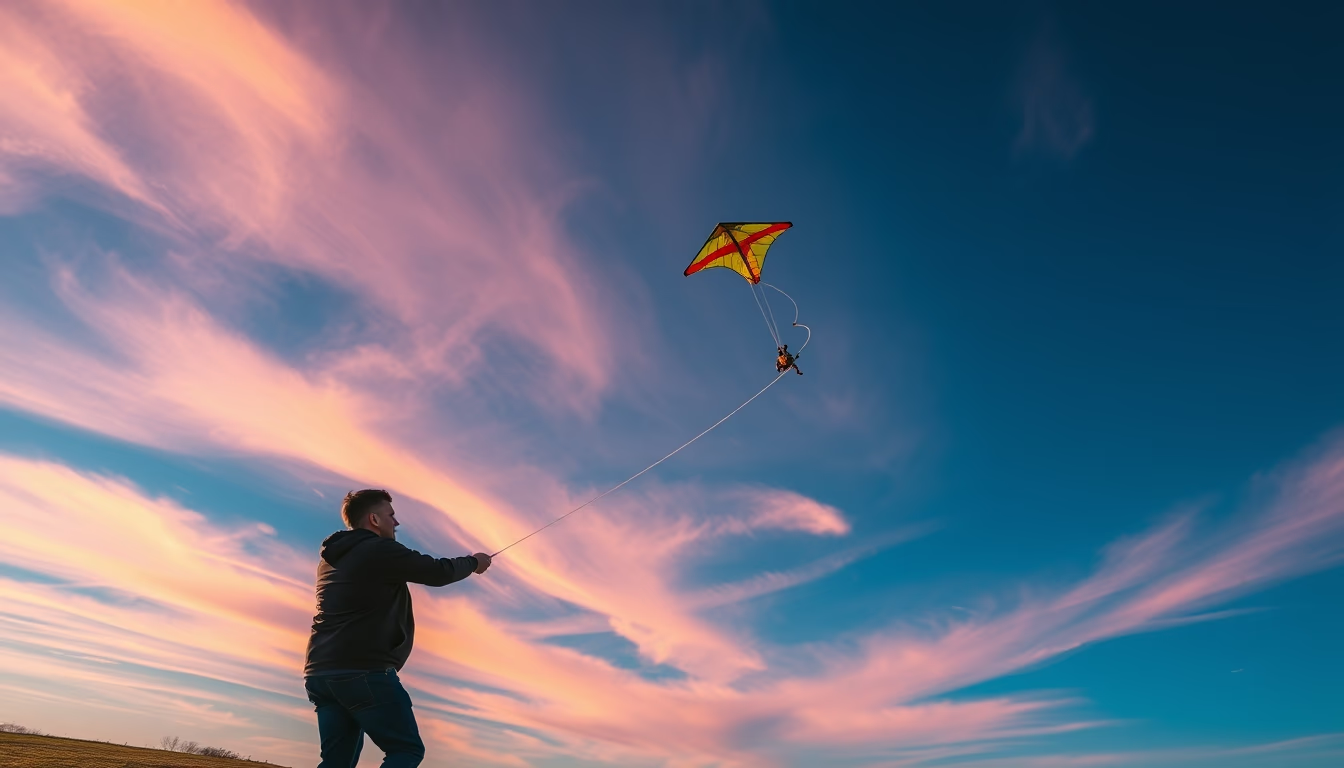
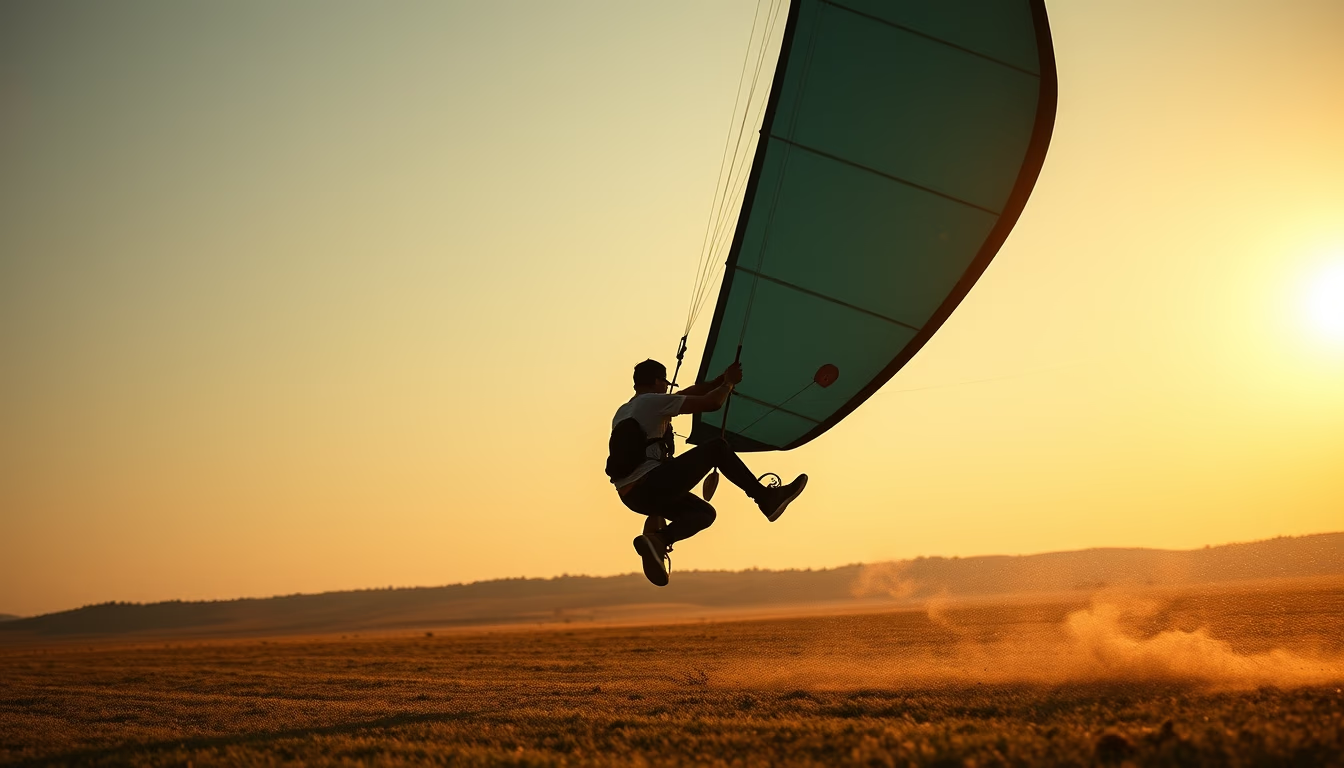
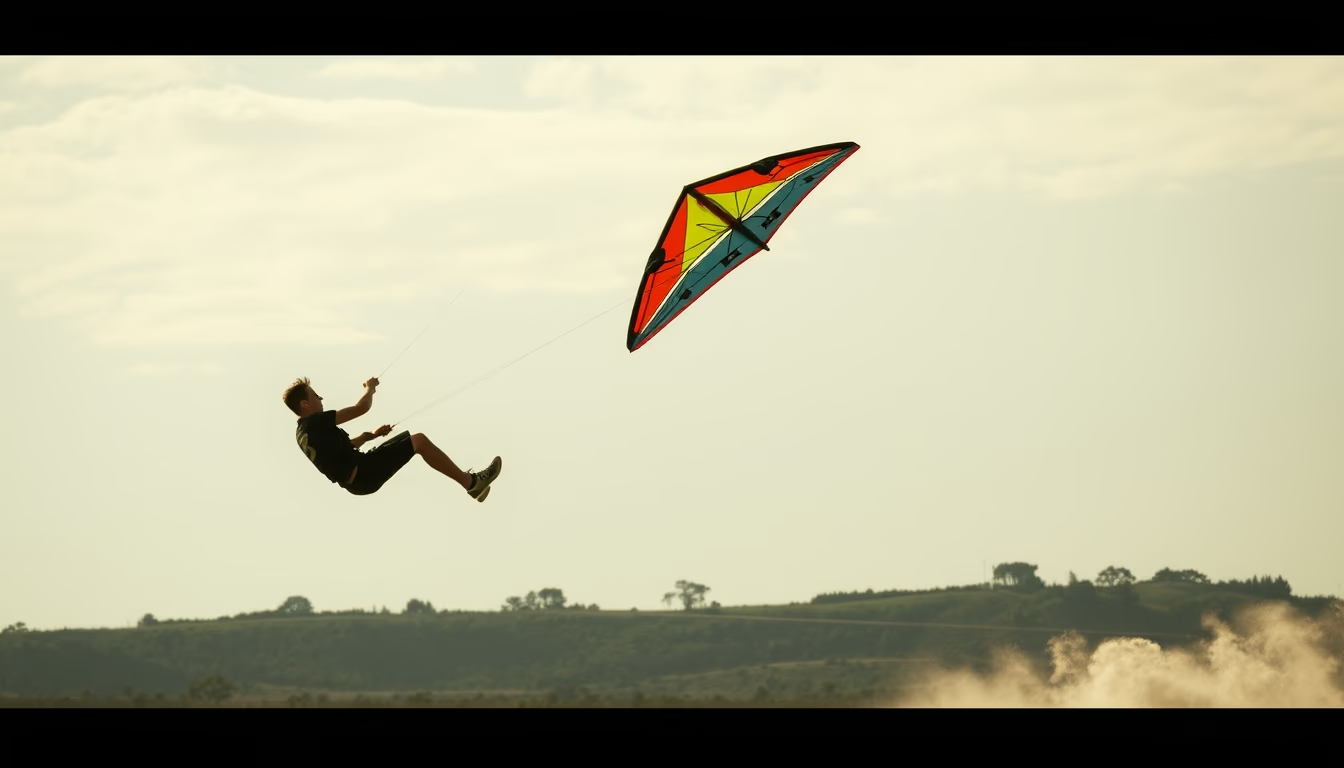
Sport kites are acrobatic kites controlled by two or four lines, capable of executing precise flights, spins, and spectacular loops.
About this subject
A sport kite, also known as a stunt kite or precision kite, is a type of kite designed for complex aerial maneuvers. Unlike traditional single-line kites, sport kites are controlled by two or four lines, allowing the pilot to perform spins, loops, dives, and figures such as the "figure eight" and "stall". Mastering these maneuvers requires technique and coordination, practiced both for recreation and in professional competitions.
The most common variation is the dual-line kite, which provides direct control over direction and speed. Quad-line kites, on the other hand, enable more subtle movements like stops and inversions, favored by experienced pilots. These kites are made from lightweight, durable materials such as ripstop nylon and carbon fiber, resisting strong winds without losing agility.
Long exposure photography is often used to capture the light trails left by these kites during night flights, creating abstract and dynamic images. This technique requires the pilot to perform predictable movements while the camera records the trajectory of light, resulting in compositions that highlight the sport's fluidity and energy.
Sport kite competitions take place worldwide, with categories including precision, ballet, and free movements. Events such as the International Kite Festival in Berck-sur-Mer, France, and the AKA Convention (American Kite Association) gather elite pilots. In Brazil, the practice grows on beaches like Ipanema and in regional festivals, where constant winds are ideal for the sport.
Frequently Asked Questions
What is the difference between a sport kite and a common kite?
A sport kite has two or four lines, enabling full directional control and acrobatic maneuvers, while a common kite has only one line and flies freely with the wind.
Is it hard to learn to fly a sport kite?
Beginners can master basic movements in a few hours of practice, but advanced maneuvers require constant training and development of motor coordination and wind sensitivity.
What are the best wind conditions for sport kite flying?
Winds between 10 and 25 km/h are ideal for most kites. Very light winds make lift difficult, while very strong winds can damage the kite or make it hard to control.
Direct URL
https://pub-c7d6a6ea828543ac903a74a341ccb2e1.r2.dev/imagens/sport-kite-stunt-long-exposure-fresh12.avifHow to credit
Include a visible link back to UtilizAí. Copy one of the snippets below:
<a href="https://xn--utiliza-eza.com/en/midia/imagens/sport-kite-stunt-long-exposure-fresh12">Sport kite stunt</a> by <a href="https://xn--utiliza-eza.com">UtilizAí</a>, licensed under <a href="https://creativecommons.org/licenses/by/4.0/">CC BY 4.0</a>.
[Sport kite stunt](https://xn--utiliza-eza.com/en/midia/imagens/sport-kite-stunt-long-exposure-fresh12) by [UtilizAí](https://xn--utiliza-eza.com), CC BY 4.0
License: CC-BY-4.0