Sport kite stunt
1344×768 · AVIF · CC BY 4.0
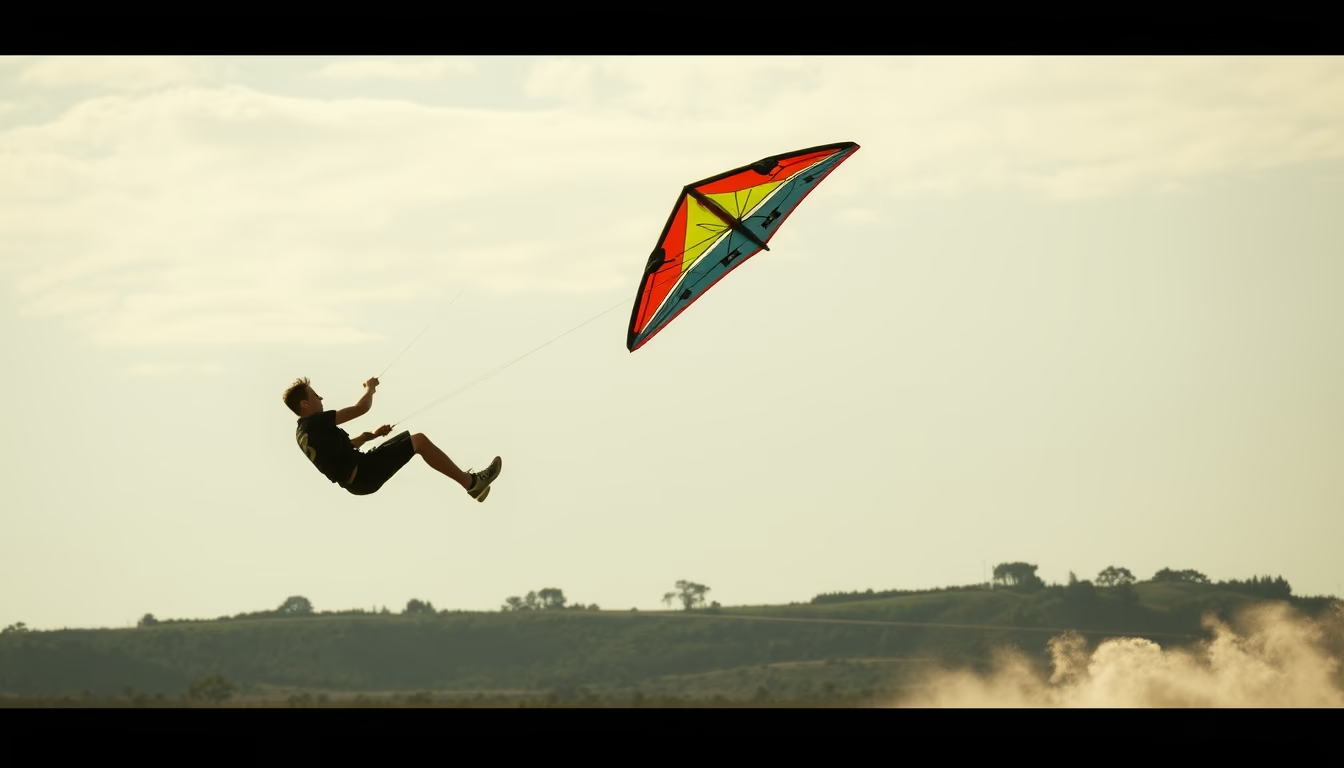
Dual-line stunt kites emerged in the 1970s, revolutionizing recreational flying with precise maneuvers and full control.
About this subject
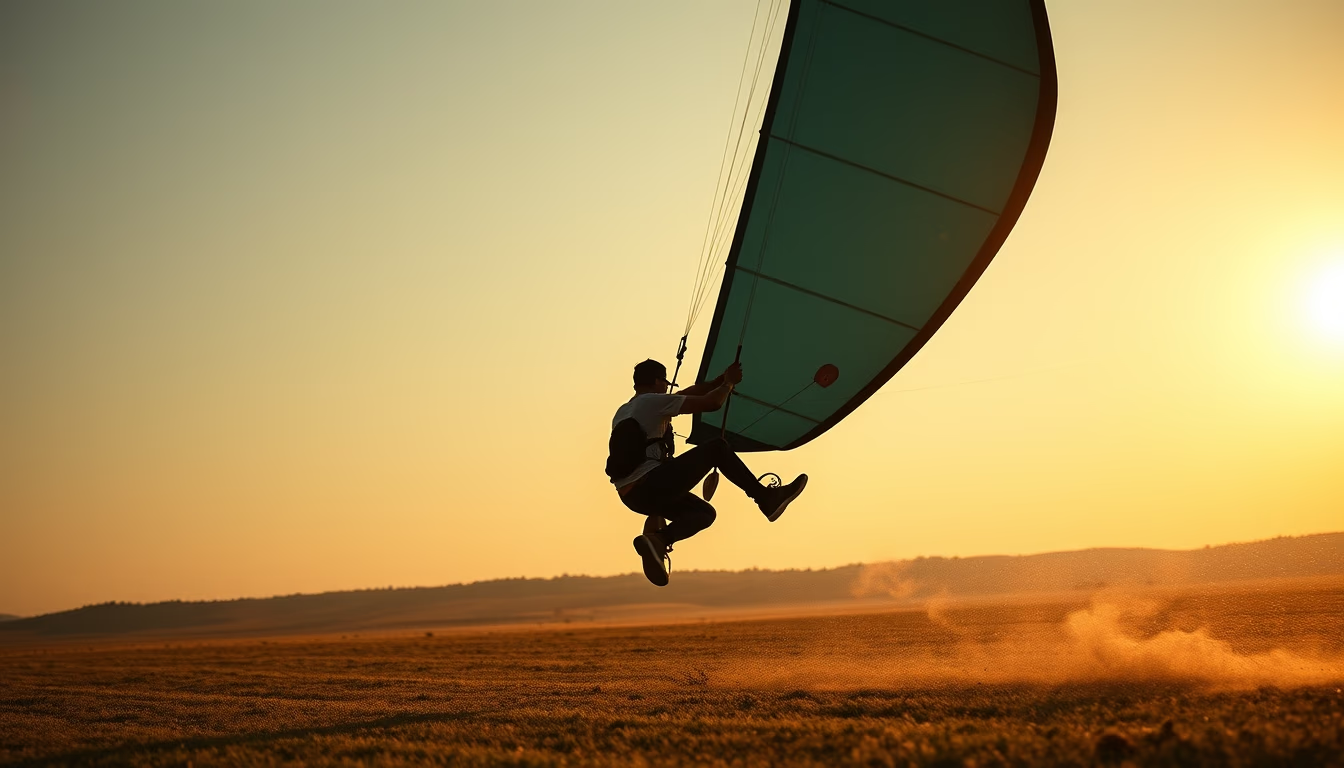
Stunt kites, also known as sport kites or acrobatic kites, are dual-line kites that allow pilots to perform complex maneuvers such as loops, figure eights, stalls, and dives. Unlike traditional single-line kites, they offer full directional control, enabling synchronized and choreographed flights.
The development of dual-line kites is credited to British inventor Peter Powell in the 1970s, who patented the modern design. By the 1980s, the sport gained global popularity, with competitions organized by the International Kiteboarding Organization (IKO) and national associations. Today, disciplines include precision flying (aerial ballet) and team flying, where multiple kites perform simultaneous moves.
Culturally, stunt kites are flown in parks, beaches, and open fields, especially in countries like the United States, United Kingdom, Japan, and Brazil. In Brazil, the hobby is common in coastal regions and during kite festivals such as the São Paulo Kite Festival. The technique requires motor coordination, wind sensitivity, and constant practice. Modern kites are made from lightweight materials like ripstop nylon and carbon fiber spars, ensuring durability and performance.
Fun facts: stunt kites can reach speeds up to 100 mph (160 km/h) in strong winds. Some professional pilots combine flying with music for artistic performances. The practice is also considered an excellent exercise for reflexes and concentration.
Frequently Asked Questions
What is the difference between a stunt kite and a traditional kite?
The main difference is control: stunt kites use two lines, allowing directional maneuvers, while traditional kites have a single line and fly with the wind.
What are the main tricks performed with a stunt kite?
Common tricks include loops, figure eights, stalls (stopping in mid-air), dives, and spins. Competitive routines involve choreographed sequences with smooth transitions.
Where can I learn to fly a stunt kite?
Many kite schools and clubs exist worldwide, especially in coastal areas. Kite festivals and online communities provide tips and gatherings for beginners.
Direct URL
https://pub-c7d6a6ea828543ac903a74a341ccb2e1.r2.dev/imagens/sport-kite-stunt-fine-art-photography-fresh3.avifHow to credit
Include a visible link back to UtilizAí. Copy one of the snippets below:
<a href="https://xn--utiliza-eza.com/en/midia/imagens/sport-kite-stunt-fine-art-photography-fresh3">Sport kite stunt</a> by <a href="https://xn--utiliza-eza.com">UtilizAí</a>, licensed under <a href="https://creativecommons.org/licenses/by/4.0/">CC BY 4.0</a>.
[Sport kite stunt](https://xn--utiliza-eza.com/en/midia/imagens/sport-kite-stunt-fine-art-photography-fresh3) by [UtilizAí](https://xn--utiliza-eza.com), CC BY 4.0
License: CC-BY-4.0