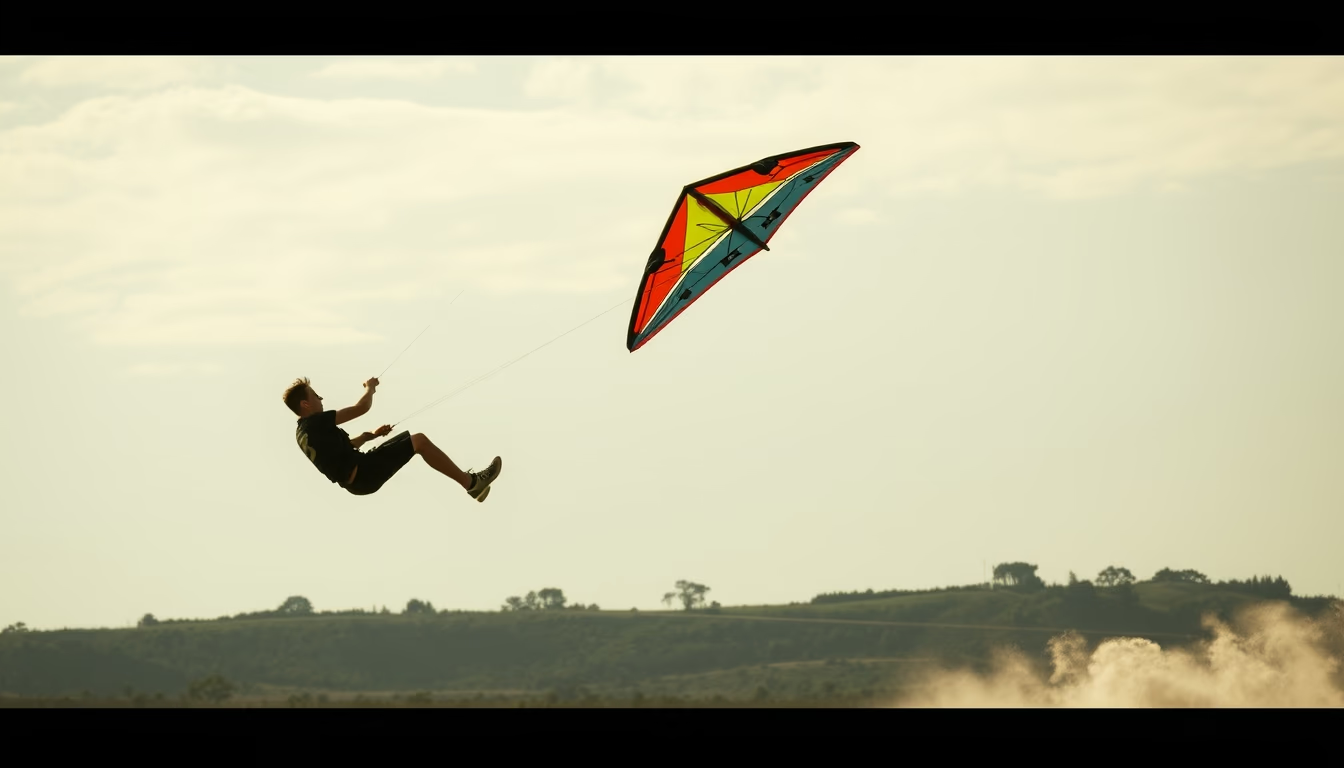
Sport kite stunt
1344×768 · AVIF · CC BY 4.0
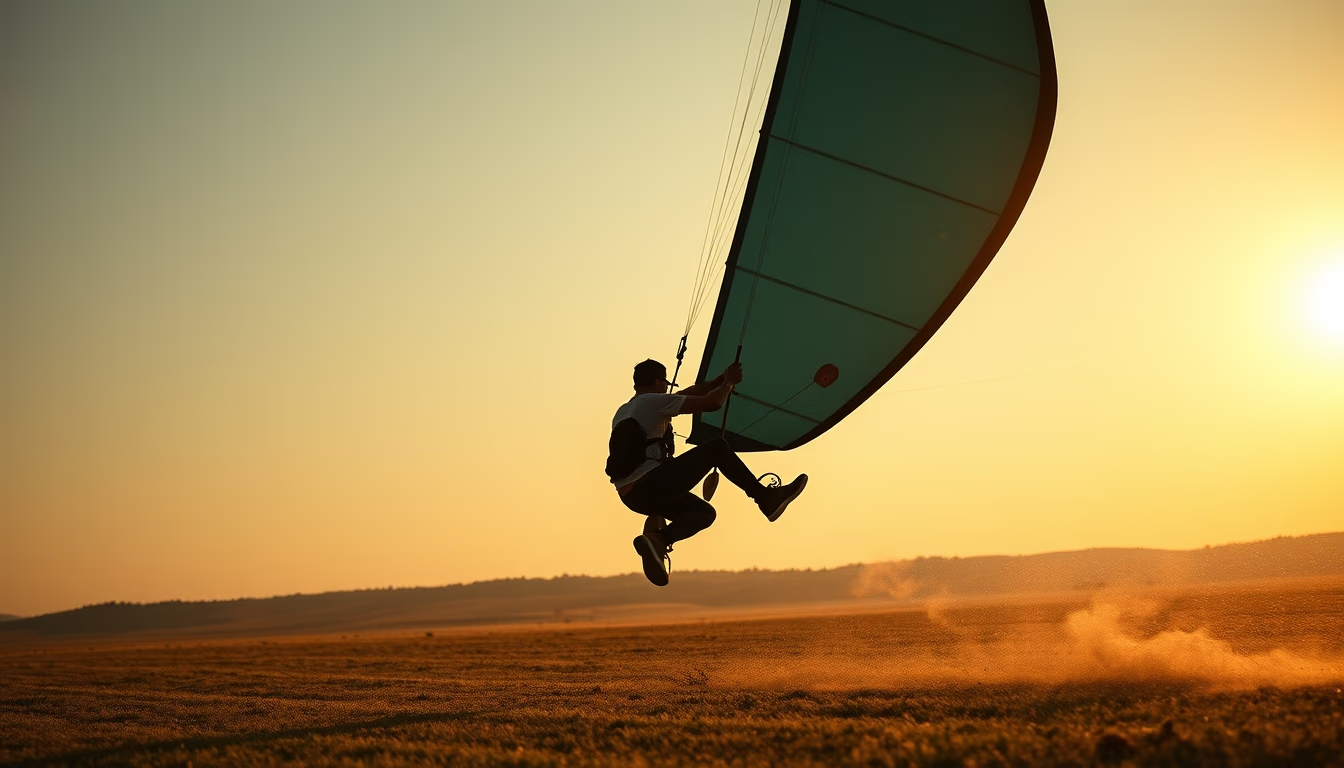
Sport kite stunts combine technique, wind, and precision in a radical sport gaining popularity in Brazil and worldwide.
About this subject
Sport kite stunts, also known as acrobatic kite flying, involve two- or four-line kites designed for precise aerial maneuvers. Unlike single-line kites, these allow the pilot to perform spins, loops, dives, and geometric patterns by coordinating hand movements and reacting to wind conditions. The sport requires skill in tensioning the lines to execute controlled tricks.
In Brazil, the practice has grown in coastal areas and at kite festivals such as the International Kite Festival in São Paulo and events in Florianópolis. Globally, competitive sport kite flying is governed by organizations like the American Kitefliers Association (AKA) and European federations. Competitions feature categories like Individual, Pair, and Team, with choreographed routines set to music, judged on difficulty, synchronization, and creativity.
Kites are typically made of carbon fiber frames and lightweight ripstop nylon for durability. Advanced maneuvers include the "axel" (an axial spin), "slot machine" (rapid back-and-forth motion), and "half-pipe" (a semicircular path). Ideal wind speeds range from 8 to 25 km/h depending on kite size. Beyond recreation, the sport enhances motor coordination and spatial awareness.
The term "stunt" originates from English, meaning acrobatic. The global scene ranges from amateur park flyers to professionals at world-class events like the Berck-sur-Mer Kite Festival in France. In Brazil, the community is still niche but growing, with online groups organizing meetups to spread the practice.
Frequently Asked Questions
What is the difference between a stunt kite and a traditional kite?
A traditional kite has a single line and flies steadily without controlled maneuvers. A stunt kite has two or four lines, allowing the pilot to perform acrobatics such as spins and loops by pulling the lines differently.
Is it difficult to learn to fly a stunt kite?
Learning requires practice, but beginners can start with two-line kites in light winds (up to 15 km/h). Online tutorials and workshops at festivals are available. Motor coordination and wind reading improve over time.
Where can I practice sport kite stunts in Brazil?
Open spaces without obstacles like beaches, soccer fields, and parks are ideal. Coastal cities such as Florianópolis, Rio de Janeiro, and Fortaleza have favorable winds. WhatsApp and Facebook groups organize regular meetups.
Direct URL
https://pub-c7d6a6ea828543ac903a74a341ccb2e1.r2.dev/imagens/sport-kite-stunt-cinematic-wide-shot-fresh18.avifHow to credit
Include a visible link back to UtilizAí. Copy one of the snippets below:
<a href="https://xn--utiliza-eza.com/en/midia/imagens/sport-kite-stunt-cinematic-wide-shot-fresh18">Sport kite stunt</a> by <a href="https://xn--utiliza-eza.com">UtilizAí</a>, licensed under <a href="https://creativecommons.org/licenses/by/4.0/">CC BY 4.0</a>.
[Sport kite stunt](https://xn--utiliza-eza.com/en/midia/imagens/sport-kite-stunt-cinematic-wide-shot-fresh18) by [UtilizAí](https://xn--utiliza-eza.com), CC BY 4.0
License: CC-BY-4.0