Songkran water festival
1344×768 · AVIF · CC BY 4.0
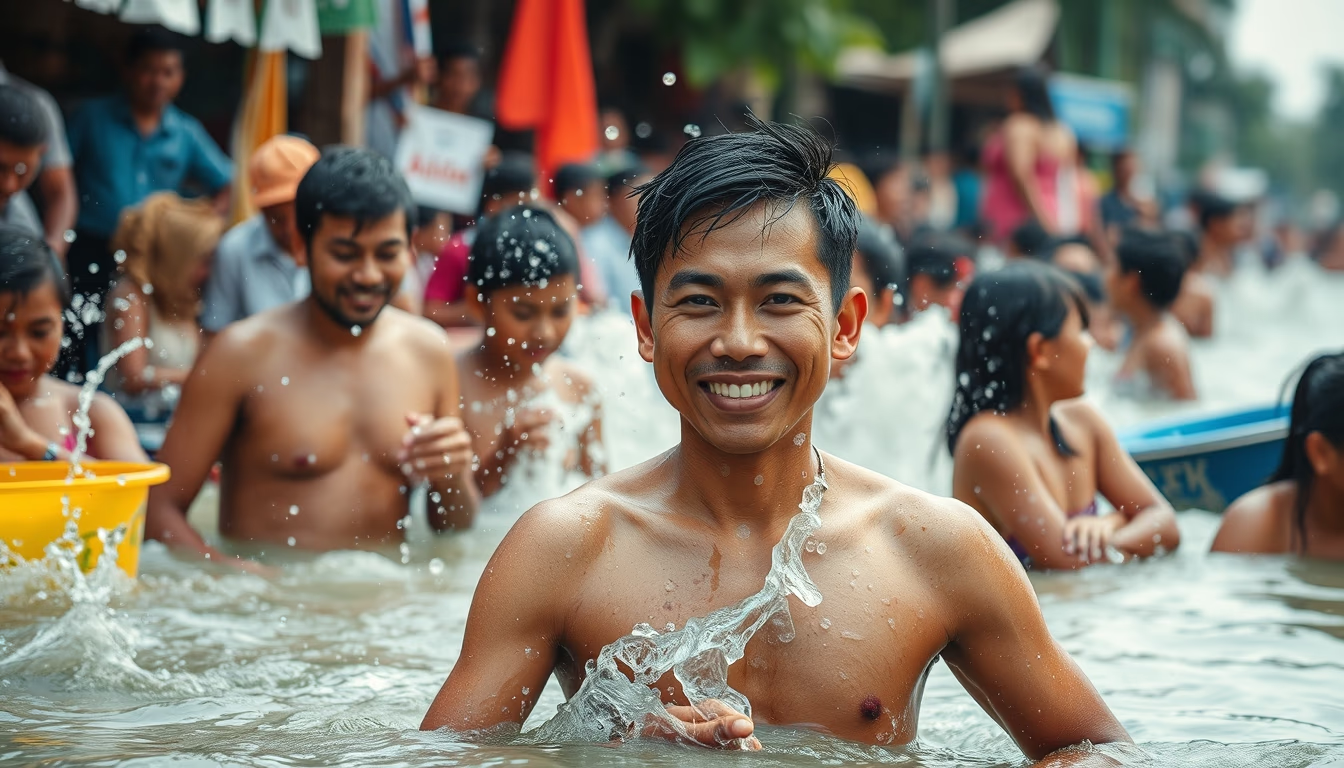
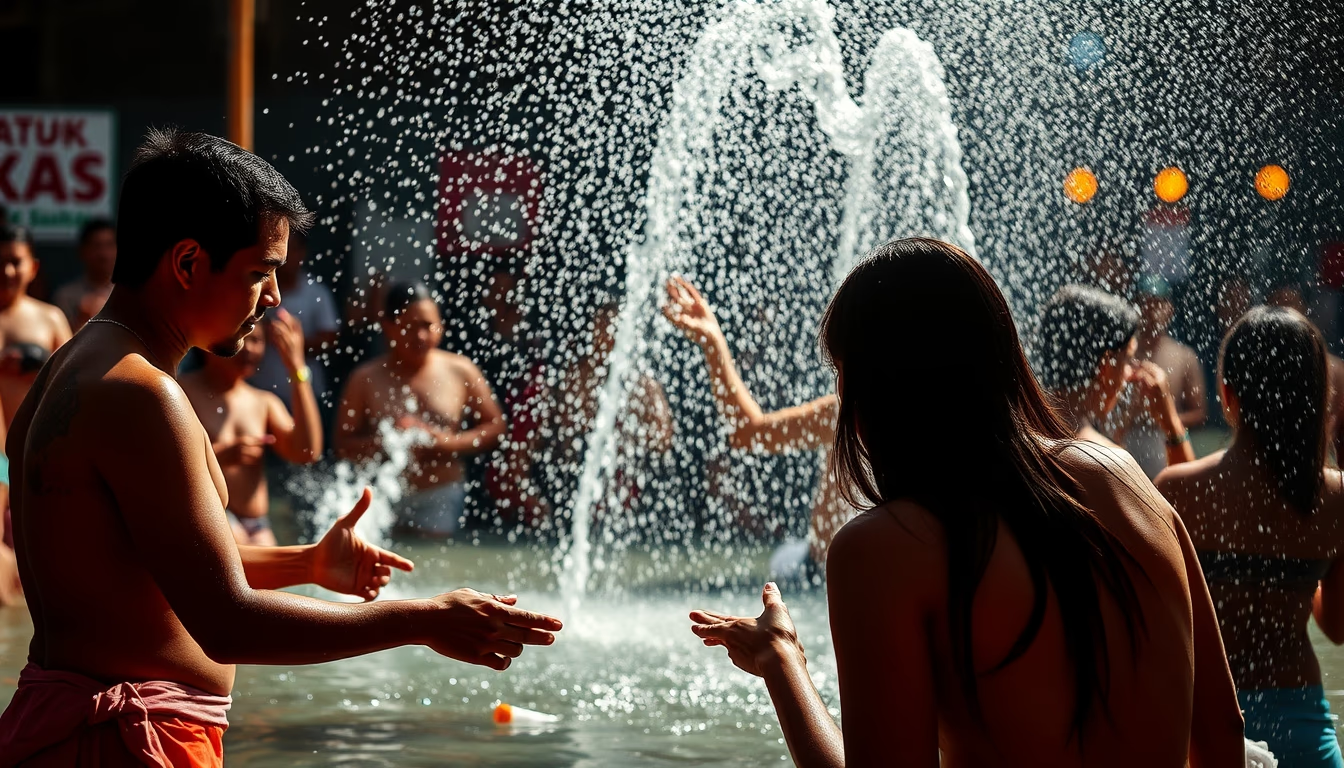
Songkran, the Thai New Year, is celebrated in April with water fights symbolizing purification and spiritual renewal.
About this subject
Songkran is the traditional Thai New Year, taking place annually from April 13 to 15. The term "Songkran" derives from the Sanskrit word "saṅkrānti," meaning "astrological passage," marking the shift in the zodiac. Originally, the festival was a time for spiritual and family cleansing: Thais would visit temples to offer food to monks, build sand pagodas, and bathe Buddha statues with scented water. The act of throwing water, now world-famous, originated as a symbolic gesture to wash away sins and impurities from the past year.
Over time, celebrations evolved into massive water battles, especially in cities like Bangkok, Chiang Mai, and Pattaya. In 2023, Songkran was inscribed by UNESCO as an Intangible Cultural Heritage of Humanity, highlighting its role in preserving Thai community traditions. During the festival, streets fill with people armed with buckets, water guns, and hoses, while trucks carrying large tanks cruise through avenues. Despite the playful chaos, respect remains key: water is never thrown at monks or elderly individuals.
Beyond the fun, Songkran carries deep meanings. It is a time to return home, honor parents, practice charity, and release fish or birds as acts of merit. The use of talcum powder mixed with water, smeared on faces, is a blessing to ward off evil. In 2024, the Thai government boosted tourism by extending festivities to three weeks, with events in every province. The festival has also inspired similar celebrations in neighboring countries, such as Pi Mai Lao in Laos and Chaul Chnam Thmey in Cambodia, all based on the Buddhist calendar.
Frequently Asked Questions
What is the origin of Songkran?
Songkran originates from the Buddhist calendar and Hindu astrology, marking the sun's entry into Aries. It was a period of spiritual cleansing before modern water traditions.
Why is water thrown during Songkran?
Throwing water symbolizes purification and washing away sins from the past year. Originally a respectful act of bathing Buddha statues and elders, it has evolved into public water fights.
Is Songkran celebrated in other countries?
Yes, similar festivals occur in Laos (Pi Mai Lao), Cambodia (Chaul Chnam Thmey), Myanmar (Thingyan), and among Thai diaspora communities, all based on the same lunisolar calendar.
Direct URL
https://pub-c7d6a6ea828543ac903a74a341ccb2e1.r2.dev/imagens/songkran-water-festival-documentary-nature-style-fresh13.avifHow to credit
Include a visible link back to UtilizAí. Copy one of the snippets below:
<a href="https://xn--utiliza-eza.com/en/midia/imagens/songkran-water-festival-documentary-nature-style-fresh13">Songkran water festival</a> by <a href="https://xn--utiliza-eza.com">UtilizAí</a>, licensed under <a href="https://creativecommons.org/licenses/by/4.0/">CC BY 4.0</a>.
[Songkran water festival](https://xn--utiliza-eza.com/en/midia/imagens/songkran-water-festival-documentary-nature-style-fresh13) by [UtilizAí](https://xn--utiliza-eza.com), CC BY 4.0
License: CC-BY-4.0