Solar prominence eruption
1344×768 · AVIF · CC BY 4.0
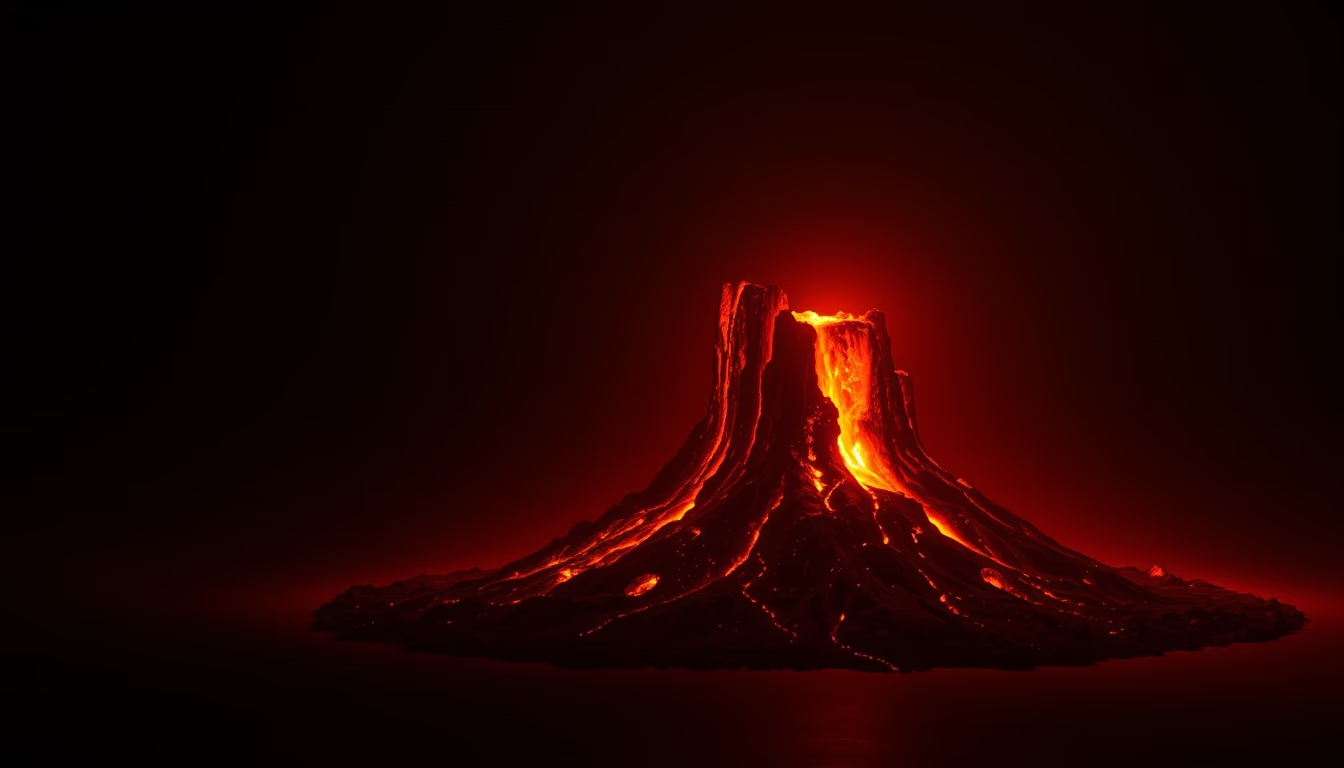
Solar prominence eruptions are massive magnetic phenomena that eject heated plasma from the Sun's surface into interplanetary space.
About this subject
A solar prominence is a dense, relatively cool (around 10,000 K) plasma structure that forms in the chromosphere and extends into the solar corona, held aloft by strong magnetic fields. They can reach hundreds of thousands of kilometers in height, far exceeding Earth's diameter. When these structures become unstable and disrupt, an eruption occurs, releasing vast amounts of energy and matter.
These eruptions are directly tied to the 11-year solar cycle, becoming more frequent during solar maximum. The triggering mechanism is magnetic reconnection, which releases energy stored in magnetic fields. Eruptive prominences often accompany solar flares and coronal mass ejections (CMEs), events that can impact Earth's space weather.
Scientists monitor prominences with telescopes equipped with H-alpha filters, which isolate light emitted by ionized hydrogen. Satellites like SOHO and the Solar Dynamics Observatory (SDO) provide continuous images in ultraviolet and visible light, allowing detailed study of these structures. The most famous prominence eruption on record occurred on August 31, 2012, when a huge eruption produced a CME that reached Earth days later.
Although visually spectacular, eruptions directed at Earth can cause geomagnetic storms, affecting satellites, communication systems, and power grids. Therefore, constant monitoring of these phenomena is crucial for space weather forecasting and protecting technological infrastructure.
Frequently Asked Questions
What causes a solar prominence?
Prominences are formed by intense magnetic fields that confine cool plasma in the solar corona. When these fields reconnect or become unstable, an eruption occurs.
Are solar prominences dangerous to Earth?
If directed at Earth, they can trigger geomagnetic storms that damage satellites, disrupt communications, and affect power grids. However, the atmosphere protects the surface.
How large can a solar prominence be?
They can extend tens to hundreds of thousands of kilometers, often many times larger than Earth's diameter (about 12,700 km).
Direct URL
https://pub-c7d6a6ea828543ac903a74a341ccb2e1.r2.dev/imagens/solar-prominence-eruption-studio-still-life-p8.avifHow to credit
Include a visible link back to UtilizAí. Copy one of the snippets below:
<a href="https://xn--utiliza-eza.com/en/midia/imagens/solar-prominence-eruption-studio-still-life-p8">Solar prominence eruption</a> by <a href="https://xn--utiliza-eza.com">UtilizAí</a>, licensed under <a href="https://creativecommons.org/licenses/by/4.0/">CC BY 4.0</a>.
[Solar prominence eruption](https://xn--utiliza-eza.com/en/midia/imagens/solar-prominence-eruption-studio-still-life-p8) by [UtilizAí](https://xn--utiliza-eza.com), CC BY 4.0
License: CC-BY-4.0