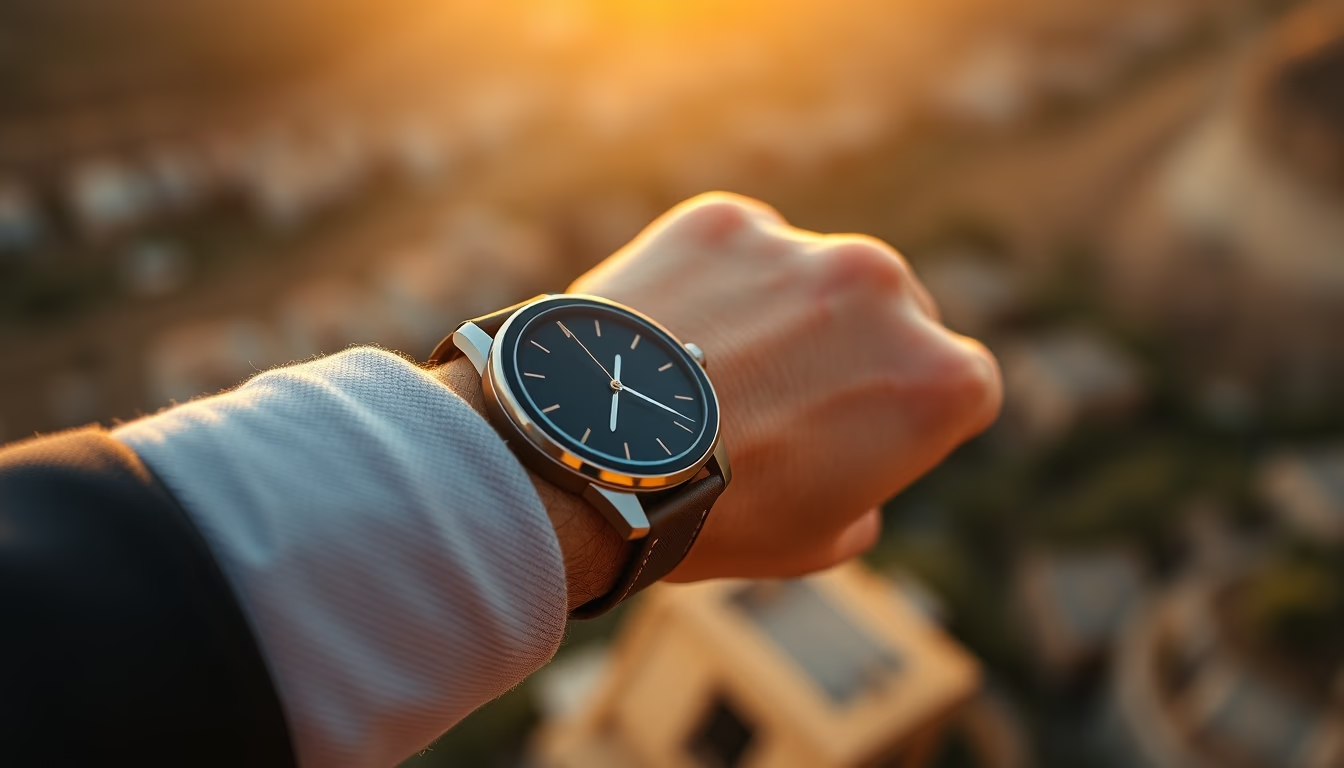
Smart watch on wrist closeup
1344×768 · AVIF · CC BY 4.0
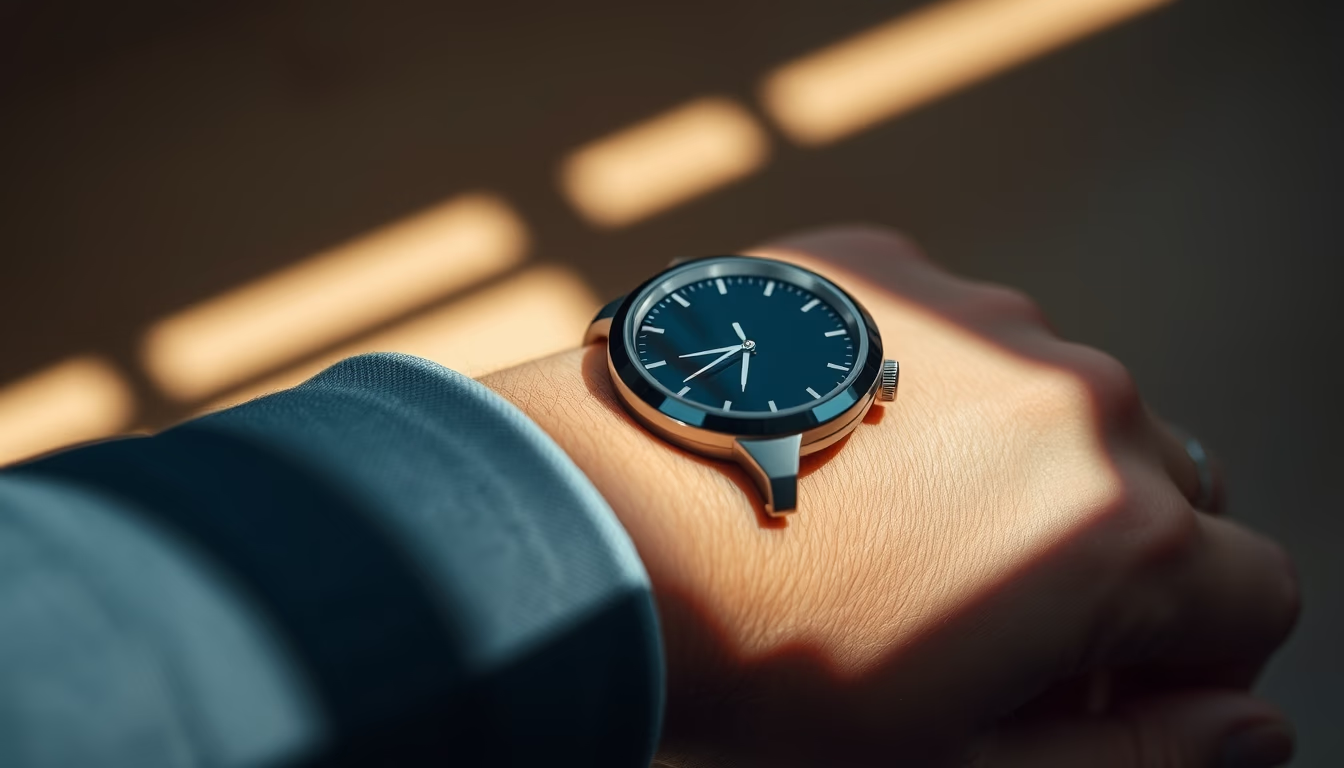
Smart watch on wrist: technology, health and connectivity at your fingertips.
About this subject
The modern smart watch is far more than a timepiece: it has become a personal assistant that monitors health, displays notifications, and tracks physical activity. Equipped with sensors such as accelerometers, gyroscopes, heart rate monitors, and pulse oximeters, these devices collect real-time data about the user's body. The global wearable market surpassed US$80 billion in 2023, with smart watches representing the largest share of that segment.
Popularized by the Apple Watch in 2015, the concept of a smart watch dates back to 1972 with the Pulsar Time Computer, which only displayed the time. Today, advanced models integrate GPS, contactless payments, eSIM calling, and even electrocardiograms. Battery life ranges from one to fourteen days, depending on the operating system and use of features like always-on display.
In Brazil, adoption has grown driven by health and wellness concerns. Brands like Samsung, Garmin, and Huawei compete with Apple, offering options for different audiences. The accuracy of sensors is validated by clinical studies but still does not replace professional medical equipment. Smart watches also collect sleep, stress, and blood oxygen data, helping users identify patterns and improve habits.
Customization is another appeal: users can change watch faces, adjust notifications, and install apps. Integration with voice assistants, Siri, Google Assistant, Bixby, simplifies daily tasks. Trends for 2026 include greater accuracy in non-invasive blood glucose monitoring and long-lasting batteries powered by solar energy. The smart watch has evolved from an accessory to a hub of health and productivity on the wrist.
Frequently Asked Questions
What are the main benefits of using a smart watch?
Benefits include continuous health monitoring (heart rate, blood oxygen, sleep), fitness tracking, smart notifications, and integration with voice assistants. It also offers GPS, contactless payments, and calling without a phone in eSIM models.
Can a smart watch replace a doctor for health measurements?
No. Although sensors like ECG have regulatory approval in some countries, data is indicative and not a substitute for professional diagnosis. They help detect anomalies and encourage seeking medical care.
What is the average battery life of a smart watch?
It ranges from 1 to 14 days. Models with AMOLED displays and advanced OS (e.g., Apple Watch) last 1-2 days. Watches with proprietary OS and low-power displays (e.g., Garmin, Amazfit) can reach two weeks, depending on usage.
Direct URL
https://pub-c7d6a6ea828543ac903a74a341ccb2e1.r2.dev/imagens/smart-watch-on-wrist-closeup-magazine-editorial-p4.avifHow to credit
Include a visible link back to UtilizAí. Copy one of the snippets below:
<a href="https://xn--utiliza-eza.com/en/midia/imagens/smart-watch-on-wrist-closeup-magazine-editorial-p4">Smart watch on wrist closeup</a> by <a href="https://xn--utiliza-eza.com">UtilizAí</a>, licensed under <a href="https://creativecommons.org/licenses/by/4.0/">CC BY 4.0</a>.
[Smart watch on wrist closeup](https://xn--utiliza-eza.com/en/midia/imagens/smart-watch-on-wrist-closeup-magazine-editorial-p4) by [UtilizAí](https://xn--utiliza-eza.com), CC BY 4.0
License: CC-BY-4.0