Smart home control panel
1344×768 · AVIF · CC BY 4.0
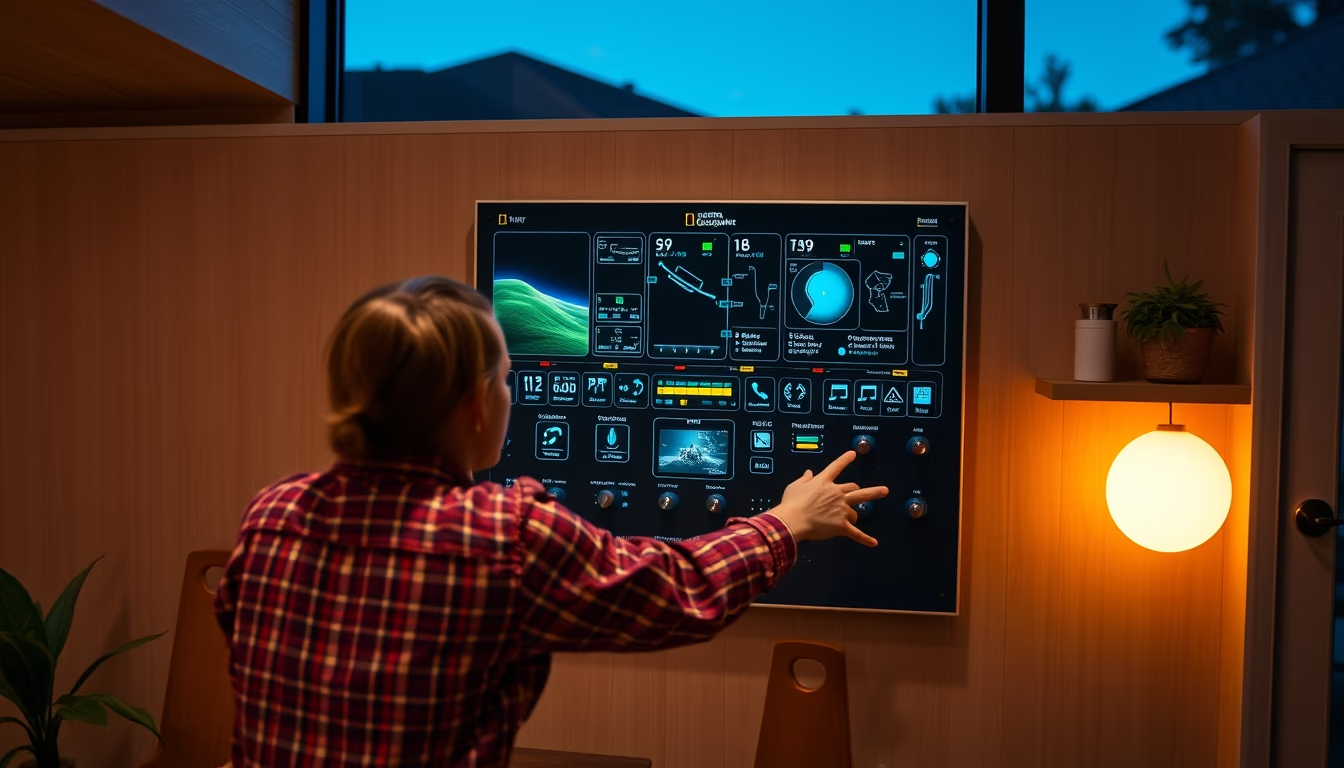
Smart home control panels centralize home automation, integrating IoT devices into a single interface.
About this subject
A smart home control panel is a device interface for managing and monitoring home automation systems. It replaces individual switches and thermostats, offering a touchscreen or physical button panel to control lighting, climate, security, and entertainment. Typically wall-mounted like a modern distribution board, it connects via Wi-Fi, Zigbee, or Z-Wave to sensors and actuators throughout the house.
The importance of these panels has grown with the proliferation of smart home devices. Instead of juggling multiple apps, the panel unifies control, simplifying routines and saving energy through automated scenes. For instance, one tap can activate "home mode" adjusting lights, temperature, and alarm simultaneously. Integration with voice assistants like Alexa or Google Assistant is common, but the panel provides a visual and tactile alternative for users who prefer not to rely solely on voice commands.
Technologically, the Matter standard, launched in 2022 by the Connectivity Standards Alliance, promises interoperability across brands, making panels more versatile. Manufacturers like Honeywell, Control4, and open-source systems like Home Assistant popularize these devices. The global smart panel market is expected to exceed $15 billion by 2028, driven by demand for connected homes and energy efficiency. In Brazil, adoption grows among builders including automation in high-end projects.
Interestingly, the first residential panels date back to the 1970s with the X10 system, but only gained color screens and IP connectivity in the 2000s. Today, advanced models include integrated cameras, presence sensors, and even wireless charging for mobile devices. Security is a priority: many panels encrypt data and require biometric authentication to prevent unauthorized access.
Frequently Asked Questions
What devices can be controlled by a smart home panel?
Lights, thermostats, locks, cameras, motion sensors, automated blinds, and sound systems are common. Compatibility depends on supported protocols (Zigbee, Z-Wave, Wi-Fi) and integration with assistants.
Is professional installation required?
It depends on complexity. Basic panels can be user-configured, but systems integrated with electrical wiring or alarms require an electrician or specialized technician. Consult the manufacturer's manual.
Does the panel work without internet?
Usually yes for local control via home network (LAN). Remote functions or cloud-based voice commands will not. Check if the panel supports offline operation for basic automations.
Direct URL
https://pub-c7d6a6ea828543ac903a74a341ccb2e1.r2.dev/imagens/smart-home-control-panel-national-geographic-style-p1.avifHow to credit
Include a visible link back to UtilizAí. Copy one of the snippets below:
<a href="https://xn--utiliza-eza.com/en/midia/imagens/smart-home-control-panel-national-geographic-style-p1">Smart home control panel</a> by <a href="https://xn--utiliza-eza.com">UtilizAí</a>, licensed under <a href="https://creativecommons.org/licenses/by/4.0/">CC BY 4.0</a>.
[Smart home control panel](https://xn--utiliza-eza.com/en/midia/imagens/smart-home-control-panel-national-geographic-style-p1) by [UtilizAí](https://xn--utiliza-eza.com), CC BY 4.0
License: CC-BY-4.0