Smart contract code on terminal IDE
1344×768 · AVIF · CC BY 4.0
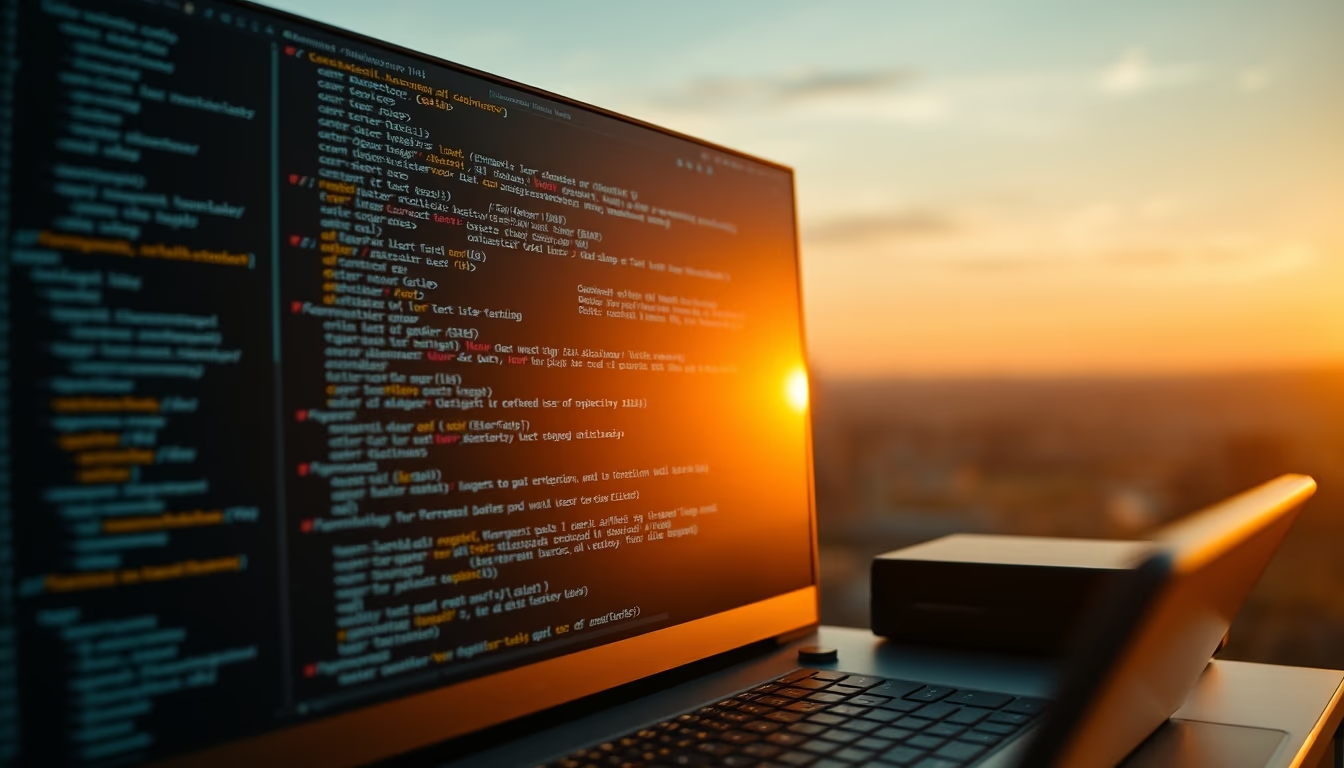
Smart contract code being edited on a terminal IDE, representing the development of decentralized applications (dApps) on the blockchain.
About this subject
Smart contracts are self-executing programs stored on a blockchain, such as Ethereum, that automatically enforce agreements when predefined conditions are met. They are written in languages like Solidity, Vyper, or Rust (for blockchains like Solana). The terminal IDE (Integrated Development Environment) shown in the image is a common tool among developers who prefer working directly in the console, using editors like Vim, Nano, or Emacs combined with compilers and deployment tools such as Truffle, Hardhat, or Foundry.
Developing smart contracts requires precision, as errors can lead to irreversible financial losses. Therefore, developers often use local test environments (like Ganache or Hardhat Network) before deploying to mainnet. The image captures a typical coding moment, highlighting the code syntax, which includes functions, state variables, and events. The terminal IDE, due to its minimalist nature, focuses on code without distractions, being preferred by experienced programmers who value efficiency and control over the development environment.
The scene reflects the growth of the Web3 ecosystem, where developers worldwide contribute to decentralized applications spanning finance (DeFi), non-fungible tokens (NFTs), gaming, and governance. The choice of a terminal IDE suggests an advanced developer who masters command lines and automation tools. In Brazil, communities like Ethereum Brasil and Solana Brasil encourage learning Solidity and Rust, promoting hackathons and free courses. Security in smart contracts is a critical topic, with frequent audits by specialized companies to prevent vulnerabilities such as reentrancy or integer overflow.
Frequently Asked Questions
What is a smart contract?
It is a program stored on a blockchain that automatically executes agreements when predefined conditions are met, without the need for intermediaries.
Which languages are used to program smart contracts?
The main ones are Solidity (Ethereum), Vyper (Ethereum), and Rust (Solana, Polkadot). Other blockchains use languages like Michelson (Tezos) or Cadence (Flow).
Why is smart contract development risky?
Errors in the code can cause irreversible financial losses, as contracts are immutable after deployment. Therefore, audits and rigorous testing are essential.
Direct URL
https://pub-c7d6a6ea828543ac903a74a341ccb2e1.r2.dev/imagens/smart-contract-code-on-terminal-ide-cinematic-wide-shot-v2.avifHow to credit
Include a visible link back to UtilizAí. Copy one of the snippets below:
<a href="https://xn--utiliza-eza.com/en/midia/imagens/smart-contract-code-on-terminal-ide-cinematic-wide-shot-v2">Smart contract code on terminal IDE</a> by <a href="https://xn--utiliza-eza.com">UtilizAí</a>, licensed under <a href="https://creativecommons.org/licenses/by/4.0/">CC BY 4.0</a>.
[Smart contract code on terminal IDE](https://xn--utiliza-eza.com/en/midia/imagens/smart-contract-code-on-terminal-ide-cinematic-wide-shot-v2) by [UtilizAí](https://xn--utiliza-eza.com), CC BY 4.0
License: CC-BY-4.0