Small family farmer tending to organic vegetables
1344×768 · AVIF · CC BY 4.0
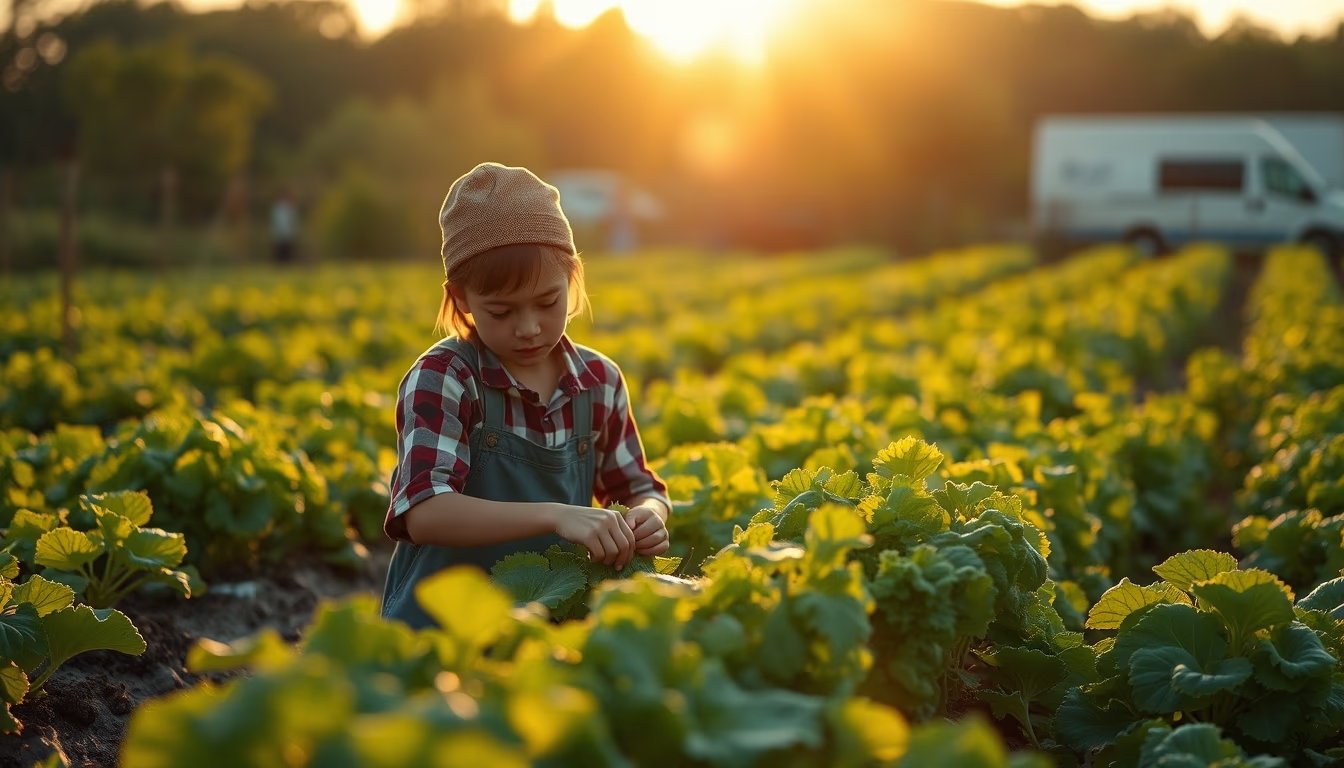
A small family farmer tends to an organic vegetable garden in the late afternoon, a practice that strengthens food security and local economies in Brazil.
About this subject
Family farming is the backbone of food production in Brazil, responsible for about 70% of the food consumed in the country, according to IBGE data. These farmers, often on small properties, cultivate organic vegetables without pesticides, following agroecological practices that preserve soil and biodiversity. Organic farming requires more labor but yields healthier products and adds value to production.
In the late afternoon, the family farmer performs tasks such as irrigation, harvesting, and soil preparation for the next planting. This time is strategic: the milder sun avoids water stress on plants and makes work easier. Many families sell their produce at local farmers' markets or through institutional purchase programs like PNAE (National School Feeding Program), which allocates some organic food for school meals.
Organic family farming also contributes to climate change mitigation, as practices like crop rotation and composting sequester carbon in the soil. Additionally, it strengthens the local economy: each real invested in family farming generates up to three times more income in the municipality than conventional agriculture. Brazil has over 4 million family farms, which occupy only 23% of agricultural land but employ 67% of the rural workforce.
The image depicts a common scene in rural Brazil, where small producers keep alive the tradition of manual cultivation, combining ancestral knowledge with modern organic production techniques. This activity is essential to ensure fresh and nutritious food for communities, while preserving rural culture and the agricultural landscape.
Frequently Asked Questions
What is the importance of family farming in Brazil?
Family farming is responsible for about 70% of the food consumed in Brazil, generates rural jobs, strengthens local economies, and preserves sustainable practices.
What is organic agriculture?
Organic agriculture is a production system that does not use synthetic pesticides or fertilizers, prioritizing soil health, plant health, and consumer health through techniques like composting and crop rotation.
How does family farming contribute to sustainability?
Practices such as crop rotation, green manure, and composting help sequester carbon, preserve biodiversity, and prevent water and soil contamination.
Direct URL
https://pub-c7d6a6ea828543ac903a74a341ccb2e1.r2.dev/imagens/small-family-farmer-tending-to-organic-vegetables-wide-late-afternoon-4.avifHow to credit
Include a visible link back to UtilizAí. Copy one of the snippets below:
<a href="https://xn--utiliza-eza.com/en/midia/imagens/small-family-farmer-tending-to-organic-vegetables-wide-late-afternoon-4">Small family farmer tending to organic vegetables</a> by <a href="https://xn--utiliza-eza.com">UtilizAí</a>, licensed under <a href="https://creativecommons.org/licenses/by/4.0/">CC BY 4.0</a>.
[Small family farmer tending to organic vegetables](https://xn--utiliza-eza.com/en/midia/imagens/small-family-farmer-tending-to-organic-vegetables-wide-late-afternoon-4) by [UtilizAí](https://xn--utiliza-eza.com), CC BY 4.0
License: CC-BY-4.0