Small family farmer tending to organic vegetables
1344×768 · AVIF · CC BY 4.0
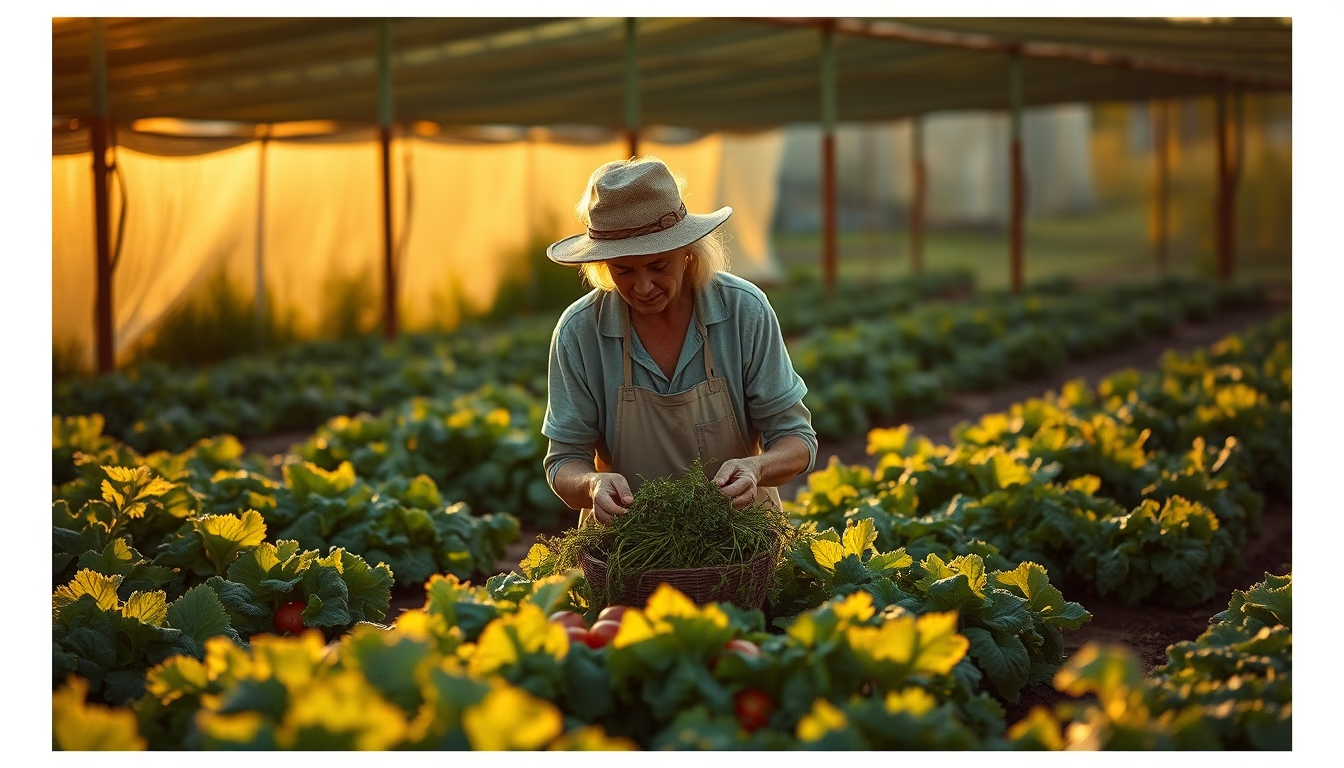
A small family farmer tends to organic vegetables on a rural property, a practice that strengthens food security and the local economy.
About this subject
Family farming accounts for about 70% of the food consumed in Brazil, according to IBGE. Small properties like this one grow organic vegetables without pesticides, preserving soil biodiversity and consumer health. Organic cultivation requires techniques such as crop rotation, composting, and biological pest control, which demand empirical knowledge passed down through generations. Many of these farmers participate in local markets or direct purchase programs like the PAA (Food Acquisition Program), which connects producers to schools and hospitals. Small-scale production also reduces transportation costs and carbon emissions, contributing to environmental sustainability. In Brazil, family farming occupies 84% of rural establishments but only 23% of the land, demonstrating its efficiency in space use. The image depicts late afternoon, a common time for irrigation and harvesting leafy greens like lettuce and arugula, which lose quality if picked under strong sunlight. Manual work allows selecting each plant at the ideal ripeness, ensuring superior flavor and freshness compared to industrialized products.
Frequently Asked Questions
What is the difference between family farming and agribusiness?
Family farming is based on small properties, family labor, and crop diversification, while agribusiness focuses on large land areas, monoculture, and intensive use of chemical inputs. Family farming is more sustainable and responsible for most of the food on Brazilians' tables.
Why are organic vegetables more expensive?
Organic cultivation requires more manual labor, lower yield per area, and certifications that increase costs. Additionally, small-scale distribution does not benefit from agribusiness's economies of scale. However, long-term environmental and health costs are lower.
How to identify a truly organic product?
In Brazil, organic products must carry the seal of the Brazilian System of Organic Conformity Assessment (SisOrg) or be sold directly by family farmers registered with the Ministry of Agriculture. Organic markets often have established trust between producer and consumer.
Direct URL
https://pub-c7d6a6ea828543ac903a74a341ccb2e1.r2.dev/imagens/small-family-farmer-tending-to-organic-vegetables-wide-late-afternoon-2.avifHow to credit
Include a visible link back to UtilizAí. Copy one of the snippets below:
<a href="https://xn--utiliza-eza.com/en/midia/imagens/small-family-farmer-tending-to-organic-vegetables-wide-late-afternoon-2">Small family farmer tending to organic vegetables</a> by <a href="https://xn--utiliza-eza.com">UtilizAí</a>, licensed under <a href="https://creativecommons.org/licenses/by/4.0/">CC BY 4.0</a>.
[Small family farmer tending to organic vegetables](https://xn--utiliza-eza.com/en/midia/imagens/small-family-farmer-tending-to-organic-vegetables-wide-late-afternoon-2) by [UtilizAí](https://xn--utiliza-eza.com), CC BY 4.0
License: CC-BY-4.0