Small family farmer tending to organic vegetables
1344×768 · AVIF · CC BY 4.0
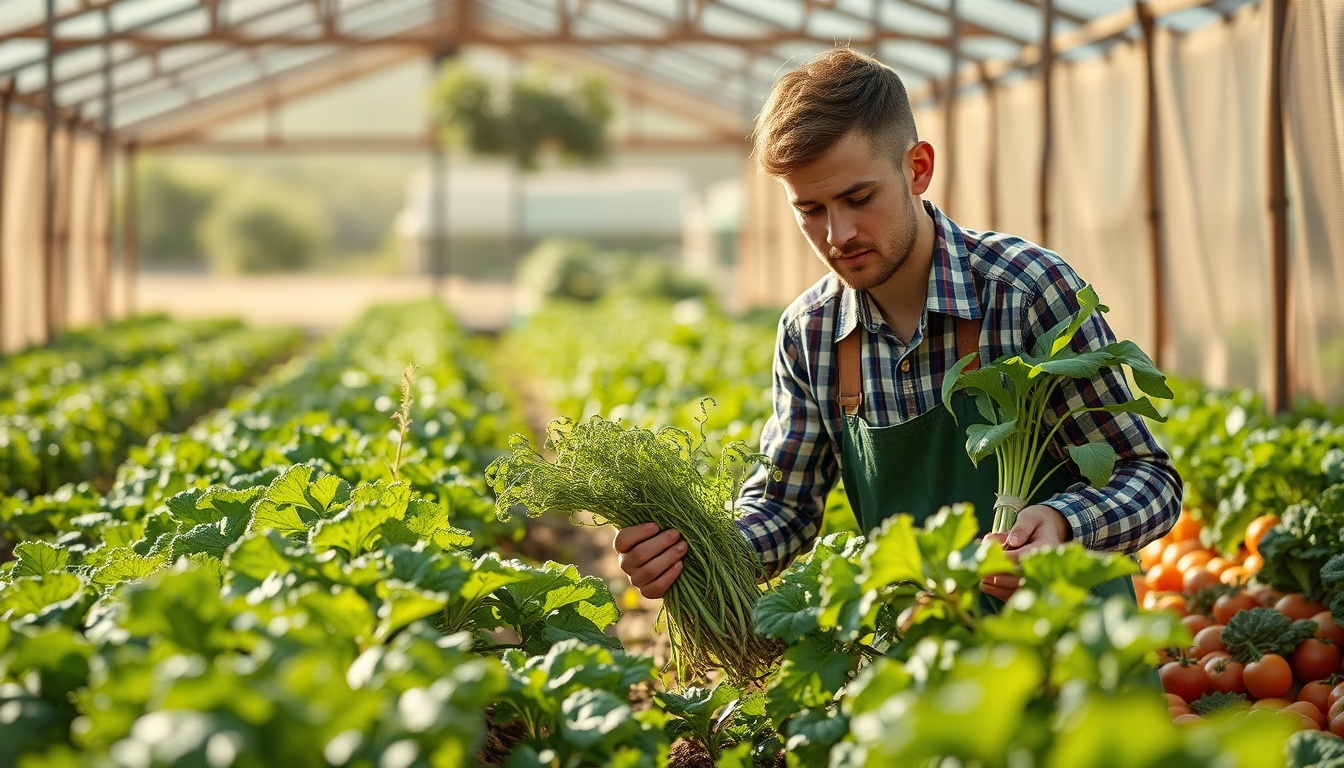
Small family farmer tends to organic vegetables on a Brazilian rural property, focusing on sustainable practices.
About this subject
Family farming accounts for about 70% of the food consumed in Brazil, according to IBGE. In this context, small rural producers play a crucial role in organic vegetable production, free from pesticides. Management involves techniques such as crop rotation, composting, and biological pest control, which preserve soil health and biodiversity.
The depicted property uses drip irrigation, a system that reduces water consumption by up to 60% compared to traditional methods. The farmer, often a member of a local cooperative, sells vegetables at organic fairs or through baskets delivered to urban consumers. This short distribution chain strengthens the local economy and ensures fresh, nutritious food.
In Brazil, organic farming grows at annual rates of 20%, driven by demand for healthy food. Small family farmers are mainly responsible for this expansion, adapting traditional knowledge to ecological innovations. The image symbolizes manual labor and direct connection to the land, contrasting with industrial agriculture.
Beyond environmental benefits, organic family farming promotes food security and rural income generation. Government programs, such as the Food Acquisition Program (PAA), encourage direct purchase of these products for schools and hospitals, integrating health and rural development.
Frequently Asked Questions
What is family farming and why is it important in Brazil?
Family farming is small-scale agriculture responsible for about 70% of the food consumed in Brazil. It generates rural jobs, preserves biodiversity, and strengthens local economies.
How can a small farmer obtain organic certification?
To obtain certification, the farmer must comply with Law 10.831/2003, which prohibits pesticides and chemical fertilizers. An audit by a certifying body accredited by the Ministry of Agriculture is required.
What are the main challenges faced by small organic producers?
Challenges include limited access to credit, marketing difficulties, and competition with large producers. Lack of technical assistance and bureaucratic certification processes are also common obstacles.
Direct URL
https://pub-c7d6a6ea828543ac903a74a341ccb2e1.r2.dev/imagens/small-family-farmer-tending-to-organic-vegetables-symmetric-bright-midday-3.avifHow to credit
Include a visible link back to UtilizAí. Copy one of the snippets below:
<a href="https://xn--utiliza-eza.com/en/midia/imagens/small-family-farmer-tending-to-organic-vegetables-symmetric-bright-midday-3">Small family farmer tending to organic vegetables</a> by <a href="https://xn--utiliza-eza.com">UtilizAí</a>, licensed under <a href="https://creativecommons.org/licenses/by/4.0/">CC BY 4.0</a>.
[Small family farmer tending to organic vegetables](https://xn--utiliza-eza.com/en/midia/imagens/small-family-farmer-tending-to-organic-vegetables-symmetric-bright-midday-3) by [UtilizAí](https://xn--utiliza-eza.com), CC BY 4.0
License: CC-BY-4.0