Small family farmer tending to organic vegetables
1344×768 · AVIF · CC BY 4.0
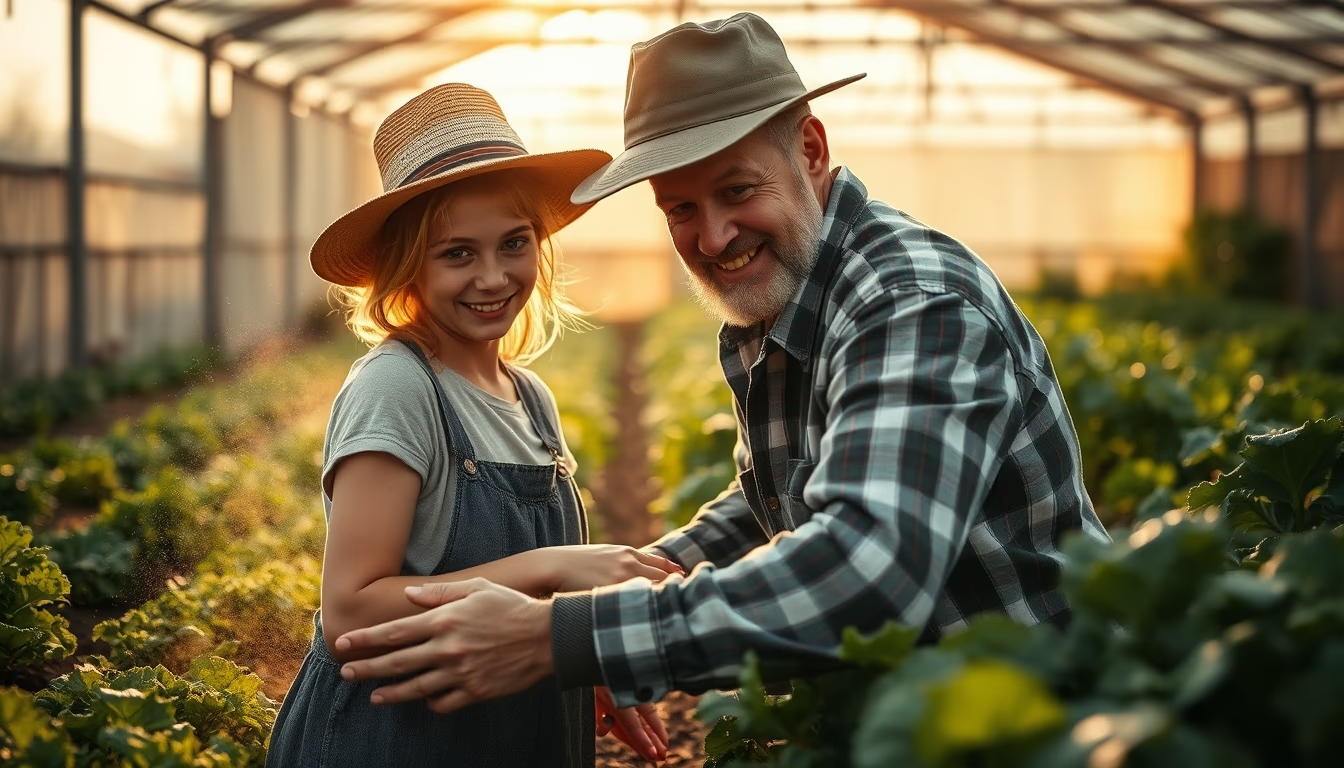
Small family farmer tends organic vegetables in an agroecological system, a practice that ensures food security and rural income.
About this subject
Family farming is responsible for about 70% of the food consumed in Brazil, according to IBGE. These producers, like the one in the image, grow vegetables without pesticides, using green manure, composting, and biological pest control. The agroecological system preserves soil biodiversity and reduces carbon emissions, contrasting with conventional agribusiness. Many families sell their products at local farmers' markets or through home delivery boxes, strengthening regional economies and healthy eating.
Organic production requires certification, but small farmers often join associations or cooperatives to reduce costs. In Brazil, the Family Farming Law (Law 11.326/2006) guarantees access to public policies such as the National School Feeding Program (PNAE), which allocates 30% of its resources to purchase food from family farms. This encourages crop diversification and rural permanence.
Growing organic vegetables requires technical knowledge about crop rotation and integrated pest management. Common species include lettuce, arugula, tomatoes, and carrots. The farmer must constantly monitor plant health, as no chemical pesticides are used. On overcast days like the one in the image, diffuse light benefits vegetative growth and reduces water stress.
Organic family farming also plays a crucial role in conserving creole seeds, varieties adapted to local conditions. These seeds are exchanged among communities, preserving agrobiodiversity. Manual labor, such as weeding and harvesting, creates direct jobs and maintains rural traditions. Despite challenges, the sector is growing in Brazil: the number of certified organic producers increased by 13% between 2020 and 2023, according to the Ministry of Agriculture.
Frequently Asked Questions
What are the main environmental benefits of organic family farming?
Organic family farming reduces pesticide use, preserves soil biodiversity, promotes crop rotation, and uses green manure, which lowers greenhouse gas emissions and protects water resources.
How can a family farmer obtain organic certification in Brazil?
The farmer can join a certifier accredited by the Ministry of Agriculture, which conducts audits and inspections. There is also participatory certification through farmer and consumer networks, such as Rede Ecovida.
What are creole seeds and why are they important in family farming?
Creole seeds are traditional varieties adapted to local conditions over generations. They are important because they maintain agrobiodiversity, are more resistant to pests and diseases, and do not depend on industrial inputs.
Direct URL
https://pub-c7d6a6ea828543ac903a74a341ccb2e1.r2.dev/imagens/small-family-farmer-tending-to-organic-vegetables-editorial-overcast-daytime-7.avifHow to credit
Include a visible link back to UtilizAí. Copy one of the snippets below:
<a href="https://xn--utiliza-eza.com/en/midia/imagens/small-family-farmer-tending-to-organic-vegetables-editorial-overcast-daytime-7">Small family farmer tending to organic vegetables</a> by <a href="https://xn--utiliza-eza.com">UtilizAí</a>, licensed under <a href="https://creativecommons.org/licenses/by/4.0/">CC BY 4.0</a>.
[Small family farmer tending to organic vegetables](https://xn--utiliza-eza.com/en/midia/imagens/small-family-farmer-tending-to-organic-vegetables-editorial-overcast-daytime-7) by [UtilizAí](https://xn--utiliza-eza.com), CC BY 4.0
License: CC-BY-4.0